





Impressionist Forest Painting
Impressionist forest painting brings sunlight through ancient trees directly onto your wall, capturing transient light in oil, watercolour, and pastel.
Impressionist Forest Painting
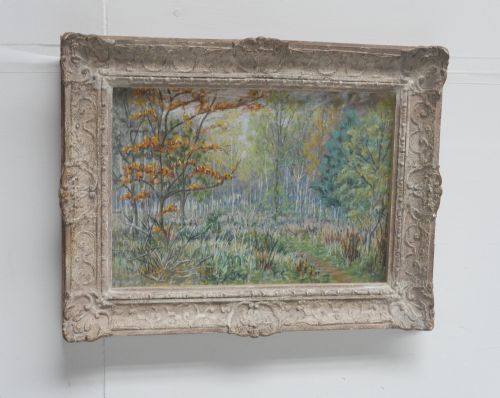
An impressionist forest painting captures woodland scenes, bluebell woods, and leafy groves through loose brushwork and a focus on natural light. When you search for an impressionist forest painting, you encounter works spanning from the Victorian and Edwardian eras through to the mid-century period. These pieces record landscapes across Britain, France, and Scandinavia using varied mediums.
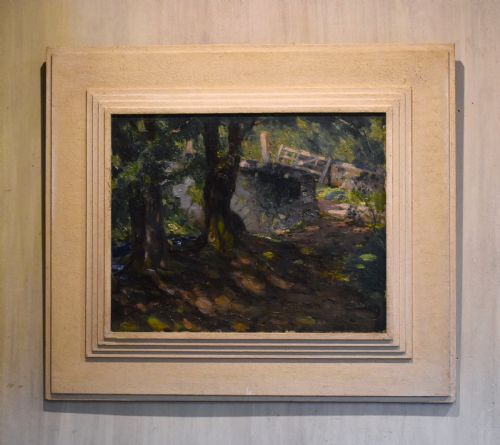
The selections on this page encompass oils on canvas, delicate watercolours, and pastel works on paper. Subjects range from quiet sunset woodland areas to snow-dappled winter trees and river landscapes framed by timber. Each canvas or paper surface offers a distinct window into woodland scenery from the early to mid twentieth century.
The physical forms include traditional framed oil paintings and wall art suited for domestic display. Artists documented specific locations such as Bushey, Yorkshire, and French countryside settings with expressive mark-making. These works represent British Impressionism, Scottish Impressionism, and continental traditions.
Materials and Techniques
Artists utilised oil paint on stretched canvas or wooden panels to build rich, textured surfaces that hold the light of woodland clearings. The application often involves visible brushstrokes laid down rapidly to catch fleeting atmospheric conditions among the trees. Gilt frames frequently enclose these canvases, adding a traditional border to the pastoral subject matter.
Works on paper employ watercolour and pastel mediums to render softer, translucent views of woodland paths and winter scenes. These watercolours and pastels rely on the white of the paper beneath to illuminate bluebells, leafy canopies, and forest floors. Framing under glass protects these delicate paper surfaces from environmental damage over time.
Impressionist Forest Painting Retail Price Guide 2026
Typical asking prices for impressionist forest painting among the pieces listed under this phrase on Sellingantiques today, from the lower quarter to the upper quarter. They describe what is for sale here now, not the wider market.
Listings feature works from the Edwardian period through to the mid-century, spanning British, French, and Scandinavian artistic traditions.
Assessing Quality and Execution
The strength of an impressionist forest painting rests upon the confidence of the brushwork and the artist's ability to render shifting light through foliage. Finer examples demonstrate a sure command of colour harmony, capturing the specific atmosphere of summer shade or winter chill without relying on rigid detail. Weaker pieces often lapse into formulaic rendering of trees and muddy colour mixing.
The handling of the medium itself separates notable works from standard decorative art. An accomplished oil or watercolour balances structure within the woodland composition while maintaining the spontaneous energy central to impressionism. The integration of the painted surface with the surrounding period frame also contributes to the integrity of the piece.
Thomas Bromley Blacklock·David Watts·James Proudfoot·Rowland Henry Hill·Ernest Higgins Rigg·Augustus William Enness·Emily M Paterson·Hans Kappel·Walter Emsley
The Impressionist Forest Painting Glossary
- Impressionism
- A nineteenth and twentieth century painting style focused on capturing the visual impression of a moment, especially regarding shifting light and colour. This approach prioritises loose brushstrokes over academic finish.
- Canvas
- Heavy woven fabric stretched across a wooden frame to serve as a sturdy support for oil paint. It provides a slightly textured surface that holds layered pigment effectively.
- Watercolour
- A paint consisting of pigment suspended in a water-soluble binder, applied to paper to create luminous, transparent washes. It requires a delicate touch and precise control of moisture.
- Pastel
- A dry painting medium in the form of a stick, composed of powdered pigment and a binder. It produces rich, velvety colour fields directly upon paper supports.
- Gilt
- A thin layer of gold leaf or gold paint applied to the surface of a wooden picture frame. It enhances the visual weight and period character of the artwork.
Impressionist Forest Painting: Frequently Asked Questions
What is an impressionist forest painting?
An impressionist forest painting is a work of art depicting woodland scenes using loose brushwork and vibrant colour to capture natural light. These pieces focus on atmosphere rather than botanical precision.
They record trees, bluebell woods, and forest paths through the eyes of artists working during the early to mid twentieth century.
How should I hang and light my painting?
Hang your impressionist forest painting away from direct sunlight to protect the pigments from fading over time. Use a stable wall surface with consistent indoor humidity.
Position a dedicated picture light above the frame to bring out the subtle tones and textured brushwork within the woodland canopy.
How do I care for watercolour versus oil paintings?
Oil paintings on canvas tolerate normal room environments well but benefit from gentle dusting with a soft, dry brush. Avoid using liquid cleaners on the painted surface.
Watercolours on paper require framing under glass and protection from direct daylight to prevent the paper from yellowing and the colours from washing out.
How can I tell the period of a forest painting?
Examine the materials, stretcher bars, framing style, and signature for clues regarding the date of creation. Period framing and canvas types often align with early twentieth century manufacturing.
Artists' records and biographical details also help place undated watercolours and oils within specific decades like the Edwardian era or mid-century.