




Impressionist Cattle Art
Impressionist cattle art captures pastoral life through loose brushwork and natural light, bringing warmth and rural character into a room.
Impressionist Cattle Art
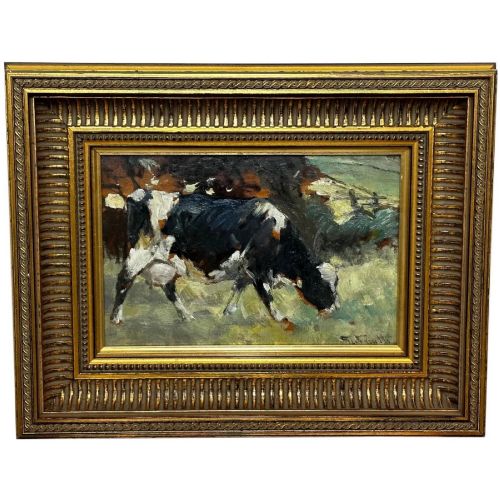
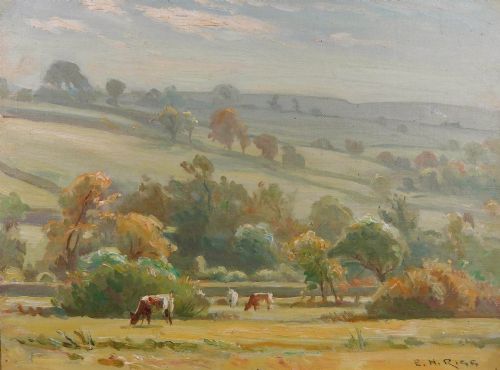
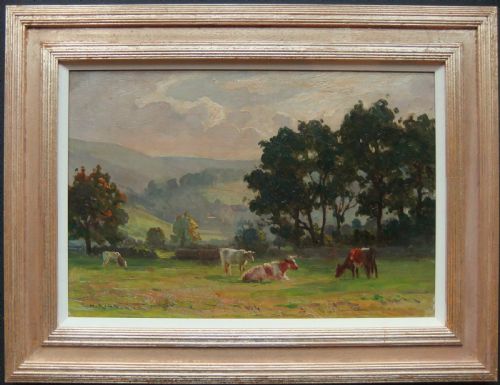
Impressionist cattle art encompasses pastoral scenes rendered primarily in oil paint on canvas, alongside watercolours and pastels, dating from the nineteenth and twentieth centuries. These works frequently depict herds grazing, watering in rivers, or resting in Yorkshire, Scottish, and Welsh landscapes.
The version most commonly encountered on this page is the oil painting on canvas or wood panel, typically framed, originating from British and Scottish impressionist traditions. Artists in these pieces focus on the interplay of light across pastures and the natural movement of farm animals.
Subjects range from wide Yorkshire valleys and Welsh riverbanks to quiet pastoral moments like milking time and driving cows. The compositions rely on painterly marks rather than rigid academic precision to convey the atmosphere of the countryside.
Materials and technique
Artists utilise oil paint applied to canvas or wood to build rich surface textures, often employing visible brushstrokes that capture shifting daylight on the field. Watercolour and pastel appear on paper for lighter, more immediate sketches of rural subjects.
Supports commonly consist of stretched canvas or wood panels housed within traditional frames, grounding the loose impressionist marks in a structured presentation. Pigments are mixed to reflect natural earth tones, greens of pastures, and the varied coats of cattle.
Impressionist Cattle Art Retail Price Guide 2026
Typical asking prices for impressionist cattle art among the pieces listed under this phrase on Sellingantiques today, from the lower quarter to the upper quarter. They describe what is for sale here now, not the wider market.
Listings feature works spanning the nineteenth and twentieth centuries, executed in oil, watercolour, and pastel on canvas, wood, and paper.
The standard of execution
Quality rests on the confidence of the brushwork and how successfully the artist handles light and atmosphere across the pasture. Stronger works demonstrate a sure command of tone, where the animals and landscape integrate naturally rather than appearing stiffly posed.
The harmony of the palette and the vitality of the mark-making separate casual studies from resolved paintings. A successful composition uses fluid handling to give weight to the cattle and depth to the surrounding valley or riverbank.
Ernest Higgins Rigg·Ernest Pile Bucknall·Frederick William Jackson·Owen Bowen·Joshua Anderson Hague·George Smith·John J Hamer·Thomas E Francis·Angus Rands·James Kay·Henri Joseph Harpignies
The Impressionist Cattle Art Glossary
- Impressionism
- A style of painting that uses loose, visible brushstrokes and an emphasis on accurate depiction of light in its changing qualities. It shifted focus away from academic finish toward sensory impression.
- Pastoral
- A genre of art depicting the rural life of shepherds, farmers, and farm animals in an idealized or naturalistic countryside setting. These scenes evoke a sense of quiet rustic routine.
- Canvas
- Heavy woven fabric used as a surface for oil painting, typically stretched over a wooden frame. It provides a flexible, textured ground for thick pigment application.
- Watercolour
- Paint made with water-soluble pigments used on paper to create translucent washes of colour. It allows for rapid sketching of outdoor light and weather.
Impressionist Cattle Art: Frequently Asked Questions
What periods do these paintings come from?
The works span from the late nineteenth century through the Edwardian era and into the mid-twentieth century. Most examples reflect British and Scottish impressionist movements active during these decades.
Dates cluster around the turn of the century and the early nineteen-hundreds, capturing a distinct era of pastoral painting.
Where were these pastoral scenes painted?
Locations include Yorkshire valleys such as Swaledale and Wharfedale, Scottish landscapes, and Welsh river valleys. Artists often worked directly from rural British scenery.
These specific locales provide the geographic backdrop for herds at rest, drinking pools, and farm work.
How should I hang an oil painting?
Select a wall with stable temperature and humidity away from direct sunlight to protect both the canvas and the traditional frame. Ensure the hanging hardware is securely fixed to support the weight of the framed piece.
Position the artwork at eye level to best appreciate the brushwork and atmospheric depth of the pastoral scene.
What is the difference between oil and watercolour?
Oil paint uses a drying oil binder to hold pigments, allowing for thick impasto marks and rich colour depth on canvas or wood. Watercolour suspends pigment in a water-soluble medium applied to paper for lighter, transparent effects.
Oils offer a heavier surface texture suited to substantial frames, while watercolours present a delicate, luminous quality.