
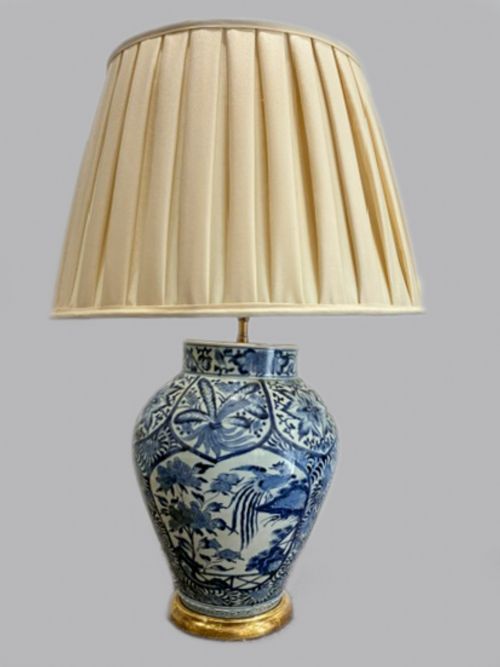
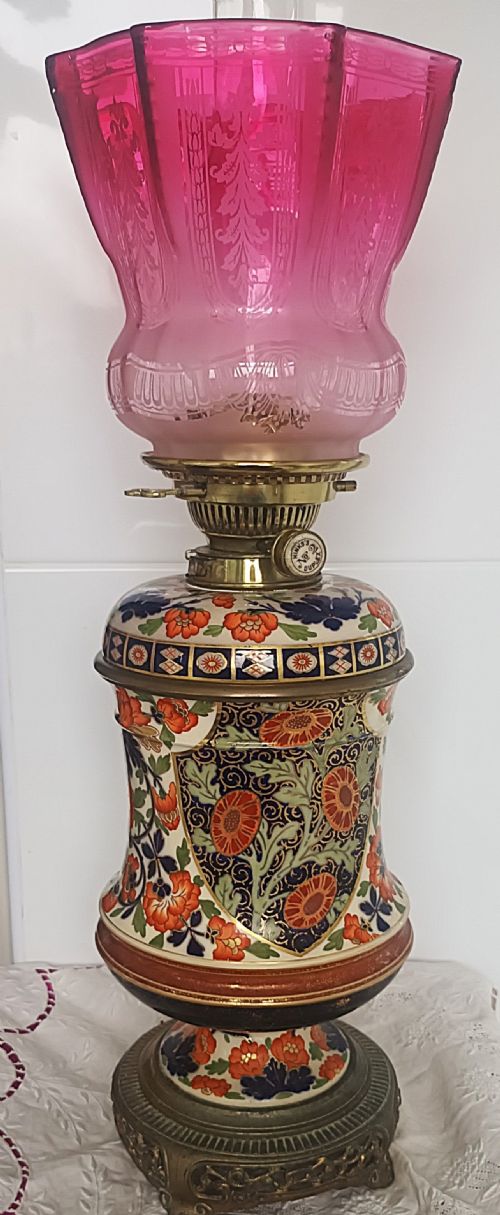

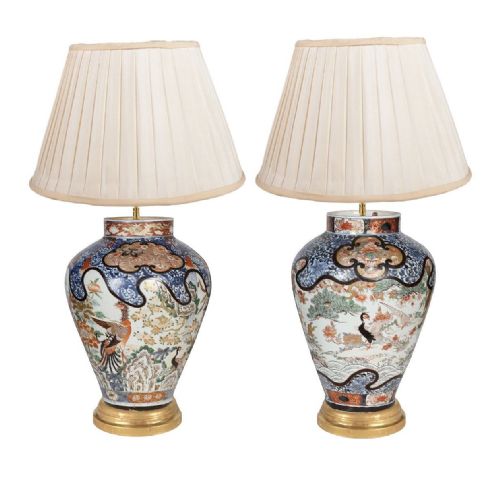


Imari Table Lamp
These imari table lamp examples combine centuries-old East Asian porcelain with period wiring and mounts, offering rich colour and deep historical character for an interior.
Imari Table Lamp
An imari table lamp typically begins life as a decorative vase or oil lamp vessel from the seventeenth, eighteenth, or nineteenth century before receiving a conversion for electrical use. The selection spans Japanese Arita and Fukagawa productions, alongside occasional English ceramic pieces and French examples decorated in the characteristic palette.
Buyers regularly encounter converted vases alongside oil lamp adaptations mounted in brass, giltwood, or ormolu. Forms range from single bottle vases and baluster shapes to matched pairs suited for flanking a sideboard or mantelpiece.
How they were made
The underlying vessels utilise porcelain or ceramic bodies hand-painted under and over the glaze in iron red, cobalt blue, and gilt highlights. Makers shaped these in kilns during the Edo and Meiji periods, or later in European workshops.
Conversion into a lamp involved securing metal fittings in brass, ormolu, or giltwood to the neck or base of the antique body. Silk or fabric shades then complete the construction, paired with internal wiring.
Periods represented reach from the seventeenth century through the Victorian era and the early twentieth century.
What varies in quality
Quality rests primarily on the crispness and complexity of the hand-painted palette upon the porcelain body, alongside the integrity of the original glaze. Early seventeenth and eighteenth-century examples show particular fineness in the brushwork.
The sophistication of the metal mounts, such as cast ormolu or heavy brass work, distinguishes standard conversions from pieces destined for formal nineteenth-century drawing rooms. The harmony between the antique vessel and its modern electrical fittings dictates overall visual success.
The Imari Table Lamp Glossary
- Imari
- A style of Japanese porcelain named after the port from which wares were shipped, traditionally decorated in cobalt blue, iron red, and gold. This palette remained popular across centuries of export trade.
- Arita
- The Japanese town and surrounding region where porcelain production originated in the seventeenth century. Many of the earliest vessels adapted as lamps hail from these kilns.
- Ormolu
- Gilded bronze mounts applied to furniture and ceramics, particularly common in French nineteenth-century decorative pieces. It provides a heavy, golden contrast to the porcelain.
- Baluster
- A vase form characterised by a rounded body that tapers toward the neck and base, resembling a classical architectural column. This shape offers a stable silhouette for table lighting.
- Edo Period
- A division of Japanese history spanning from sixteen hundred and three to eighteen hundred and sixty-eight. Pieces from this era form the foundation of many high-period lamp conversions.
Imari Table Lamp: Frequently Asked Questions
How do I date an imari lamp?
Dating relies heavily on the age of the ceramic body, determined through the style of the painting, the quality of the porcelain clay, and the characteristics of the glaze. Seventeenth and eighteenth-century pieces display different pigment densities compared to nineteenth-century productions.
Metal mounts and structural additions also provide clues, as nineteenth-century French or English conversions often incorporate specific ormolu or brass casting techniques typical of their respective decades.
Are these lamps safely wired?
Most antique lamps encountered have undergone conversion and rewiring at various points in their long history to meet modern standards. Many units receive updated electrical components and testing prior to sale.
Buyers should consult individual listings for details regarding current wiring status and consult a qualified electrician to verify suitability for household use before installation.
Can I find matching pairs?
Matched pairs appear frequently among both listed stock and historical archives, originating from symmetrical vase sets or twin oil lamp conversions. These dual items work well on large sideboards or bedside tables.
Single vessels also appear regularly, offering a strong focal point for smaller tables or nooks where a pair would overwhelm the surface area.
What styles accompany imari lamps?
The decorative vocabulary spans Japanese Edo and Meiji periods, alongside Victorian English interpretations and French nineteenth-century ormolu mountings. This cross-cultural aesthetic suits traditional and eclectic interiors alike.
The rich cobalt and iron-red palette pairs naturally with dark woods, gilt frames, and heavy silk textiles.