
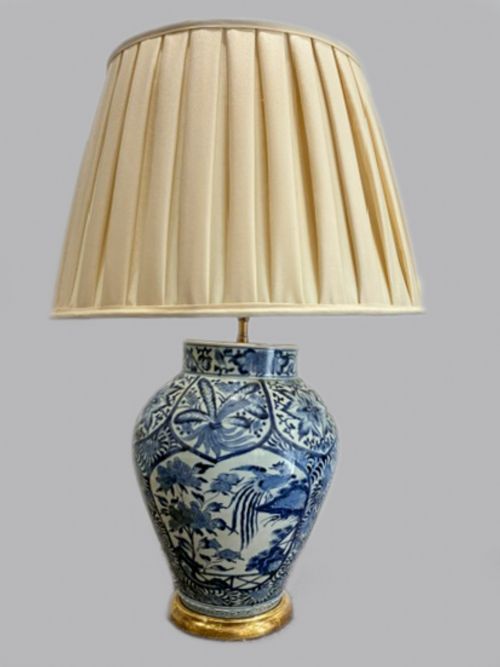

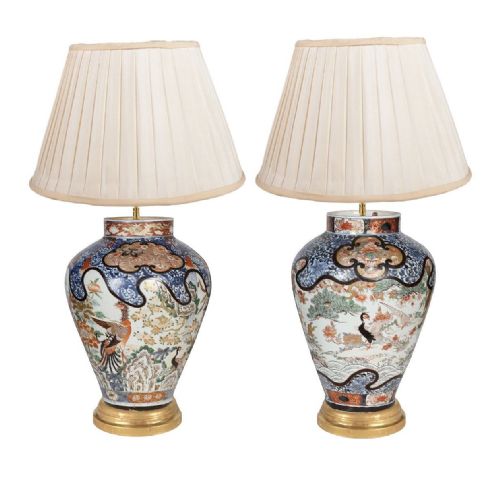


Imari Porcelain Lamps
Imari porcelain lamps bring centuries of Japanese and European craftsmanship into a room through hand-painted vessels mounted for modern lighting.
Imari Porcelain Lamps
Imari porcelain lamps combine historical ceramic vases from Japan with electrical fittings and mounts, creating functional table lamps for the home. These pieces typically originate from the seventeenth, eighteenth, and nineteenth centuries, spanning the Edo and Meiji periods.
Forms range from spill vases to larger baluster vessels, reflecting the diverse output of Japanese kilns over three hundred years. Each item retains the distinctive cobalt blue and iron red palette characteristic of the tradition.
How they were made
The foundation of every piece is hard-paste porcelain, thrown and fired in Japanese kilns before receiving hand-painted decoration in iron red, cobalt blue, and gilt. Artisans applied pigments directly to the glazed surface or beneath the glaze depending on the workshop and period.
Conversion into lamps involved drilling the ceramic body or securing it with metal mounts such as brass, wood, giltwood, or ormolu to accommodate electrical hardware. Fabric and silk shades complete the assembly, resting on frames fitted to the top of the vessel.
Several centuries ago, someone looked at a fine Japanese vase and decided the best way to enjoy it was reading by its light.
What varies in quality
The calibre of the porcelain painting dictates the visual strength of the piece, with finer examples displaying precise brushwork and balanced compositions. Early seventeenth and eighteenth-century specimens often command attention for their historical depth and the clarity of the cobalt underglaze.
The nature of the metal mounting also influences the overall standard, distinguishing simple utilitarian adaptations from elaborate French ormolu or giltwood additions. Matched pairs require uniformity in both the ceramic bodies and the accompanying mounts to achieve visual harmony.
Fukagawa
The Imari Porcelain Lamps Glossary
- Imari
- A style of Japanese porcelain named after the port from which wares were shipped to Europe. It is traditionally characterised by a palette of cobalt blue, iron red, and gilt.
- Arita
- The Japanese town and surrounding region in Hizen province where porcelain production began in the early seventeenth century. Kilns here produced the vast majority of wares exported to the West.
- Ormolu
- Gilt bronze mounts used extensively in French furniture and decorative arts from the eighteenth century onwards. Makers applied these to Asian porcelain vases when converting them into decorative lamps.
- Edo Period
- A division of Japanese history running from sixteen hundred and three to eighteen hundred and sixty-eight. Many of the ceramic vessels mounted as lamps originate from this era of internal peace and artistic development.
- Meiji Period
- The era in Japanese history spanning from eighteen hundred and sixty-eight to nineteen hundred and twelve. Pieces from this time demonstrate the continued export output and evolving decorative styles of Japanese kilns.
Imari Porcelain Lamps: Frequently Asked Questions
Are imari porcelain lamps antique?
Many of these lamps incorporate ceramic vessels dating from the seventeenth, eighteenth, and nineteenth centuries. The original vases were created centuries before being converted into functional lighting.
Electrical components and mounts are generally twentieth-century additions or later adaptations made to accommodate modern domestic use while preserving the antique ceramic body.
How do I identify Arita porcelain?
Arita porcelain is identified by its dense white body, clear glaze, and the specific iron-red and cobalt-blue pigment combination typical of Hizen province kilns. These wares formed the basis of Japanese export ceramics during the Edo period.
Examining the foot ring and unglazed clay areas provides further clues regarding the age and origin of the vessel before its conversion into a lamp.
Can I find matched pairs?
Matched pairs of lamps appear frequently among nineteenth and eighteenth-century examples. These sets share identical ceramic dimensions, palette, and decorative motifs.
Finding a symmetrical pair is particularly valued by collectors who wish to place them on matching sideboards or mantelpieces.
What styles of mounts are used?
Mounts range from simple brass collars to elaborate French ormolu and giltwood structures applied during European conversions. These additions secure the electrical fittings and elevate the visual presence of the vase.
French nineteenth-century examples often feature decorative ormolu bases that complement the traditional red and blue Japanese pigments.