
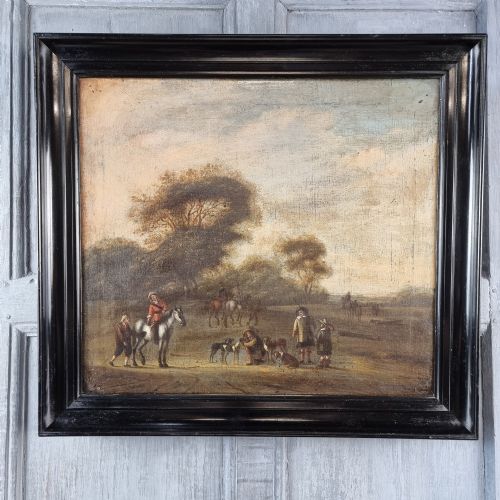
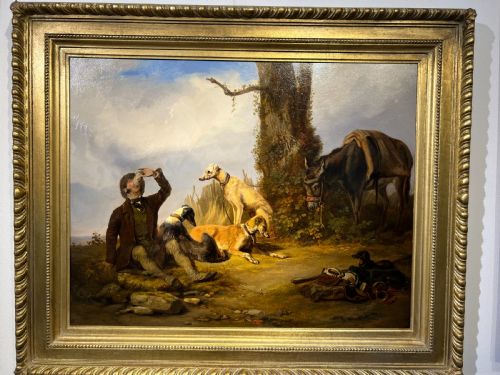


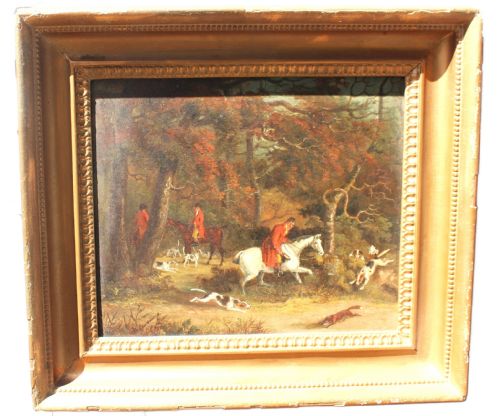
Hunting Hound Oil Canvas
These hunting hound oil canvas works capture the movement and drama of the chase across centuries of sporting art.
Hunting Hound Oil Canvas
A hunting hound oil canvas brings canine subjects and equestrian pursuits into the interior, spanning periods from the late seventeenth century to the mid twentieth century. Buyers encounter Victorian sporting art and traditional British sporting scenes alongside French works and Dutch Golden Age influences. These oil paintings depict hounds in landscapes, winter snow, farmyards, and tavern interiors.
Makers and subjects intertwine in these works, recording specific packs like the Berkeley Hunt alongside anonymous pastoral landscapes. The compositions document the working relationship between huntsmen, attendants, ponies, and their hounds. Each hunting hound oil canvas serves as a historical record of canine portraiture and rural tradition.
Pigment and support in hunting hound oil canvas
The physical foundation of a hunting hound oil canvas relies upon oil paint applied to woven textile supports stretched over wooden frames. Artists built up their compositions using rich oil pigments that allowed for fine detail in the depiction of animal coats, landscapes, and winter snow. Gilt wood and gilt frames frequently enclose these works, providing a decorative border that complements the palette of the painting.
Techniques varied from loose brushwork capturing rapid movement in the field to precise portraiture focusing on the anatomy of individual dogs. Painters utilised oil paint to achieve depth in the coats of hounds and the shadows of woodland or farmyard settings. The durability of oil on canvas ensured that these sporting scenes survived across generations of handling and display.
Distinctions in execution and condition
The standard of a hunting hound oil canvas rests upon the anatomical precision of the animals and the handling of light within the landscape. Master artists render the musculature, tension, and coat texture of hounds with acute observation, whereas lesser works rely on formulaic postures and flat backgrounds. The integration of dogs, horses, and human figures within a coherent spatial arrangement separates accomplished sporting art from basic illustration.
Material preservation also defines the calibre of these pieces, distinguishing untouched canvases from those burdened by heavy restoration or relining. The harmony between the painting and its original gilt wood frame contributes significantly to the integrity of the object. Works bearing the distinct hand of a known animal artist typically demonstrate superior compositional confidence.
Sir Edwin Henry Landseer·George Wright·Colin Graeme Roe·Fannie Moody·Jules Chardigny·John Sanderson-Wells·Alfred Duke·Henri Schouten·Ludolf de Jongh·Heywood Hardy·Guillaume Urban Régamey·George Goodwin Kilburne·Henry Frederick Lucas-Lucas·Edward B Herberte·Wilfred Bailey
The Hunting Hound Oil Canvas Glossary
- Oil on Canvas
- A painting medium consisting of pigments bound with drying oils applied to a woven fabric support. This combination allows for rich colour blending and longevity.
- Victorian Sporting Art
- Artwork created during the nineteenth century focusing on equestrian subjects, shooting, and fox hunting. These pieces document rural pursuits and animal portraits popular at the time.
- Gilt Wood
- Wood decorated with gold leaf or gold paint, frequently used for framing antique paintings. It adds reflective warmth and ornamental weight to the presentation.
- Foxhound
- A breed of hound trained to hunt foxes by scent, featured prominently as the central subject in traditional sporting canvases. Their distinctive markings and grouping provide dynamic movement in compositions.
Hunting Hound Oil Canvas: Frequently Asked Questions
What periods do these paintings cover?
The listings span from the late seventeenth century through the Victorian era and into the mid twentieth century. Nineteenth century works form the largest group.
Examples range from Dutch Golden Age influences to mid century portraits of foxhounds.
How were these artworks framed originally?
Many works are housed in decorative gilt wood or gilt frames designed to enhance the visual depth of the oil painting. These frames range from simple wooden mouldings to elaborate gilt structures.
The framing often reflects the period of the canvas itself.
Are all the dogs foxhounds?
While foxhounds feature heavily in hunting scenes, the selections also include setters, Grand Griffon Vendéens, and general hunting dogs. Some canvases focus on individual animal portraits.
Other works depict broader packs in motion across winter snow or farmyard settings.
Where were hunting hound scenes set?
Artists placed their subjects in diverse rural environments including open landscapes, woodland edges, farmyards, and tavern interiors. Winter snow settings frequently highlight the contrast of dark hounds against white ground.
Coaching scenes and stagecoach journeys also provide the backdrop for the chase.