





Hung Pendulum Clock
A hung pendulum clock is a weight- or spring-driven timekeeper mounted directly to a wall, offering visible mechanics and period elegance.
Hung Pendulum Clock
A hung pendulum clock encompasses wall-mounted timepieces driven by weights or springs, designed to keep time while displaying a swinging pendulum. The selection here leans heavily towards Victorian and nineteenth-century examples alongside French and English wall clocks.
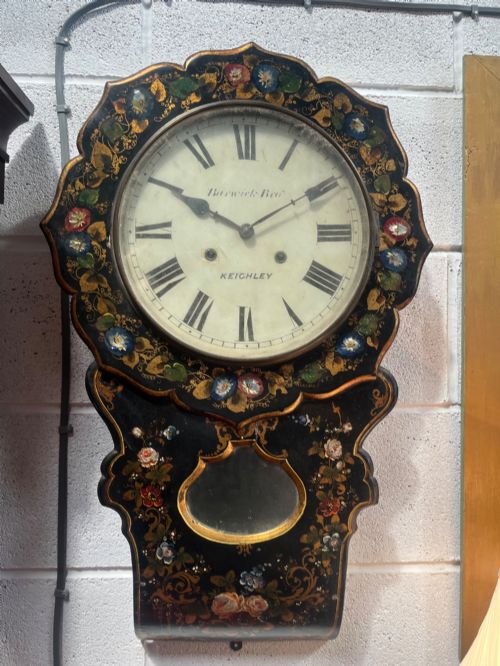
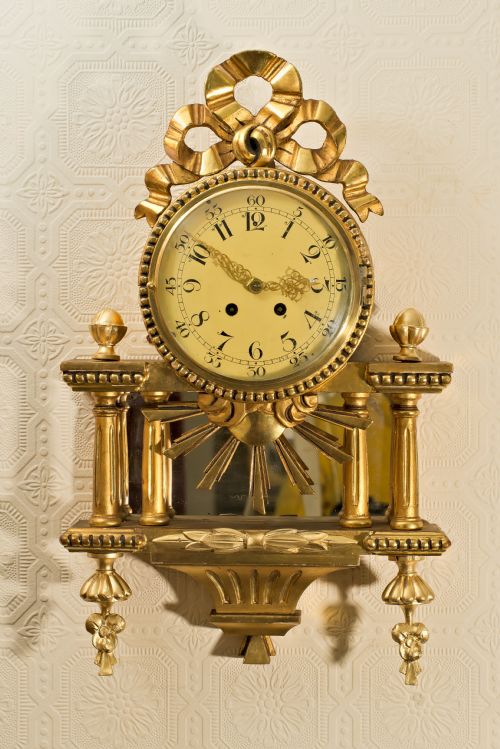
Buyers encounter various regional styles, including ornate giltwood cartel clocks, walnut Vienna wall clocks, and robust mahogany drop-dial designs. These pieces range from simple domestic timekeepers to elaborate Louis XVI ormolu creations.
Origins stretch across France, England, and Sweden, utilising forms like the Comtoise and the Gustavian Neoclassical aesthetic. Each style reflects the interior tastes of its specific decade, from eighteen-eighty to nineteen-forty.
Materials and construction
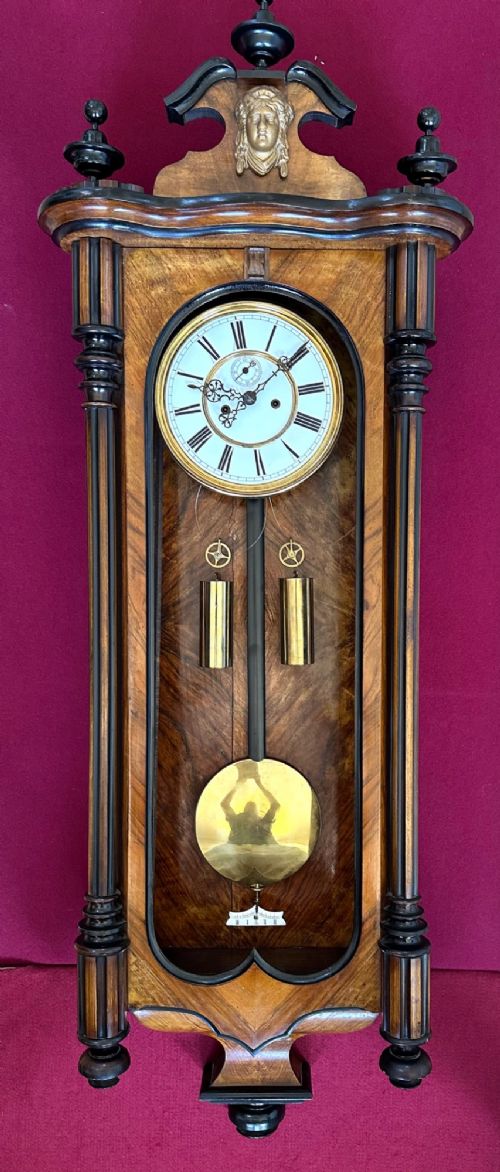
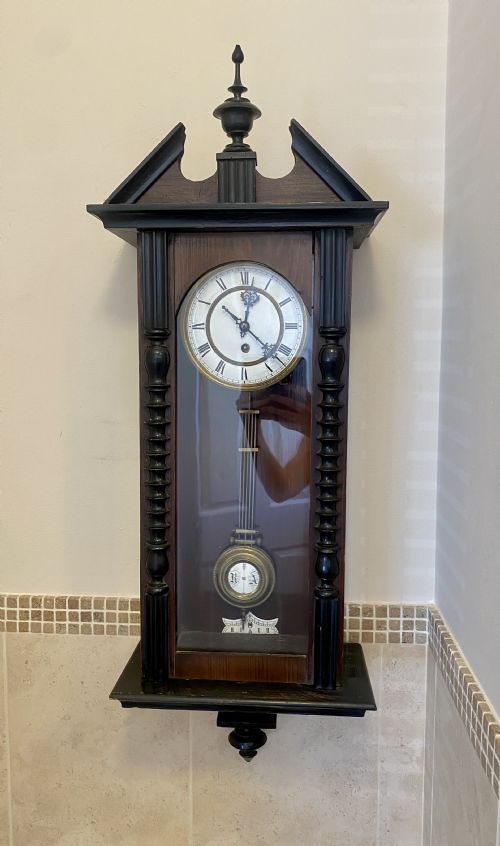
Cases utilise timber frames of mahogany, walnut, oak, ebonised wood, and rosewood, often paired with carved giltwood or cast ormolu and bronze. Glazed doors protect the dial while revealing the movement and the swinging pendulum within.
Dials feature enamel or painted metal with distinct chapter rings, driven by brass movements that power striking or chiming mechanisms. Comtoise and Vienna wall clocks rely on precise metal gearing housed within robust wooden or metal wall cases.
Hung Pendulum Clock Retail Price Guide 2026
Typical asking prices for hung pendulum clock among the pieces listed under this phrase on Sellingantiques today, from the lower quarter to the upper quarter. They describe what is for sale here now, not the wider market.
The listings span the nineteenth and twentieth centuries, employing materials from brass and glass to walnut, mahogany, and giltwood.
Distinctions in quality
Quality rests upon the crispness of the timber carving, the depth of the giltwood or ormolu casting, and the preservation of the painted enamel dial. Fine nineteenth-century Vienna and cartel clocks show meticulous attention to case detail and balanced proportions.
Movements signed by known makers or structured with superior brass engineering separate standard domestic timepieces from exceptional examples. The integration of striking and chiming mechanisms indicates a higher tier of horological ambition.
WETTERSTRANDS·JOHANN BAPTIST BEHA·Perivale of England
The Hung Pendulum Clock Glossary
- Cartel clock
- A wall clock housed in an ornate frame made of giltwood, bronze, or ormolu. These decorative timepieces were particularly popular in French interior design.
- Drop-dial
- A wall clock featuring an extended case beneath the dial to accommodate a longer pendulum drop. This configuration is frequently seen in nineteenth-century English mahogany designs.
- Vienna regulator
- A precision wall clock developed in Austria, celebrated for its accurate movement and elegant walnut or ebonised wood case. They often display the pendulum and weights visibly through glass panels.
- Comtoise clock
- A traditional weight-driven wall clock originating from the Franche-Comté region of France. These pieces are recognised by their large dials and pressed brass front surrounds.
- Ormolu
- Gilt bronze ornamentation applied to furniture and clock cases. It provides a bright golden finish popular in Louis XVI and revival styles.
Hung Pendulum Clock: Frequently Asked Questions
How do I hang a hung pendulum clock safely?
These wall clocks require secure fixing directly into a solid wall stud or using heavy-duty wall anchors capable of supporting the combined weight of the timber case and internal movement.
Ensure the clock is levelled precisely on the wall so the pendulum swings with an even beat and the escapement functions correctly.
How do I wind a striking wall clock?
Winding involves using a matching key inserted into the winding holes on the enamel dial to tension the springs or raise the weights.
Care must be taken not to over-wind the movement, and striking trains should be allowed to complete their sequence without manual interference.
Where were most nineteenth-century wall clocks made?
Production centres were spread across Europe, with significant output coming from French workshops, English cabinet makers, and Austrian horologists.
Each region developed distinct visual characteristics, such as the robust mahogany drop-dial in England and the elaborate gilt cartel in France.