


Hung Crystal Lighting
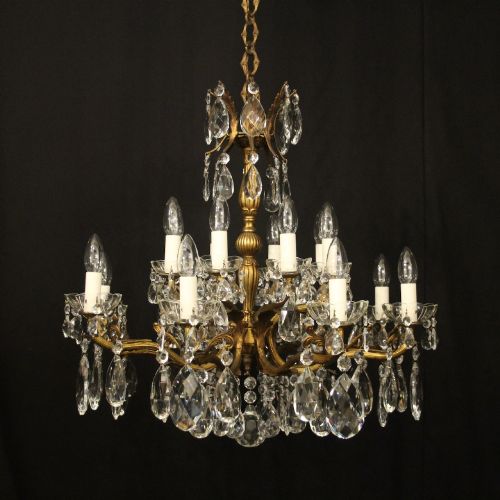
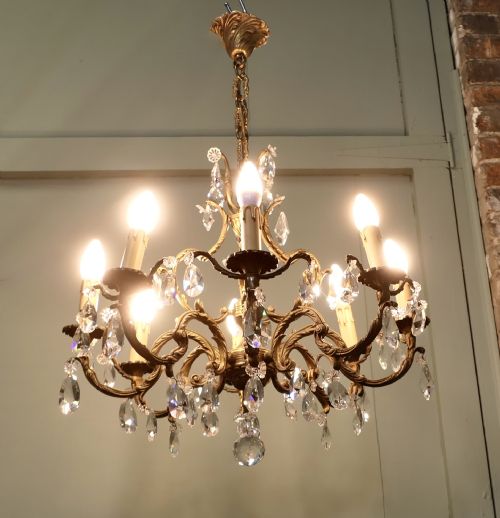
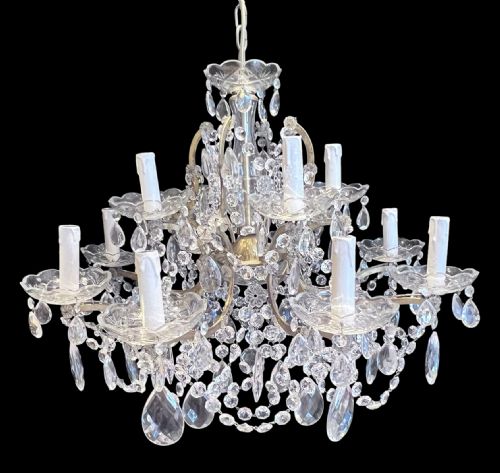
These hung crystal lighting fixtures catch and scatter light through cut glass, brass and gilded bronze, bringing genuine antique brilliance into a room.
Hung Crystal Lighting
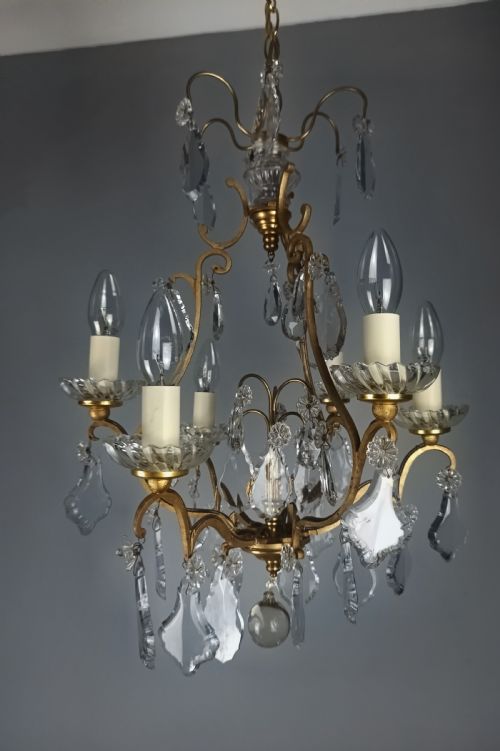
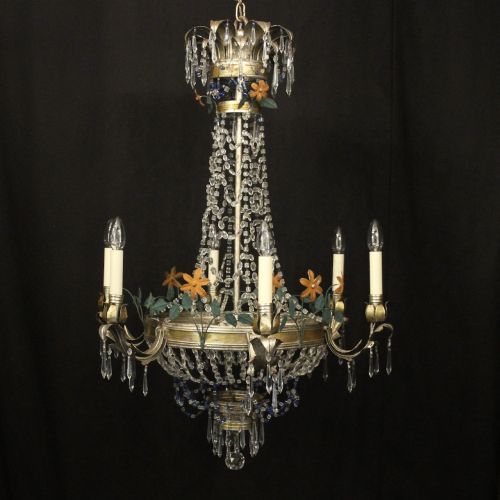
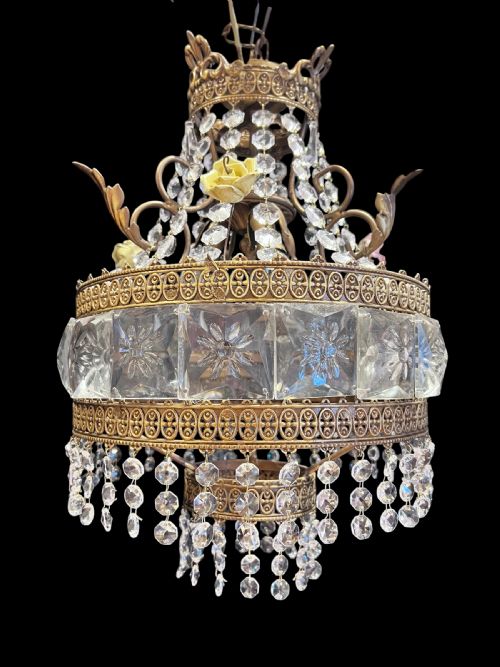
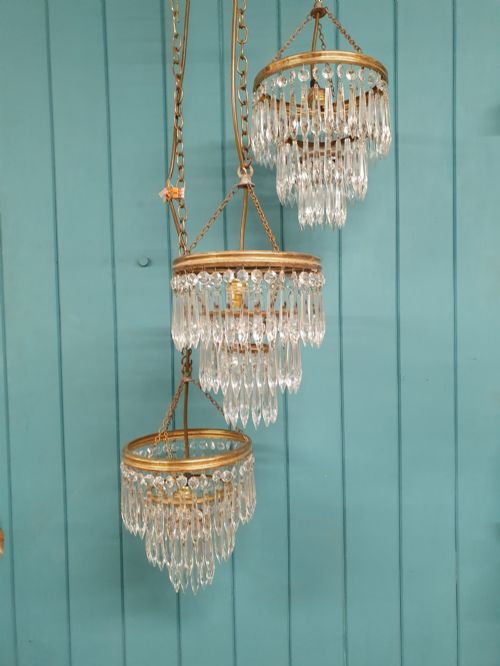
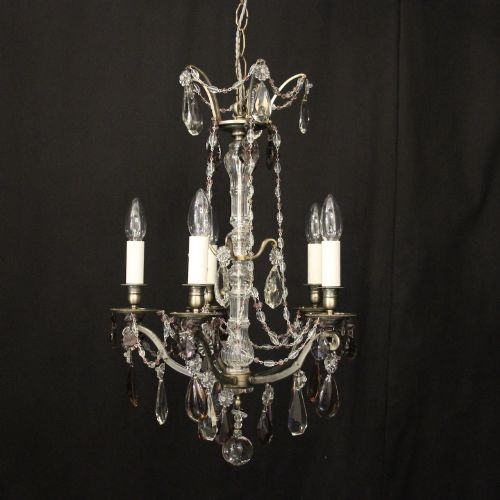
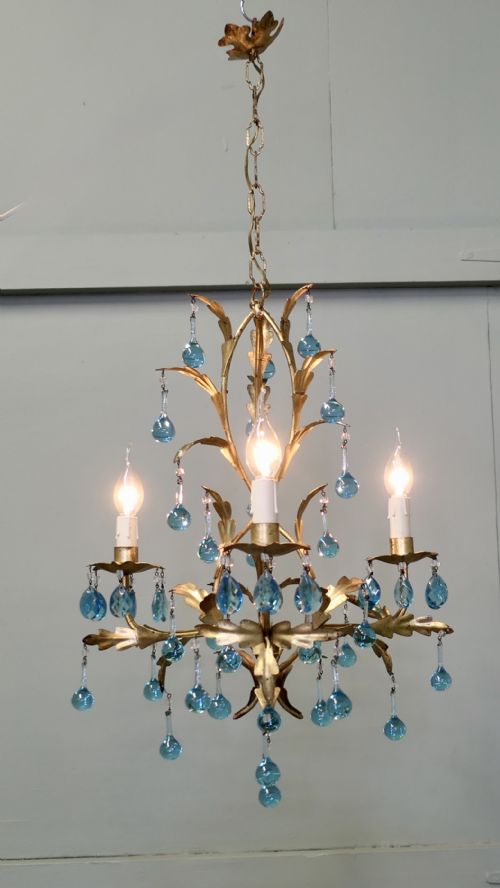
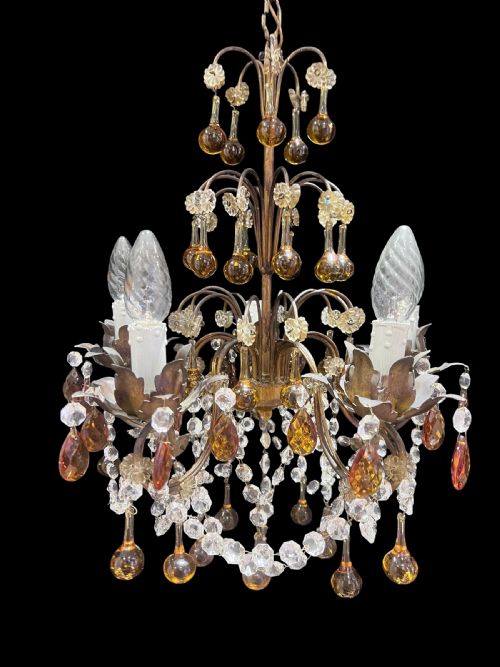
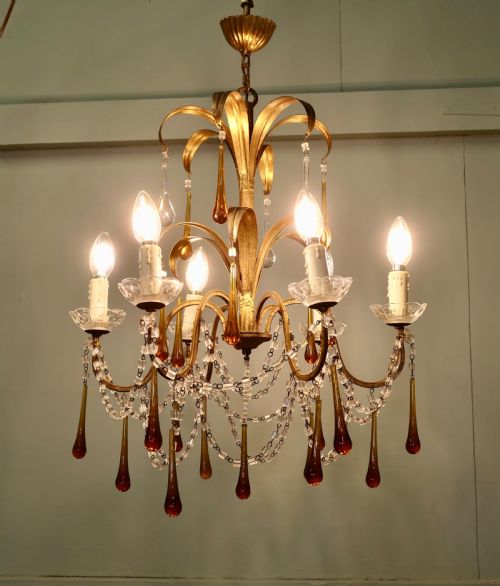
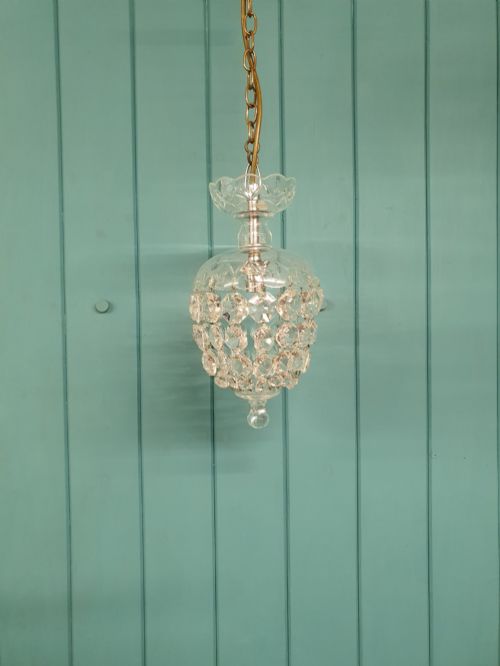
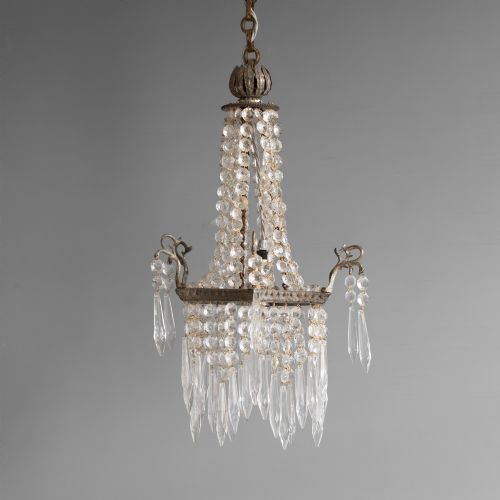
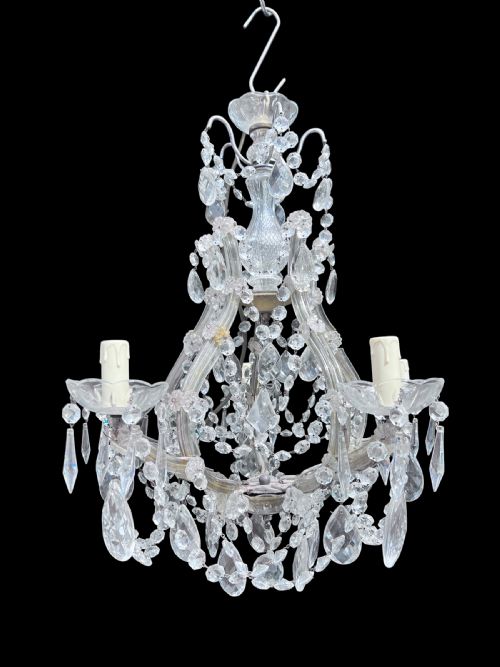
Forms include birdcage, spike, dome top, and waterfall configurations, alongside candelabras and ceiling lights. Many examples incorporate coloured crystal elements such as amber teardrops, mauve fruits, and blue prisms, often paired with tolewear, iron, or gilt metal frames.
How they were made
The construction relies on metal frameworks of brass, gilt bronze, iron, and chrome that support arrangements of glass and cut crystal. Frames are cast, gilded, or painted, providing the structural skeleton for numerous suspended lustres, drops, and beads.
Individual crystal and glass components are hand-cut or moulded before being wired or pinned to the metal armature. Coloured glass fruits, grapes, and porcelain flowers are integrated alongside traditional clear prisms to refract illumination.
Hung Crystal Lighting Retail Price Guide 2026
Typical asking prices for hung crystal lighting among the pieces listed under this phrase on Sellingantiques today, from the lower quarter to the upper quarter. They describe what is for sale here now, not the wider market.
Several chandeliers come loaded with glass apples, pears, and grapes, proving that lighting historically doubled as an indoor orchard.
What varies in quality
The distinction between tiers rests upon the complexity of the metalwork and the depth of the crystal cutting. Heavier gilt bronze and finely cast brass frames demonstrate superior craftsmanship compared to simpler iron or plated alternatives.
The richness of the hanging elements also defines the standard, with heavy cut crystal and varied coloured glass drops creating greater optical depth. The presence of elaborate forms like waterfall tiers or porcelain floral details elevates the overall execution.
The Hung Crystal Lighting Glossary
- Tent chandelier
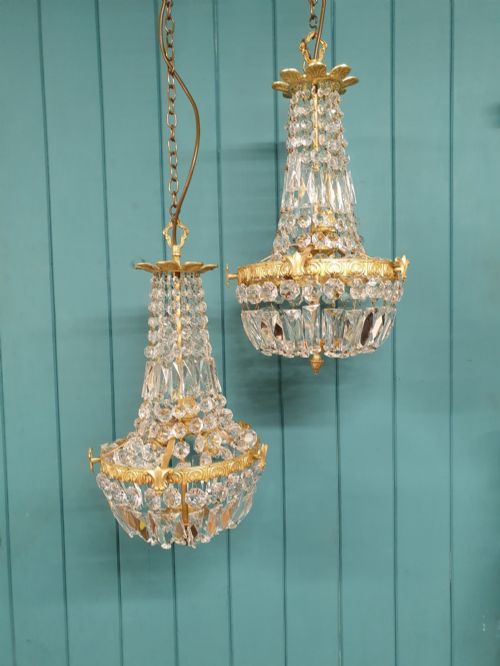
- A lighting fixture featuring an upper canopy of gathered glass beads falling downwards to a central ring. This design directs visual weight towards the perimeter of the frame.
- Lustre
- A cut glass or crystal pendant hung from a chandelier or candelabrum. These elements amplify illumination by reflecting ambient and direct light.
- Waterfall
- A tiered arrangement of hanging crystals that cascades downward in overlapping rows. This configuration creates a dense sheet of refractive glass.
- Birdcage
- A rounded skeletal metal frame enclosing internal candle arms or lights. The structure takes its descriptive shape from traditional aviaries.
- Tolewear
- Painted or lacquered sheet metal used in decorative light fixtures. It often introduces polychrome colour into the metal components of the frame.
Hung Crystal Lighting: Frequently Asked Questions
How do I hang a heavy crystal chandelier safely?
Suspension requires securing the fixture directly to ceiling joists using an appropriate metal hook and electrical box rated for the weight. Professional installation ensures the structural integrity supports the combined mass of the metal frame and glass components.
Electrical wiring must be inspected to match modern standards, particularly when adapting older fixtures. Grounding the metal framework protects against faults while preserving the original aesthetic.
What rooms suit a French tent chandelier best?
Dining rooms and living spaces provide suitable environments where downward-directed illumination and refractive sparkle create a focal point. Ceiling height dictates the appropriate drop, allowing the fixture to hang freely without obstructing movement.
Smaller bedrooms or hallways accommodate compact tent or spike variants effectively. These smaller formats deliver the same decorative glass work on a scale appropriate for lower ceilings.
How should I clean hung crystal lighting?
Dusting the metal armature and glass elements regularly prevents grime accumulation on the cut surfaces. Using a mild solution applied with a soft cloth maintains the clarity of the crystal drops without damaging the gilt or painted finishes.
Detailed cleaning often involves removing individual lustres to wash them independently before reattaching them to the frame. This method prevents moisture from reaching old internal wiring and structural joints.
How do I date a crystal ceiling light?
Dating relies on examining the fastening methods, metal composition, and wiring styles present in the fixture. Early twentieth-century pieces often display specific casting techniques and coloured glass combinations characteristic of the Edwardian and Art Nouveau eras.
Nineteenth-century examples typically feature heavier bronze casting and hand-cut crystal drops with distinct mineral impurities. Comparing the proportion of glass beads to the metal frame helps place the piece within a specific stylistic decade.