

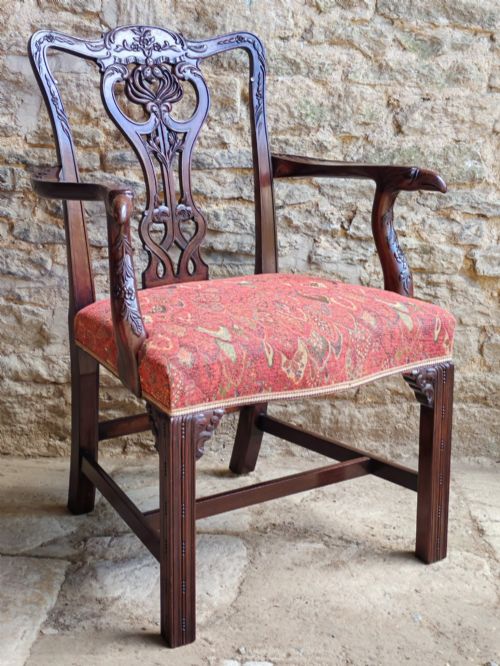
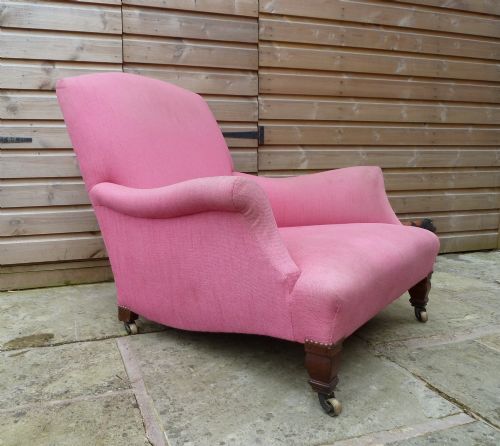
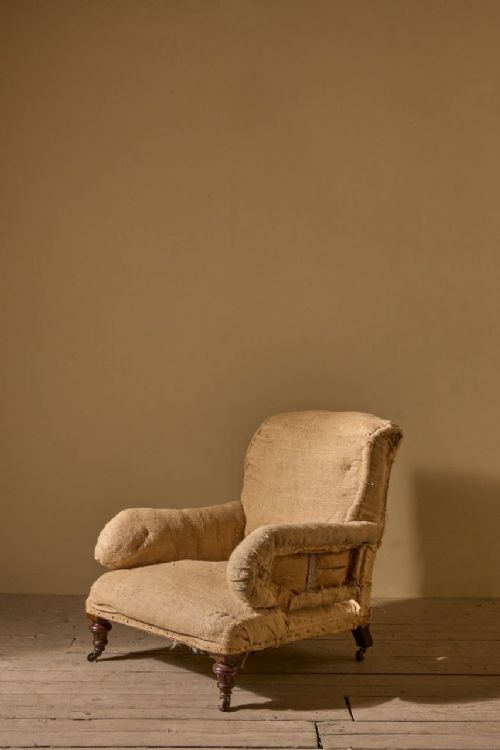
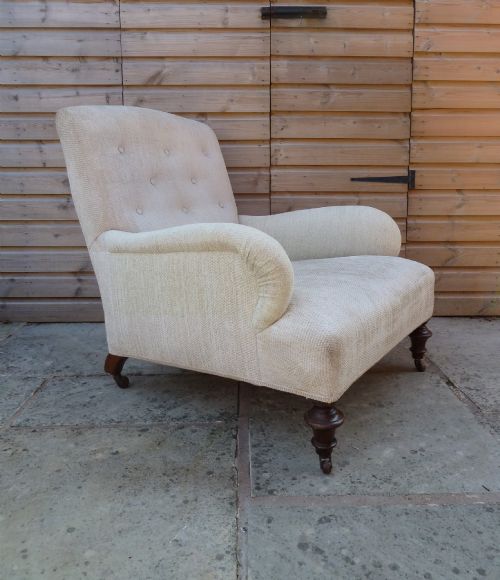



Howard Arm Chair
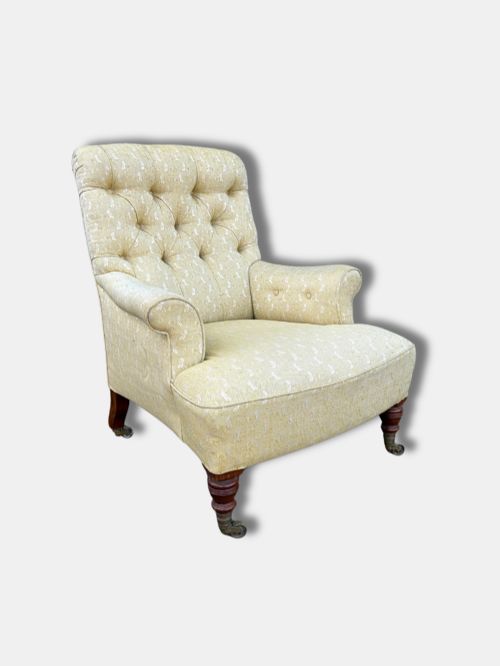
A howard arm chair offers deep-seated English country house comfort, combining generous proportions with traditional upholstery.
Howard Arm Chair
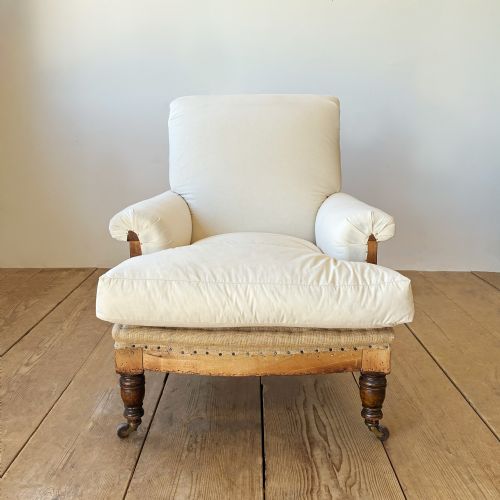
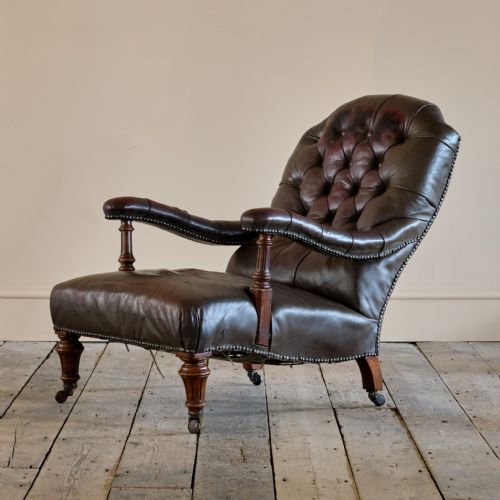
A howard arm chair is a substantial seat defined by low arms, deep proportions, and a relaxed silhouette associated with English country houses. These pieces originate predominantly from the nineteenth century and the Edwardian period, capturing a specific domestic comfort.
The version most commonly met on this page is the upholstered armchair, often attributed to the maker Howard and Sons or built in the distinct Howard style. Such seating ranges from standard club armchairs to large open armchairs and elbow chairs.
Makers such as Trollope and Sons also appear alongside pieces bearing the Grafton or Bridgewater descriptor. The framing utilises timber, mahogany, and hardwood beneath layers of fabric, calico, or velvet.
Materials and construction
Frames are constructed from sturdy timbers including mahogany, walnut, and general hardwood to support the considerable weight of the seating. Brass details occasionally appear on castors or structural fittings.
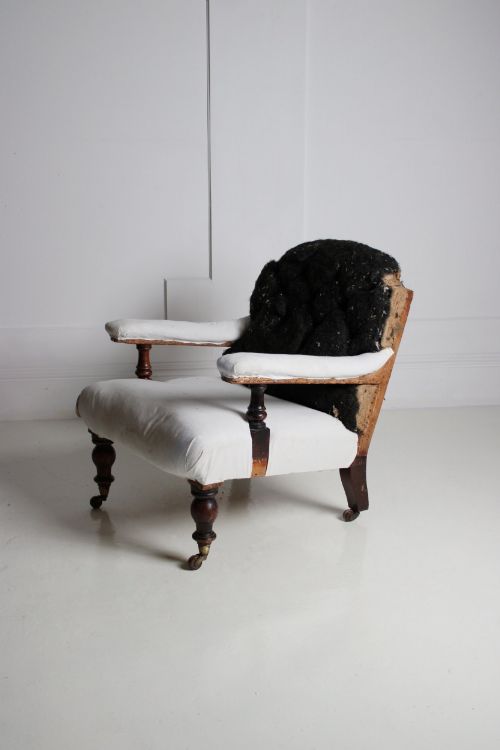
Upholstery relies on foundational layers of calico and ticking beneath top covers of fabric, velvet, or kilim. This traditional layering creates the characteristic depth and give of the seating.
Howard Arm Chair Retail Price Guide 2026
Typical asking prices for howard arm chair among the pieces listed under this phrase on Sellingantiques today, from the lower quarter to the upper quarter. They describe what is for sale here now, not the wider market.
Several examples retain their original heavy ticking fabric, proving that interior comfort has remained remarkably consistent since the nineteenth century.
Distinctions in quality
The standard of a howard arm chair rests on the integrity of its wooden frame and the preservation of its original upholstery techniques. Pieces retaining early ticking or authentic calico demonstrate a higher level of historical intactness.
Proportions also dictate distinction, with large country house models and specific Bridgewater or Grafton forms commanding attention. The subtlety of the maker's stamp or the pedigree of firms like Howard and Sons separates workshop standard from general revival pieces.
Howard and Sons·Trollope and Sons
The Howard Arm Chair Glossary
- Bridgewater armchair
- A specific upholstered chair design featuring low, rolled arms and a deep seat. This form became a staple of nineteenth-century comfort.
- Calico
- A plain-woven cotton fabric used as the inner lining and base layer for traditional upholstery. It holds the stuffing tight before the final decorative cover is applied.
- Grafton style
- An armchair design variant associated with nineteenth-century seating aesthetics. It shares the generous proportions of the broader Howard aesthetic.
- Ticking
- A heavy, tightly woven cotton or linen fabric traditionally used to contain feather or down stuffing. Original ticking adds significant historical context to a piece.
- Elbow chair
- A seating form featuring supportive arms positioned for relaxed posture. These pieces often accompany larger suites or serve as standalone reading chairs.
Howard Arm Chair: Frequently Asked Questions
What defines a howard arm chair?
A howard arm chair is characterised by its deep seat, low arms, and substantial nineteenth-century proportions. These pieces were designed for relaxed sitting in country house drawing rooms.
Makers such as Howard and Sons popularised this specific balance of robust wooden framing and sprung comfort. The form remains a benchmark for traditional English seating.
How do I identify a Howard and Sons piece?
Authentic pieces often feature maker stamps on the castors, legs, or structural frame members. The internal construction relies on traditional materials like calico and ticking.
Stylistic markers include the characteristic low rolling arms and generous depth. Comparing the piece to documented nineteenth-century examples helps confirm attribution.
Where were these armchairs used?
These armchairs served primarily as comfortable seating in nineteenth and early twentieth-century English country houses. They occupied libraries, drawing rooms, and studies.
Their deep proportions and upholstered padding made them suitable for long periods of reading or relaxation. Today, they function similarly in classic domestic interiors.
How should I care for original upholstery?
Preserving original fabric requires gentle vacuuming with a soft attachment to remove dust without stressing the fibres. Avoid direct sunlight to prevent fading of velvet, kilim, or standard textiles.
For pieces retaining early ticking or calico underneath, professional textile conservation is recommended. Keeping the underlying hardwood and brass components clean ensures structural stability.