
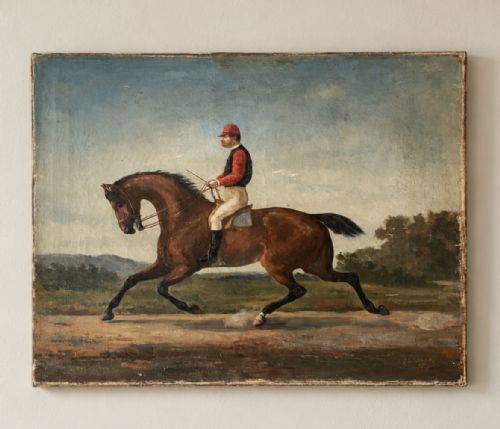
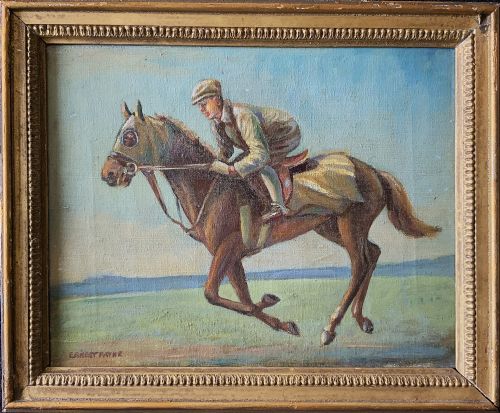
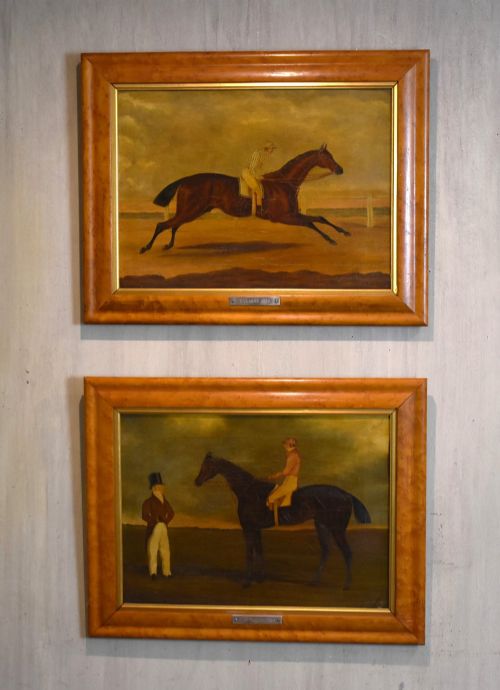


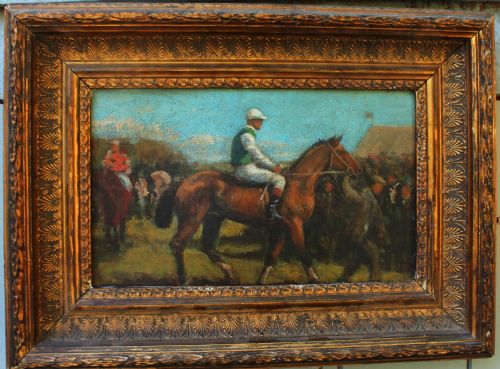


Horse and Jockey Painting
These horse and jockey painting works capture the speed and tension of the turf, offering a direct window into the history of racing.
Horse and Jockey Painting
A horse and jockey painting depicts the thoroughbred and its rider in various settings, from the paddocks and the starting line to the intensity of the finish. Buyers seeking this subject will encounter works ranging from Victorian sporting art to mid-century modern expressions.
The selections span oil paintings on canvas, framed prints, and watercolours. Victorian pieces often document specific named winners with celebrated jockeys up, while later twentieth-century works lean towards impressionism and dynamic field studies.
Originating largely from British and European hands, these paintings reflect changing artistic approaches to speed and light across the nineteenth and twentieth centuries.
Materials and Techniques
Oil paint applied to canvas remains the primary medium for these works, allowing artists to build rich textures in the coats of the horses and the silks of the jockeys. Wood frames, often gilt, complement the traditional oil works.
Paper and glass support works in watercolour, gouache, and painted prints. These water-based and printed formats utilise finer lines to capture the fleeting movement of the race.
Canvas and paper serve as the primary supports, framed in wood and gilt.
Evaluating Quality and Execution
Quality rests upon the artist's command of equine anatomy and the convincing depiction of motion. Stronger pieces convey the muscular tension of the horse and the precise posture of the rider without stiffness.
Provenance and subject matter also shape the standing of a work. Paintings that identify historic thoroughbreds and notable jockeys by recognised artists command greater interest than anonymous school pieces.
Ernest Payne·John Frederick Herring Snr·Alfred Munnings·John Rattenbury Skeaping·Gabriel Dauchot·Alfred Wheeler·John Atkinson·Isaac Cullin·John Parker Davis·Frank Giggs
The Horse and Jockey Painting Glossary
- Equestrian realism
- A style focused on the accurate and detailed portrayal of horses and racing scenes. Artists working in this manner prioritize correct proportions and authentic trackside atmosphere.
- Gouache
- An opaque water-based medium used on paper. It allows for vibrant colour blocks and fine detail in mid-century works.
- Impressionism
- An art style characterised by relatively small, thin, yet visible brush strokes and an open composition. Works in this vein emphasise accurate depiction of light in motion.
- Paddock
- The enclosure where horses are saddled and paraded before a race. Many studies capture the quiet tension of this pre-race space.
- Silks
- The brightly coloured jackets worn by jockeys to identify the owner of the horse. Painters pay close attention to these specific hues.
Horse and Jockey Painting: Frequently Asked Questions
What periods do these paintings cover?
The works span from the Victorian era through the early twentieth century up to the nineteen-sixties. You will find nineteenth-century oils alongside mid-century gouache and watercolours.
Victorian pieces often lean towards formal sporting portraiture, while later decades embrace impressionist and expressive techniques.
How do I identify named horses and jockeys?
Many paintings include inscriptions on the canvas, stretcher, or frame detailing the horse's name, the jockey, and the racecourse. Titles often record historic triumphs such as Derby winners or royal thoroughbreds.
Look for contemporary documentation or signatures that link the work to documented racing events of the period.
Where should I hang an equestrian painting?
These works suit traditional studies, libraries, or living spaces with classic decor. Their dynamic movement also complements more eclectic mid-century interiors.
Keep them away from direct sunlight to protect oil varnishes and watercolour pigments from fading over time.
What is the difference between an oil study and a finished portrait?
An oil study is often painted quickly to capture light, movement, or composition before a larger work is undertaken. These pieces display looser brushwork and immediate energy.
Finished portraits provide a more formal, highly detailed record of the horse, rider, and owner's racing silks.