





Honey Wood Dresser
A honey wood antique dresser brings warmth to a room through rich timber tones and honest domestic craftsmanship.
Honey Wood Dresser
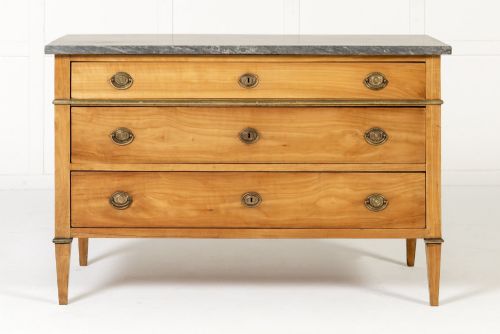
A honey wood antique dresser covers a broad family of storage furniture, including chests of drawers, cottage dressers, and low dresser bases found across the nineteenth and eighteenth centuries. These pieces serve practical household needs while displaying the warm golden and amber tones characteristic of aged timber.
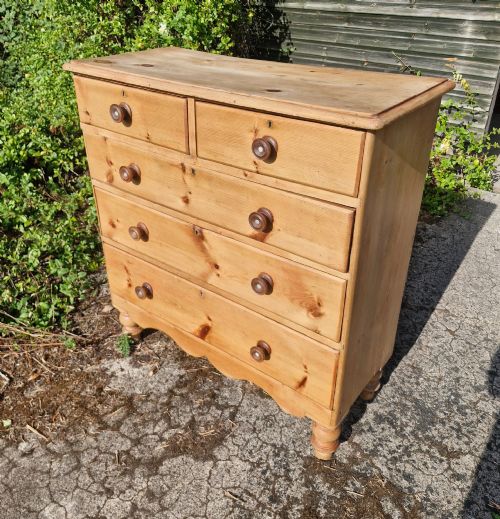
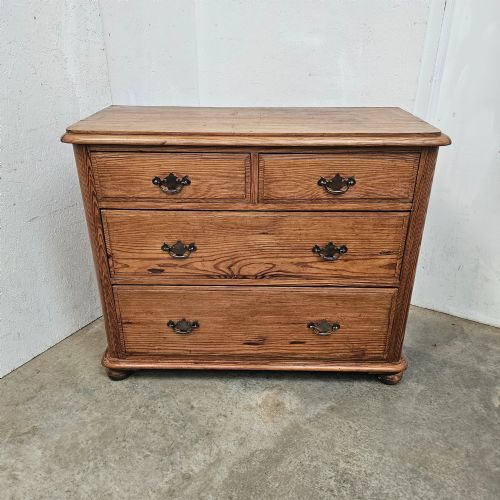
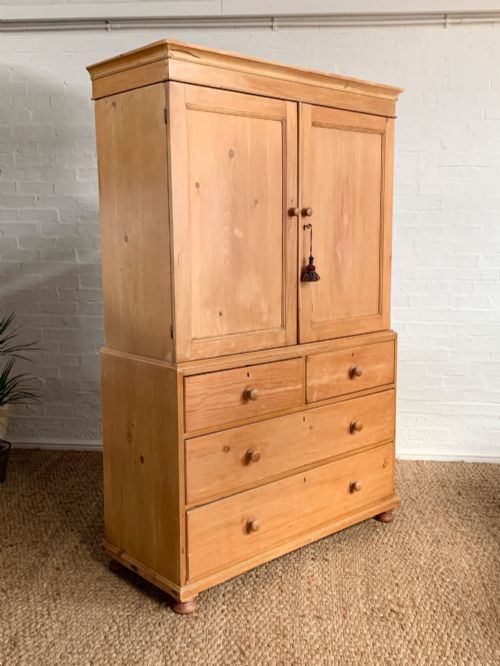
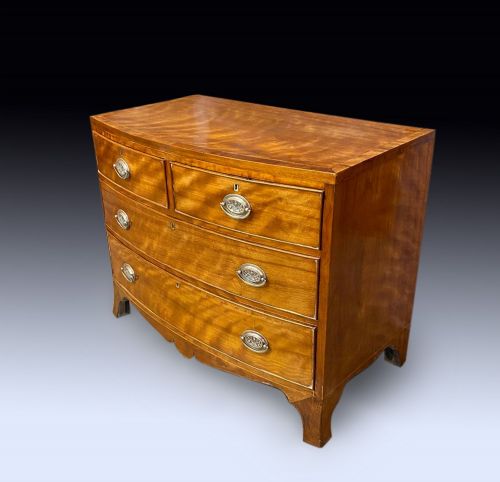
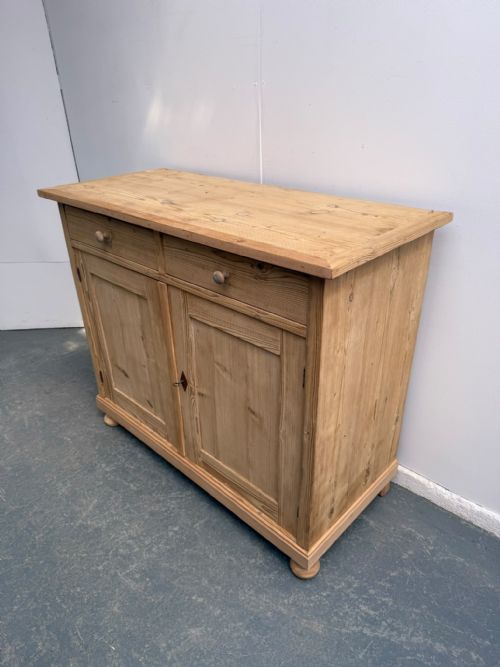
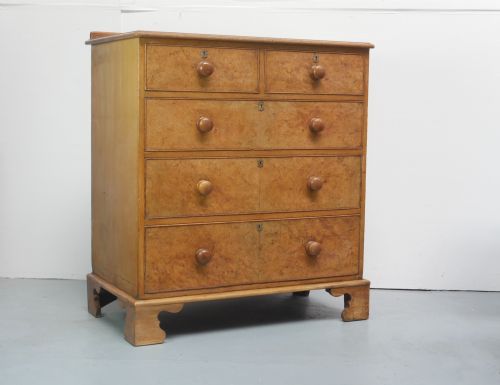
The versions most frequently met on this page are Victorian and nineteenth-century pine chests of drawers, alongside country dressers and occasional satinwood or burr ash pieces. They range from stripped pine cottage furniture to refined bow fronted satinwood chests bearing brass handles.
Origins stretch from English country workshops to French provincial makers, offering various configurations of drawers and cupboard space. Buyers select these items for their utilitarian heritage and the tactile character accumulated over generations of domestic use.
Materials and Construction
Construction relies heavily on solid pine, pitch pine, and satinwood, frequently complemented by brass hardware, iron fittings, and occasional bone details. Workshops shaped these timbers into robust carcases featuring dovetailed drawer construction and panelled doors.
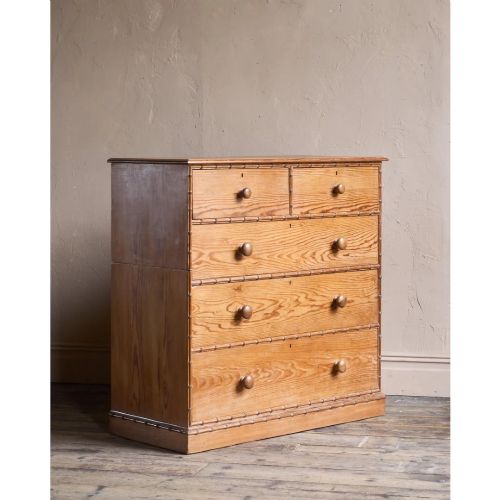
Surface finishes vary from wax and paint to polished satinwood and burr ash veneers, highlighting the natural grain of the wood. Many pieces utilise gallery backs, turned feet, or faux bamboo and hand-painted simulated birch details to achieve distinct regional styles.
Listings span the eighteenth, nineteenth, and early twentieth centuries, featuring woods such as pine, satinwood, burr ash, and pitch pine.
Distinctions in Quality
Quality reveals itself in the selection of timbers, such as figured burr ash, burr elm, or finely grained satinwood, contrasted with standard utility pine. The choice of decorative elements, including brass handles, bone escutcheons, and shaped gallery backs, elevates simpler utilitarian carcases.
Joinery execution distinguishes everyday regional items from finer cabinet work, seen in the precision of drawer dovetails and the integrity of applied veneers. Original surface treatments and untouched patination carry greater desirability among collectors than later stripping or repainting.
Howard and Sons·Gemla Fabrikers
The Honey Wood Dresser Glossary
- Bow fronted
- A cabinet front that curves outward in a convex sweep, often seen on eighteenth-century satinwood chests.
- Dresser base
- The lower section of a kitchen or cottage dresser, typically featuring cupboards and drawers without upper shelving.
- Gallery back
- A raised timber barrier along the rear top edge of a chest of drawers, sometimes fitted with small compartments or rails.
- Satinwood
- A durable, hard timber yielding a lustrous golden-yellow sheen, popular for refined furniture in the eighteenth and nineteenth centuries.
- Pitch pine
- A resinous North American pine variety prized for its strong grain pattern and warm colour, utilised in nineteenth-century furniture.
Honey Wood Dresser: Frequently Asked Questions
How do I date a pine chest?
Dating relies on construction methods, timber preparation, and hardware styles. Hand-cut dovetails and hand-sawn boards typically indicate earlier periods.
Later Victorian pieces often show machine assistance alongside simpler pine construction and standard brass or wooden pull handles.
Are these pieces suitable for daily use?
These items were built for domestic storage and remain robust enough for everyday household service. The spacious drawers and sturdy timber carcases handle clothing and linens reliably.
Care should be taken to maintain stable indoor humidity to protect historic wood joints and wax finishes.
What is the difference between a commode and a chest?
A commode generally refers to a low cabinet or chest of French or continental origin, often featuring decorative wood veneers like burr ash or cherrywood.
An English chest of drawers tends to be taller and more utilitarian, constructed frequently from pine or satinwood for bedroom storage.
How should I clean a waxed pine surface?
Maintenance requires gentle dusting with a dry or slightly damp cloth followed by occasional application of quality beeswax. Avoid modern silicone polishes that can degrade the traditional finish over time.
Preserving the natural patina depends on keeping the timber nourished without stripping its historic character.