

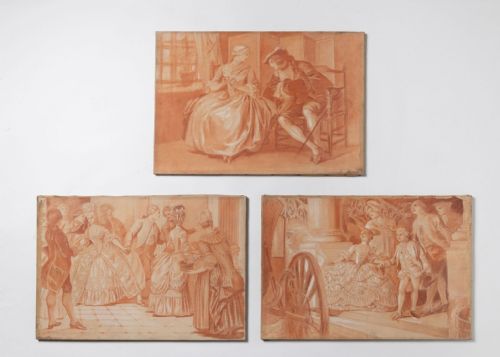


Historical Genre Scene
A historical genre scene brings domestic intimacy and narrative drama into a room through Victorian and earlier figure painting.
Historical Genre Scene
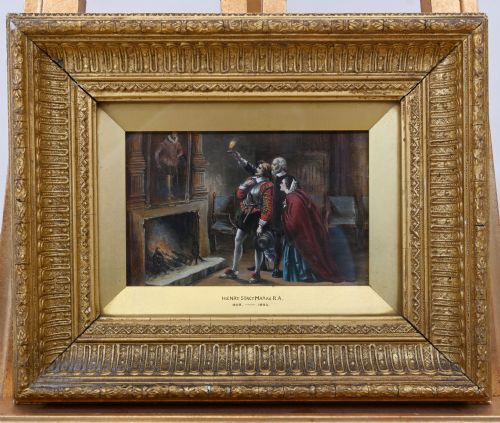
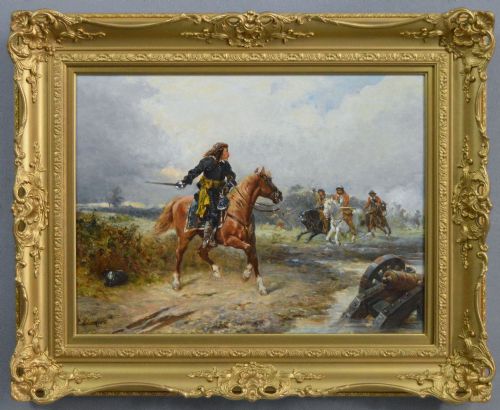
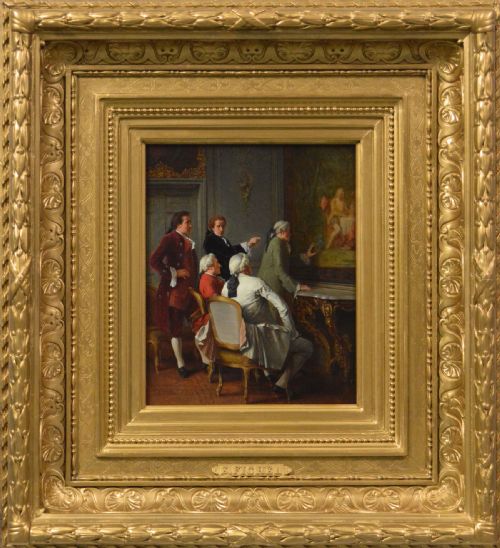
A historical genre scene depicts narrative moments from everyday life or historical episodes, capturing domestic interiors, social gatherings, and quiet interiors. The pieces on this page span the eighteenth, nineteenth, and early twentieth centuries, moving from intimate domestic watercolours to large academic oils.
Subjects range from military figures like Cavaliers and Roundheads to domestic visits, tea parties, and fireside rests. These artworks record human interaction and historical costume through the eyes of academic and Victorian painters.
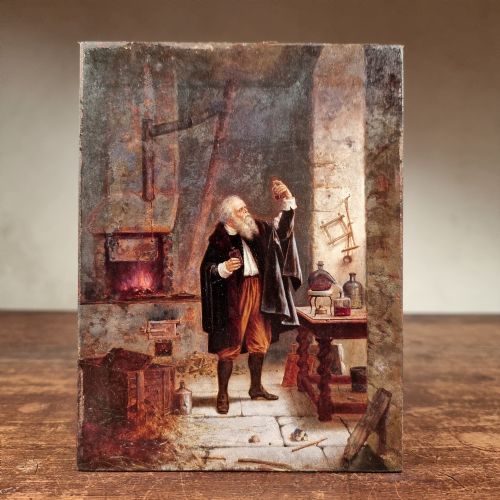
Formats include framed oil paintings on canvas or panel, delicate watercolours on paper, and painted papier-mâché wall plaques. Buyers encounter works produced across British, French, and Italian schools of painting.
Materials and Technique
Artists built these compositions primarily using oil paint on canvas or wooden panel, creating rich depth and colour through layered glazes. Watercolours on paper offer a lighter, immediate touch, often finished with precise ink or pencil underdrawing.
Frames are constructed from wood and finished with gold leaf or giltwood, framing the painted surface with moulded ornament. Papier-mâché serves as a sturdy substrate for painted wall plaques, providing a smooth base for detailed miniature work.
Historical Genre Scene Retail Price Guide 2026
Typical asking prices for historical genre scene among the pieces listed under this phrase on Sellingantiques today, from the lower quarter to the upper quarter. They describe what is for sale here now, not the wider market.
The selection includes works by British, French, and Italian artists working in academic, Victorian, and Rococo revival styles.
Evaluating Quality
Quality rests on the precision of figure drawing, the handling of facial expression, and the integration of the figures within their architectural or natural setting. Superior works demonstrate confident brushwork and balanced composition that sustain visual interest across the entire surface.
The handling of light and texture in fabrics, armour, and interior furnishings distinguishes accomplished academic production from more formulaic studio output. Original period framing also contributes to the integrity of the piece.
Robert Alexander Hillingford·Benjamin Eugene Fichel·Frank Moss Bennett·Heywood Hardy·George Cattermole
The Historical Genre Scene Glossary
- Genre painting
- A branch of art depicting scenes from everyday life, typically involving figures in domestic or social settings rather than mythological or religious subjects.
- Cavalier
- A term referring to supporters of King Charles I during the English Civil War, frequently depicted in nineteenth-century historical genre art.
- Oil on panel
- A painting technique where oil pigments are applied to a prepared wooden board rather than woven canvas.
- Giltwood
- Wood that has been treated with a thin layer of gold leaf or gold paint, commonly used for traditional picture frames.
Historical Genre Scene: Frequently Asked Questions
What defines a historical genre scene?
A historical genre scene combines narrative storytelling with historical costume and setting, depicting figures engaged in specific daily or dramatic activities.
These works draw on past eras to create theatrical or intimate vignettes rather than strict historical documentation.
How should I hang these paintings?
Oil paintings and watercolours require placement away from direct sunlight and excessive humidity to protect the canvas, paper, and giltwood frames.
Pairing them with traditional lighting enhances the detailed brushwork and warm palettes characteristic of nineteenth-century academic art.
Are these works original period pieces?
The listings comprise authentic works executed during the eighteenth, nineteenth, and early twentieth centuries by recorded artists.
Mappings of dates and signatures on the reverse or front provide provenance and attribution for each artwork.
What subjects are most common?
Common subjects include military encounters involving Cavaliers, domestic interiors with family members, and social gatherings in stately homes.
Artists also turned to quiet moments such as reading dispatches, playing cards, or enjoying tea by the fireside.