




Historical Embroidery
Historical embroidery captures centuries of patience in silk, wool, and thread, offering a tactile record of domestic skill and artistic ambition.
Historical Embroidery
Historical embroidery encompasses framed textile art, needlework samplers, and tapestries created across the eighteenth and nineteenth centuries. These works include detailed pictorial scenes, commemorative pieces, and structured educational samplers stitched by young makers.
The pieces on this page span Georgian, Victorian, and continental European traditions, featuring works from English, Scottish, French, Dutch, and German origins. Buyers frequently encounter needlework pictures framed in wood, alongside samplers recording dates, names, and ages.
Subjects range from British horse racing tracks and Crystal Palace exhibitions to classical battles like Napoleon at Pont d'Arcole and mourning scenes. Each textile survives mounted behind glass, preserving the original linen, canvas, silk, and wool threads.
How historical embroidery was made
Makers stitched onto woven linen and canvas foundations using various threads, including spun silk, wool, and occasionally metal thread. Working by hand, artisans employed counted-thread techniques, tapestry stitches, and freehand embroidery to build complex pictorial compositions.
Many eighteenth-century panels and nineteenth-century Berlin wool work tapestries relied on painted guides or charted patterns. Once completed, these textiles were stretched and framed, often in wooden or gilded frames beneath protective glass.
Historical Embroidery Retail Price Guide 2026
Typical asking prices for historical embroidery among the pieces listed under this phrase on Sellingantiques today, from the lower quarter to the upper quarter. They describe what is for sale here now, not the wider market.
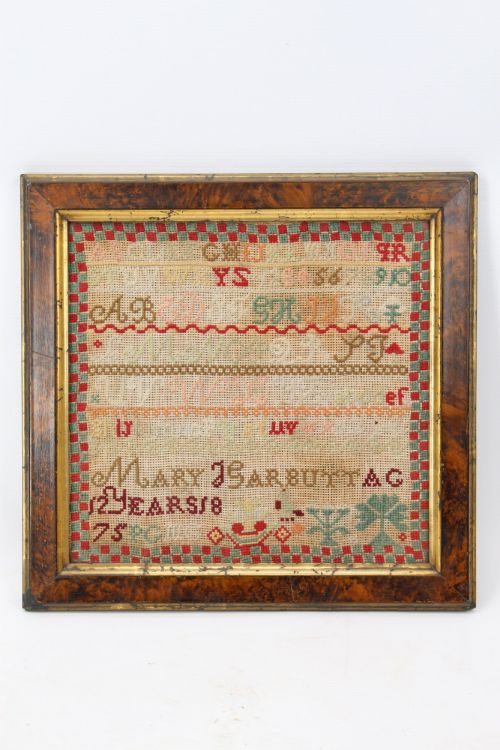
Young Mary J Garbutt preserved her twelve-year-old patience in stitches for eighteen seventy-five, ensuring her needlework outlasted the household.
What varies in quality
Quality rests in the precision of the stitching, the complexity of the design, and the survival of the original materials. Finer works display intricate shading, sophisticated perspective, and a disciplined control of silk or wool threads.
The ambition of the subject matter also distinguishes the range, moving from standard alphabetic practice samplers to elaborate narrative scenes depicting historic events, topography, or detailed portraiture.
The Historical Embroidery Glossary
- Needlework Sampler
- A piece of embroidery produced to demonstrate or test skill in needlework, frequently featuring alphabets, numbers, maker names, and dates. These often include structured decorative borders.
- Berlin Wool Work
- A type of counted-thread embroidery popular in the nineteenth century, stitched in brightly coloured wool on canvas using printed grid patterns.
- Metal Thread
- A thread made of beaten metal or metal-wrapped silk used in advanced embroidery to add reflective highlights and formal richness to a panel.
- Canvas
- A heavy, open-weave fabric used as the foundation ground for needlepoint and tapestry work, providing the structural grid for the stitches.
Historical Embroidery: Frequently Asked Questions
What is historical embroidery?
Historical embroidery comprises needlework pictures, samplers, and tapestries stitched by hand during the eighteenth and nineteenth centuries. These textiles record domestic craft, educational milestones, and popular visual culture.
Surviving examples are typically mounted behind glass in period wooden frames. They preserve materials such as silk, wool, and linen across British and continental European traditions.
How were needlework samplers used?
Needlework samplers served as practical exercises for young makers to master alphabets, numbers, and decorative stitches. They functioned as permanent reference pieces and records of achievement.
Many samplers include the maker's name, age, and a specific date, alongside moral verses or familial motifs. They were subsequently framed and displayed in domestic interiors.
How do I care for antique embroidery?
Protect antique embroidery from direct sunlight to prevent the fading of silk and wool threads. Keep the textiles in stable humidity conditions away from damp environments.
Maintain the original framing and glass where possible to shield the delicate fibres from dust and physical contact. Avoid hanging textile pieces in areas prone to excessive temperature fluctuations.
How can I tell the period of a piece?
Dating relies on stylistic clues, materials, and internal evidence such as stitched names, locations, and dates. Georgian and Victorian samplers often follow distinct typographical and compositional conventions.
Subsequent nineteenth-century works frequently adopt specific regional techniques, such as German Berlin wool work or French narrative tapestry styles. The construction of the backing and frame also offers chronological indicators.