



Historic Seascape Painting
Historic seascape painting works as a record of maritime craft, coastal navigation and naval engagements across the centuries.
Historic Seascape Painting
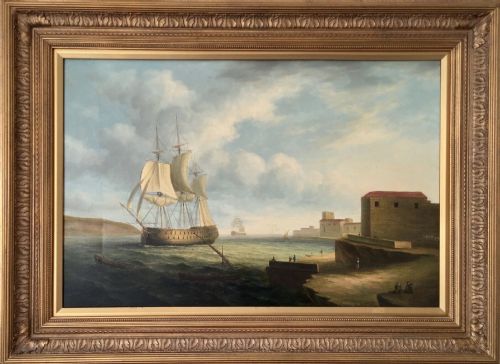
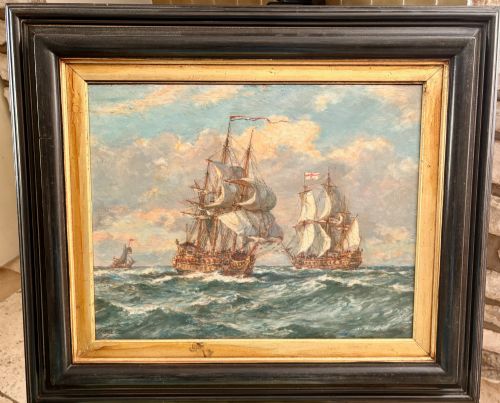
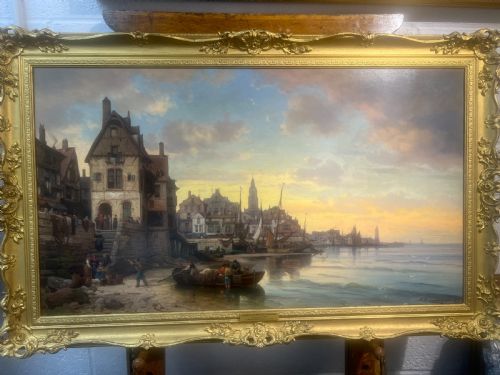
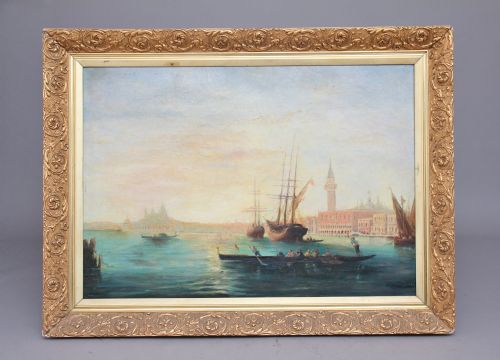
A historic seascape painting captures marine subjects ranging from named warships and passenger liners to bustling river traffic and quiet coastal lagoons. The examples gathered here span periods from the eighteenth century through to the mid-twentieth century, showing diverse encounters with water and vessels.
Most pieces on this page take the form of framed oil paintings or watercolours on canvas, panel or paper. They record specific locations such as Valletta Harbour, the Venetian lagoon, the River Thames and New Brighton lighthouse.
The styles shift from traditional marine art and Victorian maritime works to Edwardian maritime pieces and mid-century marine realism. Buyers encounter named vessels like HMS Swift, HMS Blenheim and the RMS Lusitania alongside anonymous craft under sail.
Materials and methods
Makers utilised oil paint applied to canvas, wood panels or paper supports, alongside watercolour pigments. Gold leaf frequently appears on the frames that enclose these artworks.
Techniques range from detailed ship portraits depicting rigging and hull construction with precision to looser impressionistic brushwork capturing light on water.
Historic Seascape Painting Retail Price Guide 2026
Typical asking prices for historic seascape painting among the pieces listed under this phrase on Sellingantiques today, from the lower quarter to the upper quarter. They describe what is for sale here now, not the wider market.
At least one painted ship met its fate shortly after being immortalised on canvas.
Elements of quality
Quality rests upon the artist's command of maritime architecture, rigging accuracy and the movement of water. Works by documented painters command attention through their established handling of light and atmospheric conditions.
The integration of the original frame, often finished in gold leaf, contributes to the integrity of the piece. Condition of the painted surface, whether canvas, panel or paper, remains central to the evaluation of any work.
Bernard Gribble·Charles Euphraisie Kuasseg·Charles William Wyllie·Dion Pears·Joseph Heard·Edward Fletcher·John D. Walker·R I Barrow
The Historic Seascape Painting Glossary
- Galleon
- A large sailing ship of the fifteenth to seventeenth centuries with three or more masts. These vessels frequently feature in early maritime compositions.
- West Indiaman
- A large merchant ship trading between Europe and the West Indies. Such vessels appear in detailed nineteenth-century ship portraits.
- Panel
- A flat piece of wood used as a rigid support for oil painting instead of stretched canvas. Artists often selected panels for smaller cabinet works.
- Watercolour
- A painting method where the pigments are suspended in a water-based solution on paper. This medium suits translucent effects of sea and sky.
Historic Seascape Painting: Frequently Asked Questions
How do I identify the ship in a painting?
Many historic marine paintings include signal flags, specific hull configurations or written inscriptions on the canvas or frame that identify the vessel. Naval histories and port records often confirm the exact subject depicted by the artist.
Studying the uniform of any figures on deck or the architectural landmarks in the background can further narrow down the date and location of the scene.
Where should I hang a marine painting?
These artworks suit spaces with stable temperature and humidity away from direct sunlight to protect the oil paint, watercolour pigments and gold leaf frames. Wall placement should allow comfortable eye-level viewing of the detailed rigging and water surface.
Pairing a maritime piece with traditional interiors complements the historical subject matter, while well-lit hallways provide strong viewpoints for larger ship portraits.
What is the difference between an oil and a watercolour?
Oil paintings utilise pigment bound in drying oils applied to canvas or wood panels, allowing for rich textures and deep colour layering. Watercolours employ water-soluble pigments on paper, producing lighter and more translucent atmospheric effects.
Oils generally require a sturdy stretcher or panel support, whereas watercolours need protective glass framing to prevent moisture damage.
How do I date a seascape painting?
Stylistic clues such as the clothing of figures, the architecture of lighthouses and forts, and the design of the watercraft provide clear chronological markers. Dated signatures or documented exhibition records offer the most precise verification.
Changes in painting technique from nineteenth-century realism to mid-century styles also help place the work within its proper era.