

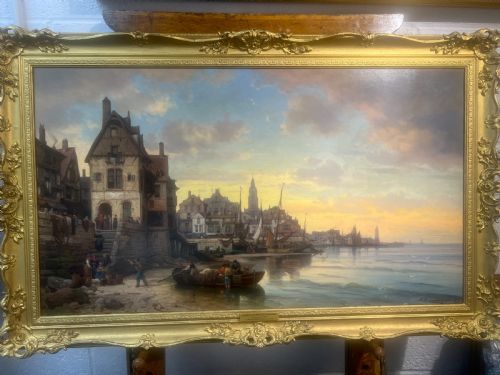
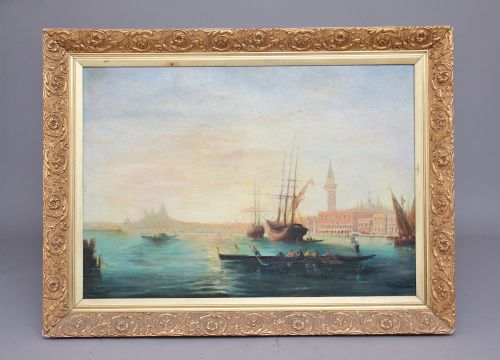


Historic Seascape Canvas
These historic seascape canvas works bring the movement of open water, naval battles and bustling rivers straight onto the wall.
Historic Seascape Canvas
When you search for a historic seascape canvas, you are looking at oil paintings on canvas capturing maritime scenes, naval engagements, riverscapes and ship portraits. These pieces span multiple centuries, ranging from early nineteenth century depictions of vessels like the HMS Swift to mid twentieth century representations of ocean liners and sea battles.
The versions you are most likely to meet on this page include traditional maritime art from the nineteenth and early twentieth centuries. These encompass Victorian maritime views, Edwardian naval subjects, and scenes featuring British waterways such as the River Thames with the Tower of London.
How they were made
Artists painted these works using oil paint applied to stretched canvas, often housed within wood frames embellished with gold leaf and gilt finishes. The combination of oil on canvas allowed painters to build rich textures for churning seas, stormy skies and the detailed rigging of sailing ships.
Makers utilised traditional brushwork techniques to capture the play of light across water, whether depicting the Venetian lagoon or a West Indiaman off Eddystone Lighthouse. The physical construction relies on durable wooden stretchers supporting the painted canvas through generations.
Historic Seascape Canvas Retail Price Guide 2026
Typical asking prices for historic seascape canvas among the pieces listed under this phrase on Sellingantiques today, from the lower quarter to the upper quarter. They describe what is for sale here now, not the wider market.
Materials appearing across these artworks include oil paint, canvas, wood, gold leaf and gilt frames.
What varies in quality
Quality in a historic seascape canvas rests upon the precision of the maritime detail and the artist's command of light and atmosphere. Works by recorded painters who understood naval architecture and tidal movement stand apart from anonymous studio pieces through their convincing rendering of vessels and water.
The depth of the oil paint layers and the preservation of the original wood and gilt framing also influence the overall character of the piece. Superior examples capture the specific mood of a maritime moment with confident brushwork and balanced composition.
Bernard Gribble·Charles Euphraisie Kuasseg·Charles William Wyllie·Dion Pears·Joseph Heard·Edward Fletcher
The Historic Seascape Canvas Glossary
- Oil on canvas
- A painting medium where pigments bound in oil are applied to a woven fabric surface stretched over a wooden frame. This combination allows for rich colour blending and lasting durability.
- Gilt
- A thin layer of gold applied to wood framing to provide a decorative metallic finish. This traditional framing technique enhances the visual weight of maritime paintings.
- Marine ship portrait
- A specialised artwork focused on depicting a specific watercraft with accurate technical details regarding its rigging and hull. These portraits were often commissioned by shipowners or captains.
- Riverscape
- A painting genre dedicated to views of rivers, estuaries and associated urban or rural banks. These works frequently feature shipping activity and bridge architecture along waterways like the Thames.
Historic Seascape Canvas: Frequently Asked Questions
What is a historic seascape canvas?
A historic seascape canvas is an oil painting on fabric depicting maritime subjects, ships, naval battles or coastal views from past centuries.
These works record the maritime history and shipping activities of eras ranging from the Georgian period through to the mid twentieth century.
How should I hang an oil painting?
Hang your oil painting on a stable interior wall away from direct sunlight and sudden changes in temperature or humidity.
Ensure the wall fixings are secure enough to support the combined weight of the canvas, wooden stretcher and heavy gilt frame.
How do I identify the period?
Identify the period by examining the clothing styles of any figures depicted, the type of watercraft shown, and the framing materials.
Signatures, artist dates recorded in titles, and the style of the canvas backing also provide clear clues to the creation era.
Were these painted outdoors?
Many marine paintings of the nineteenth century were composed in studios using preliminary sketches and detailed knowledge of vessel design.
Later works from the twentieth century occasionally reflect direct observation of light during plein air painting sessions.