



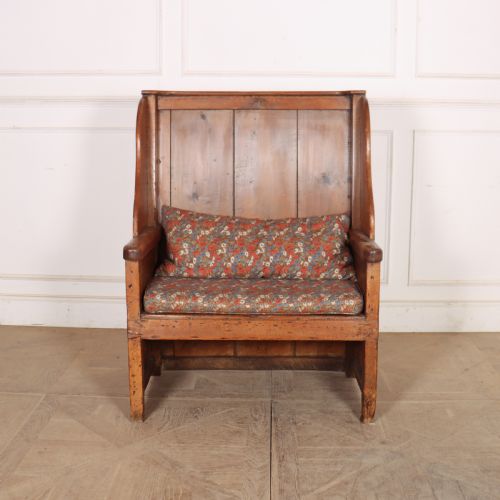


High Back Timber Settle
A high back timber settle is a solid wooden seat with a tall back designed to block draughts, bringing centuries of practical utility to an interior.
High Back Timber Settle
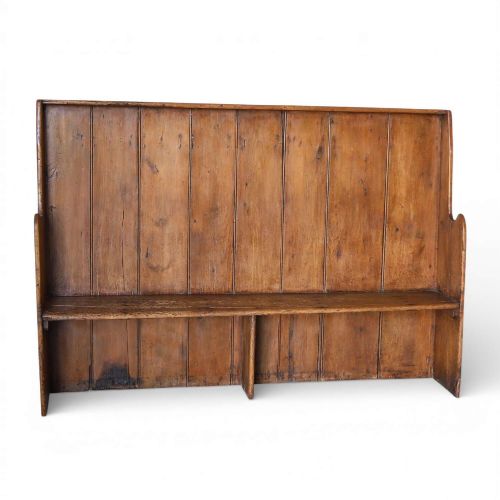
A high back timber settle offers a substantial wooden seat enclosed by high sides and a high back, built to shield occupants from cold air in draughty rooms. These pieces predominantly appear in regional styles such as English Country, Welsh Country, and Rustic Farmhouse forms.
The selections available here span from the 18th century through the 19th century and the Edwardian period, encompassing Georgian examples and specific pieces like the Spanish folk art canopied settle. Most examples take the form of heavy benches and settle benches with high timber backs.
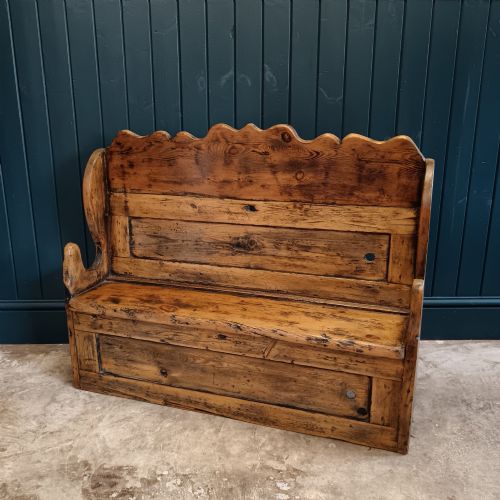
Buyers will find both plain wooden constructions and painted finishes, with some pieces incorporating storage boxes beneath the seat. Forms range from narrow hallway benches to large tavern settles and barrel back designs.
Materials and construction
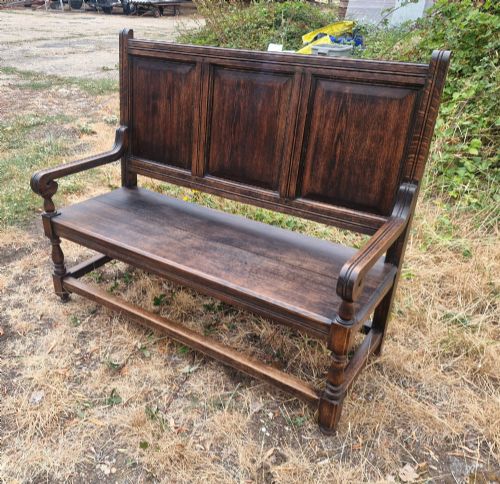
Carpenters built these settles using solid native timbers including oak, elm, pine, chestnut, and general wood, often combining different woods within a single piece. Construction methods rely heavily on sturdy panelled backs, pegged joints, and solid plank seats designed to withstand heavy daily use.
Surface treatments vary from untreated or bleached timber showing natural grain to original painted finishes and rich patinated surfaces. Certain pieces feature structural additions like canopies, storage boxes, or curved barrel backs fashioned from bent timber.
High Back Timber Settle Retail Price Guide 2026
Typical asking prices for high back timber settle among the pieces listed under this phrase on Sellingantiques today, from the lower quarter to the upper quarter. They describe what is for sale here now, not the wider market.
Catalan shepherds once relied on wooden benches designed with high backs to block mountain winds blowing straight through rustic stone dwellings.
Distinctions in quality
Quality in a settle is determined by the integrity of the timber, the depth of the patination, and the proportion of the high back relative to the seat. Pieces fashioned from solid oak or figured elm with original joined panels demonstrate superior craftsmanship compared to simpler utility items.
The presence of integrated storage boxes, original painted surfaces, or unusual forms like barrel backs and canopies elevates the character of the piece. Regional distinctiveness, such as Welsh or Catalan framing, also marks out more sophisticated examples from standard workshop production.
The High Back Timber Settle Glossary
- Settle
- A wooden bench with a high back and solid arms designed to keep out cold draughts. These seats often include enclosed storage compartments beneath the squab.
- Barrel back
- A seating design featuring a curved, semicircular high back that wraps around the occupant for maximum shelter. This form is frequently associated with Georgian tavern seating.
- Patina
- The surface sheen and colour developed on timber through decades of handling, polishing, and exposure to light. A desirable patina shows genuine age rather than applied finish.
- Canopy
- An overhanging wooden hood positioned above the high back of a settle. This architectural feature traps rising heat and provides further shelter from room currents.
- Provincial
- Describing furniture made in regional areas outside metropolitan centres by local joiners. These pieces often utilise available local woods like pine and chestnut.
High Back Timber Settle: Frequently Asked Questions
What is a high back timber settle?
A high back timber settle is a traditional wooden bench featuring a tall back and solid wings, originally built to protect people from cold draughts in large rooms.
Today, these substantial pieces function as striking hallway seating or focal points in living spaces, combining deep historical character with practical utility.
How were settles used originally?
Historically, settles stood near hearths in farmhouses, cottages, and public taverns where heat management was essential. The high back and enclosed sides trapped warmth around the sitter.
Many examples also incorporated lidded box seats beneath the timber planking, providing secure storage for household goods, blankets, or tavern supplies.
Where should I place a settle?
These benches suit long hallways, large entryways, or spacious living rooms where their high timber backs can be appreciated against a blank wall. They also work well anchored behind a dining table or placed in a large kitchen.
Because of their substantial depth and height, measure your floor space carefully before positioning one in a tighter circulation area.
How do I care for antique timber?
Maintain antique pine, oak, and elm surfaces by dusting them regularly with a dry cloth and avoiding harsh chemical polishes. Keep the wood away from direct heat sources and severe humidity shifts to prevent timber splitting.
Applying a light, traditional beeswax occasionally will nourish the grain and preserve the historic patina without damaging the finish.