

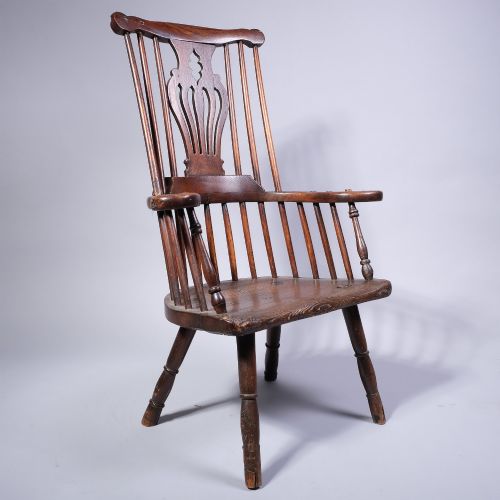
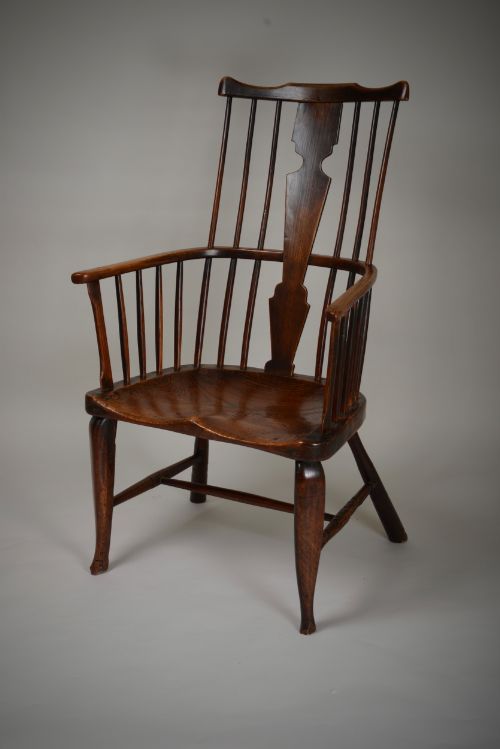
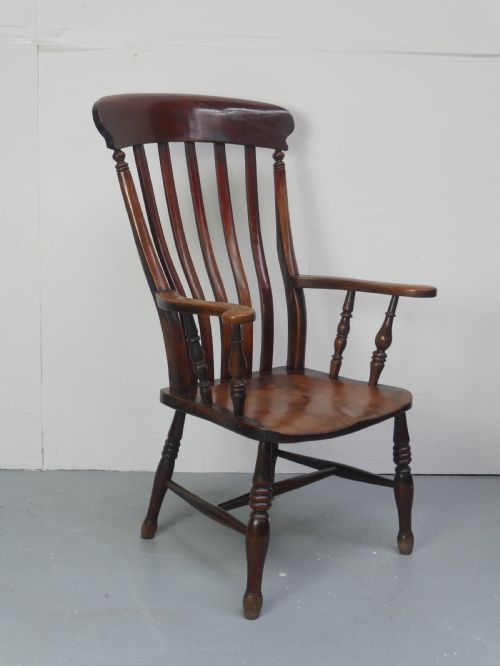

High Back Rustic Chair
A high back rustic chair brings honest country timber and tall, commanding proportions straight into a modern interior.
High Back Rustic Chair
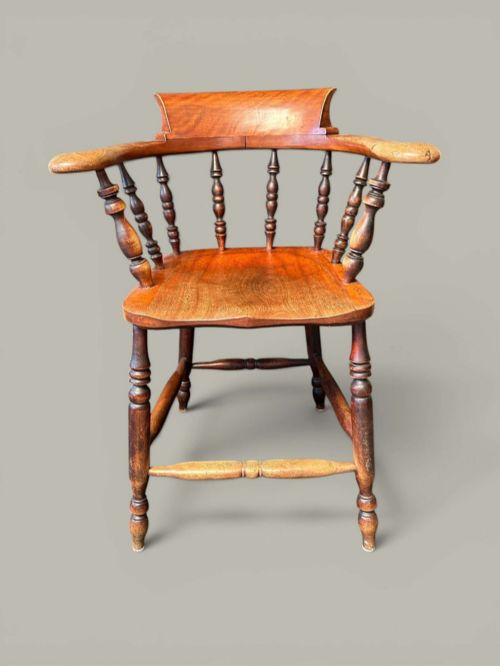
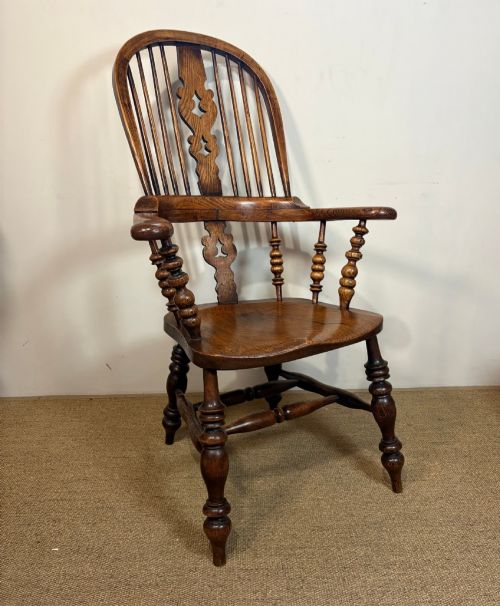
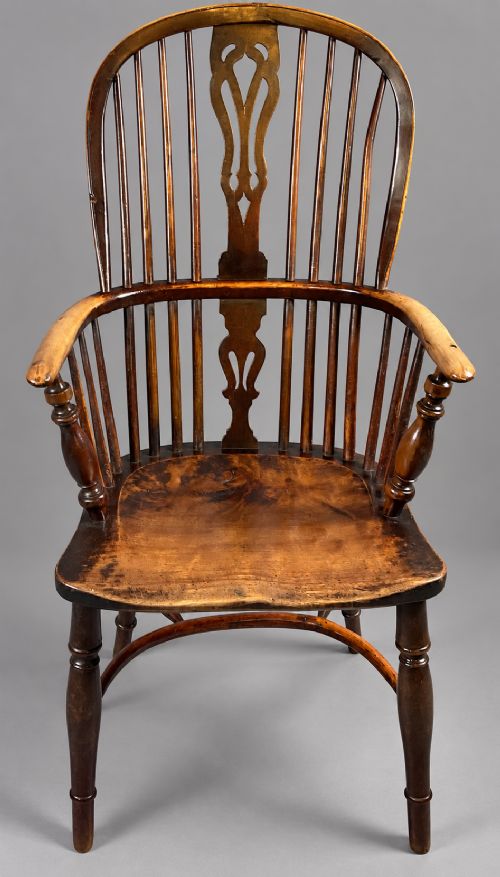
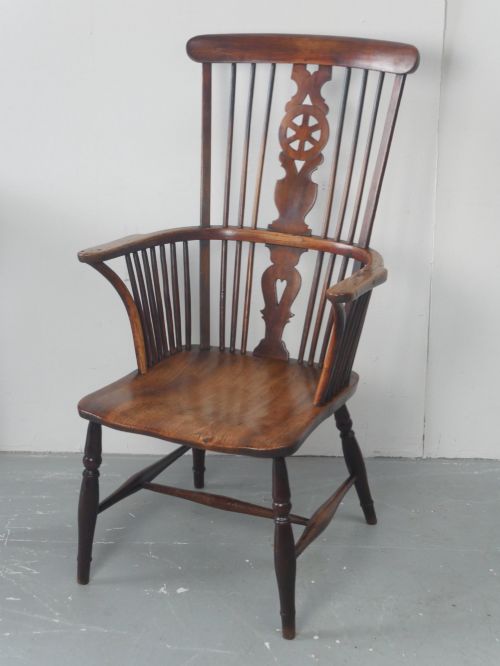
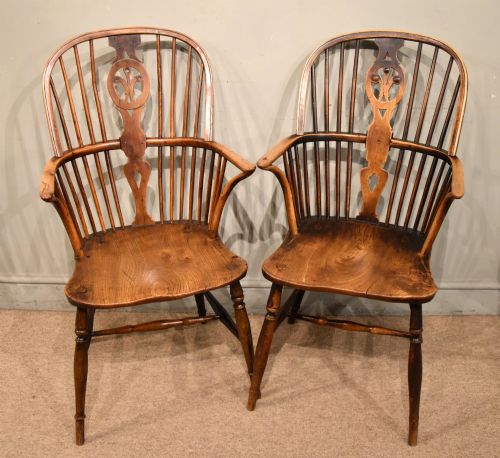
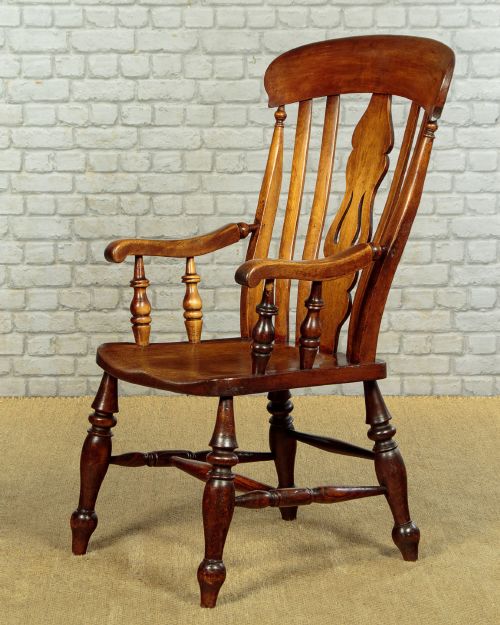
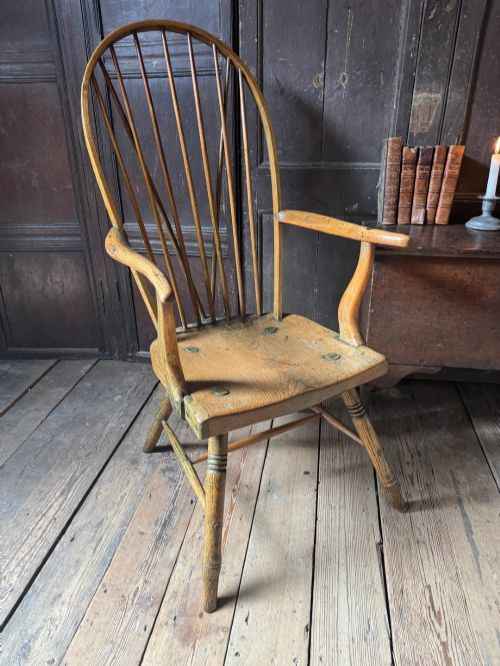
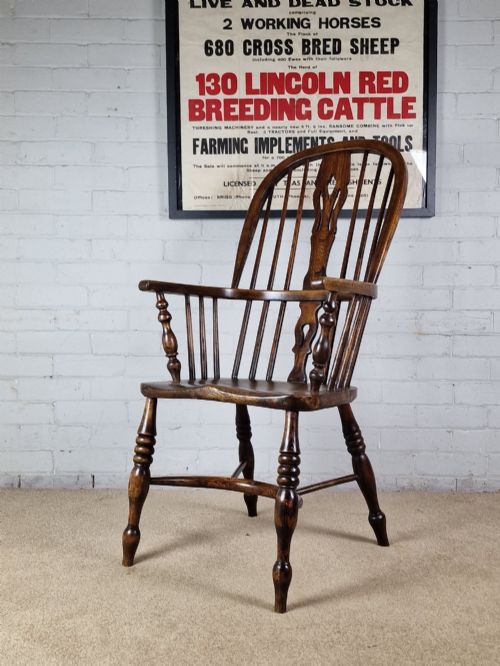
A high back rustic chair encompasses tall vernacular seating built by regional makers, most commonly found here as Windsor armchairs and farmhouse carvers. These pieces draw from eighteenth, nineteenth and early twentieth century traditions across English and Welsh country houses and kitchens.
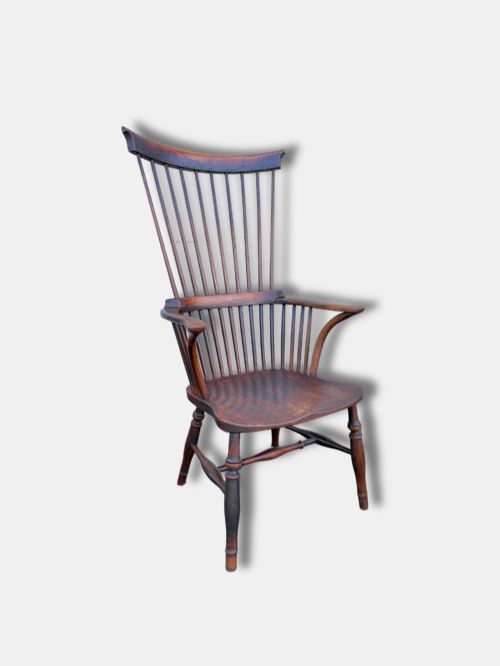
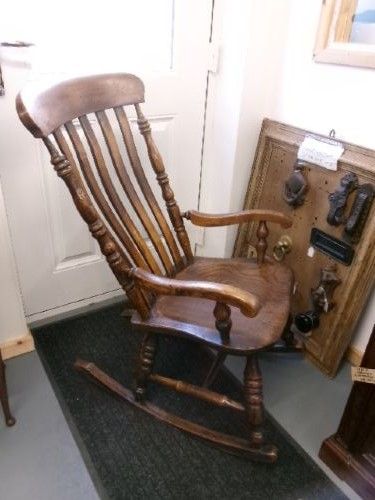
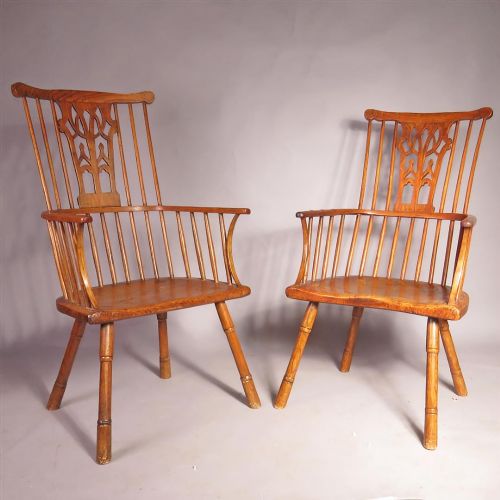
The selection ranges from sturdy kitchen armchairs and comb back Windsors to rocking chairs, children's high chairs and fireside seats. Elm, ash, beech and yew dominate the forms, often paired with saddle seats hollowed out for comfort.
Regional variations appear frequently, from Yorkshire and Lincolnshire workshops to West Country framing. Collectors encounter both single library or fireside pieces and matched pairs or sets designed for country dining.
How they were made
Makers relied on a combination of native timbers, typically pairing elm for sculpted seats with ash or beech for turned spindles, legs and bow backs. Yew wood appears in select high-end Windsors, prized for its rich grain and warm tone.
Traditional construction involved boring legs and spindles directly into a solid wooden seat blank using bodger techniques. Steam bending shaped the continuous hooped or comb backs, while wedge joints locked uprights firmly into place without complex metal fixings.
High Back Rustic Chair Retail Price Guide 2026
Typical asking prices for high back rustic chair among the pieces listed under this phrase on Sellingantiques today, from the lower quarter to the upper quarter. They describe what is for sale here now, not the wider market.
Listings feature seating spanning the eighteenth century through the 1930s, constructed predominantly from elm, ash, beech and yew.
What varies in quality
Quality rests in the harmony of the timber selection and the elegance of the spindle turning. A superior chair displays deeply sculpted saddle seats and well-balanced proportions that support the tall back without feeling top-heavy.
The integrity of the original joints and the preservation of surface patina dictate desirability. Fine examples retain their original timber wedges, matching turned components and untouched aged finishes rather than heavy modern sanding.
Benjamin Gilling
The High Back Rustic Chair Glossary
- Windsor
- A wooden chair featuring a solid carved seat into which the legs and back spindles are directly fitted. This form evolved through regional English variations before spreading widely.
- Comb back
- A Windsor chair style where the tall back uprights pierce a top rail that resembles the teeth of a comb. It provides strong vertical lines and sturdy head support.
- Vernacular
- Everyday furniture built by local craftsmen using regional styles and native woods rather than following strict London court fashions. These pieces reflect practical local needs.
- Pad arm
- An armchair design where the wooden arm supports are widened into solid pads for hand rest. They appear frequently on nineteenth-century country carvers.
- Bodger
- A travelling pole-lathe turner working in woodland to produce green-wood chair legs and spindles for local chairmakers. Their efficiency shaped traditional country seating.
High Back Rustic Chair: Frequently Asked Questions
Where were high back rustic chairs used?
These tall chairs served primarily in country kitchens, farmhouses and estate libraries where draughty rooms demanded high headboards. They gathered around large hearths or dining tables.
Owners valued their sturdy construction for daily domestic use. The tall backs offered protection from cold indoor drafts.
How do I identify a Windsor chair?
A Windsor chair is defined by its solid wooden seat slab that holds all the undercarriage legs and upper back components independently. It lacks a traditional upholstered frame.
Look for turned spindles radiating from a shaped elm seat up to a bentwood hoop or comb rail. The construction relies on wedged tenon joints.
What woods were used for these chairs?
Craftsmen selected native British hardwoods suited to specific structural demands. Elm provided a stable, non-splitting surface for carved saddle seats.
Ash, beech and oak formed strong, flexible spindles and bentwood bows. Yew was reserved for finer provincial pieces due to its decorative grain.
Are these chairs comfortable for daily sitting?
The deep saddle seats and ergonomic rake of the spindle backs offer surprising support. Many generations of farmhouse occupants relied on them for everyday seating.
Adding a loose sheepskin or linen cushion softens the wooden base for modern lounging. Their tall proportions provide excellent upper back support.