



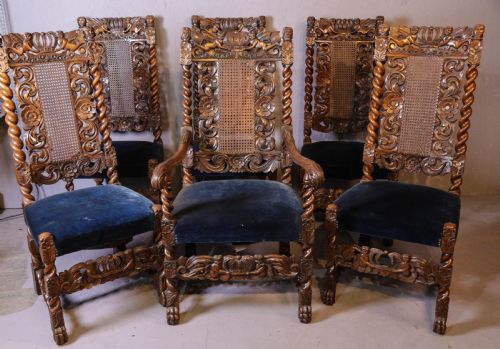


High Back Caned Chair
A high back caned chair brings commanding height, pierced woodwork and resilient seating to a room, drawing the eye instantly.
High Back Caned Chair
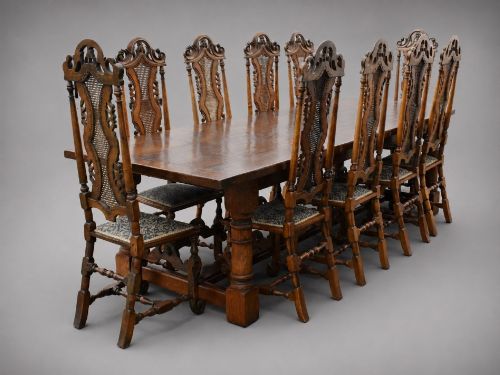
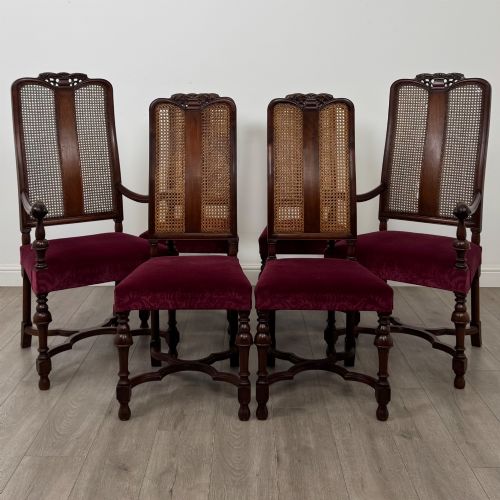
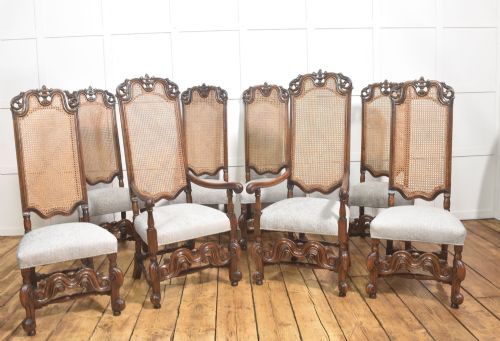
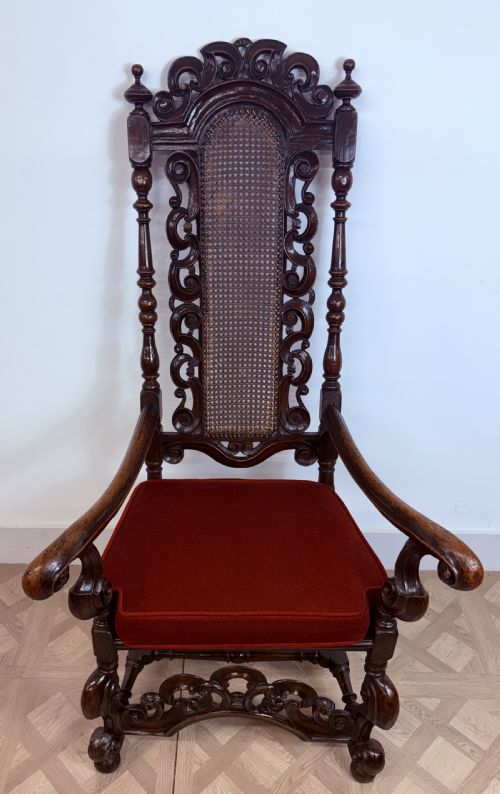
A high back caned chair is designed for presence and posture, offering an elevated wooden frame paired with woven panels. Buyers encounter pieces ranging from seventeenth-century originals to later revivals produced across the Victorian and Edwardian eras.
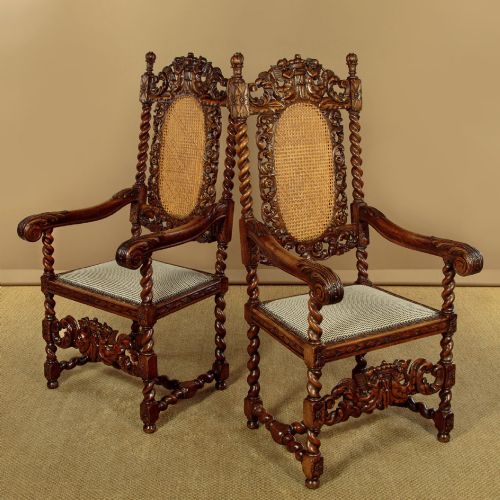
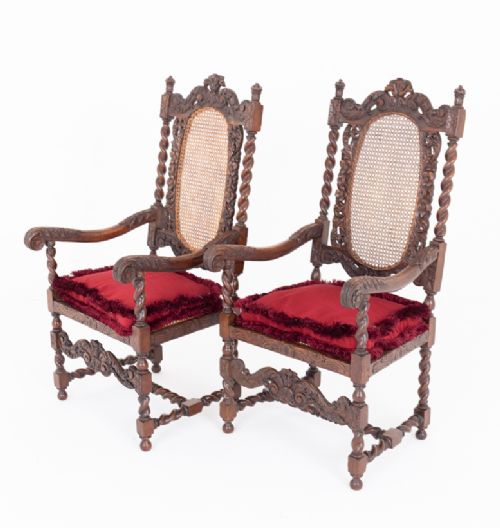
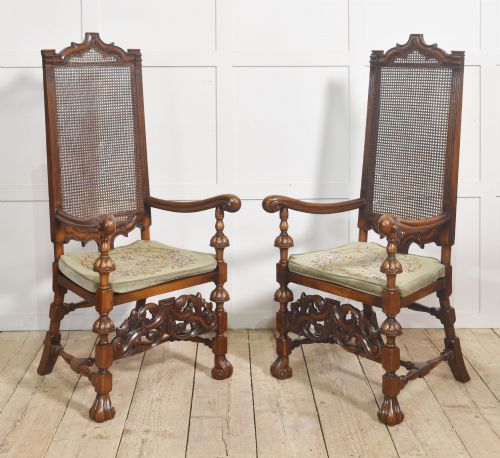
The selections span various forms including single armchairs, pairs, and full dining sets. Walnut and oak dominate the construction, while specific iterations adopt Carolean, Jacobean Revival, or Arts and Crafts styling.
Materials and construction methods
Frames rely principally on timber such as walnut, oak, beech, and mahogany, chosen for strength and grain. Carvers shaped the crest rails, stiles, and stretchers with intricate scrolls and pierced details.
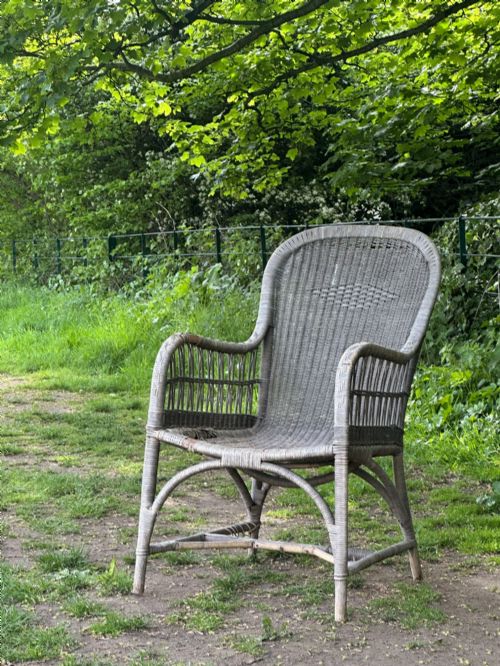
Seating and back panels utilise handwoven cane, rattan, or willow threaded through drilled holes in the wooden framework. Certain chairs integrate additional elements like velvet, fabric, or bone inlay to enhance comfort and visual depth.
The inventory encompasses periods from the seventeenth century through to the 1930s.
Distinctions in craftsmanship and preservation
Quality rests in the crispness of the wood carving and the integrity of the joinery within the tall frame. Deeply pierced crest rails and substantial walnut or oak timbers distinguish finer workshops from simpler regional pieces.
The tightness and uniformity of the handwoven cane indicate superior execution. Original surface patination and minimal structural alteration maintain the historical authenticity of the piece.
Dryad of Leicester·Waring and Gillow
The High Back Caned Chair Glossary
- Cane
- A material derived from the peeled outer bark of rattan palms, utilised for flexible woven panels in seats and backs.
- Carolean
- A seventeenth-century style defined by rich carving, scrolling foliage, and crown motifs, often revived in later periods.
- Crest rail
- The uppermost horizontal member of a chair back, frequently shaped or elaborately carved in high back designs.
- Stile
- The upright vertical side post of a chair back that connects the crest rail to the seat frame.
High Back Caned Chair: Frequently Asked Questions
How do I spot a true seventeenth-century piece?
Examine the tool marks, timber shrinkage, and construction joints beneath the frame. Period walnut and oak develop a distinct dry patination that modern reproductions cannot replicate.
Check whether the cane work is integrated into the original frame construction rather than added later. Contemporary revival pieces often employ standardised machine drilling that differs from older hand-pierced holes.
Can I use these chairs for daily dining?
Many high back caned chairs serve as functional dining seating when the frames remain structurally rigid. Ensure the joints are secure before placing them around a table.
Weight distribution matters greatly with antique cane. Avoid heavy daily use on fragile eighteenth-century or seventeenth-century webbing to preserve the historic weave.
How do I care for antique cane?
Maintain the flexibility of the cane by applying distilled water lightly with a damp cloth underneath the panel periodically. This prevents the natural material from becoming brittle.
Keep the chairs away from direct heat sources and radiators. Excessive dryness causes rattan and cane fibres to snap under tension.
What defines Carolean style?
The Carolean style emerged during the reign of King Charles the Second, featuring dramatic scrollwork, cherubs, and crowned motifs. High back chairs from this movement prioritize ornate vertical presence.
Revival versions appeared frequently during the Victorian and Edwardian eras. These later pieces copied the grand proportions and heavy carving of the seventeenth century using contemporary workshop techniques.