

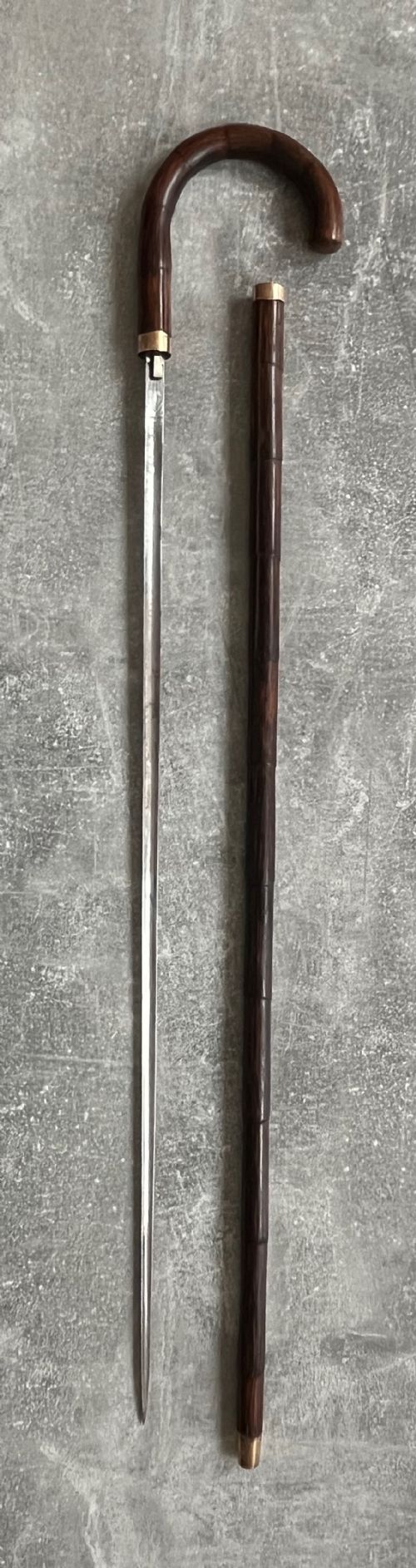
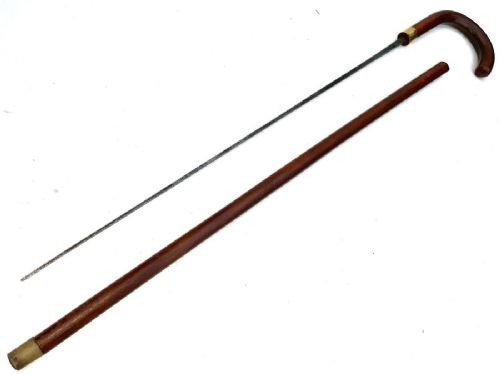
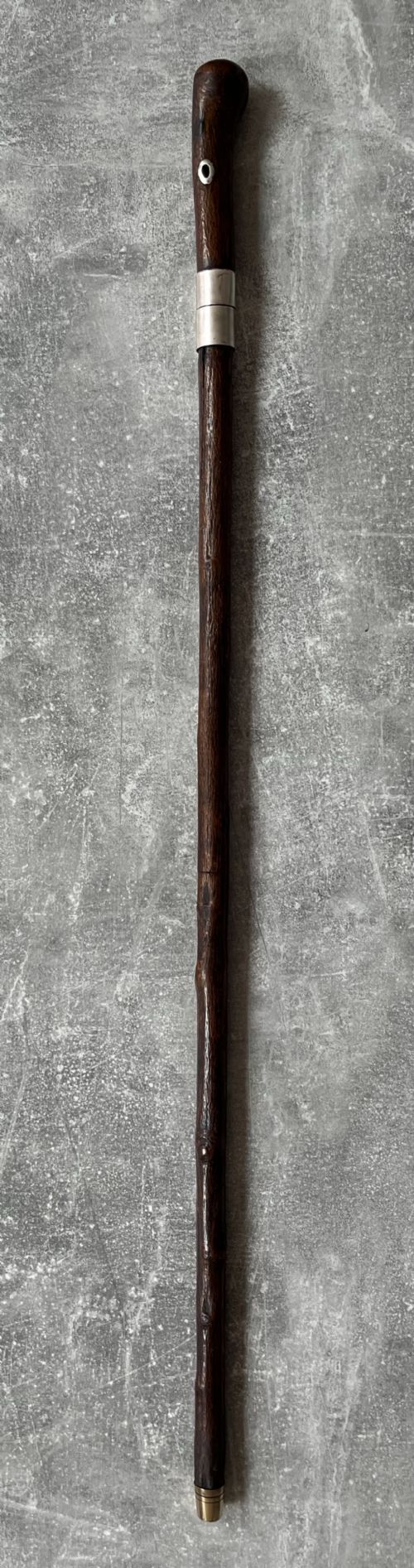


Hidden Sword Walking Stick
These hidden sword walking sticks are ingenious nineteenth and early twentieth century self-defence pieces combining a sturdy shaft with a concealed blade.
Hidden Sword Walking Stick
A hidden sword walking stick is a dual-purpose accessory designed for gentlemen of the nineteenth and early twentieth centuries who required discreet personal protection during daily walks. These items appear as ordinary walking canes and sticks at a glance, yet house a concealed steel blade securely within the shaft.
The versions most commonly met on this page originate from the Victorian, Edwardian, and late nineteenth century periods. Makers utilised natural materials like bamboo, hazel wood, malacca, and hardwood to form the exterior shafts, often finishing them with handles shaped from silver, bone, antler, or brass.
Examples range from military officers' swagger sticks to elegant gentleman's canes fitted with button releases or curved crook handles. French variants also appear, featuring exotic coverings such as snakeskin alongside traditional wooden shafts.
Materials and Construction
Makers constructed the exterior shafts using flexible yet resilient natural elements such as bamboo, hazel wood, and malacca, sometimes covering the haft in snakeskin or shaping them to imitate faux bamboo. These organic materials required careful seasoning and fitting to ensure the shaft concealed the internal blade without warping.
The internal blades typically comprise forged steel, with several specimens featuring etched Toledo blade designs known for their quality and durability. Handles demanded precise metalwork and carving, incorporating brass, silver, bone, and antler fitted with functional mechanisms like button releases.
Hidden Sword Walking Stick Retail Price Guide 2026
Typical asking prices for hidden sword walking stick among the pieces listed under this phrase on Sellingantiques today, from the lower quarter to the upper quarter. They describe what is for sale here now, not the wider market.
Some Edwardian gentlemen walked the city streets apparently leaning on a harmless bamboo cane, entirely concealing a Toledo steel blade within.
Markers of Quality
Quality in a hidden sword walking stick rests primarily on the precision of the join between the handle and the shaft, which determines how seamlessly the blade remains concealed. Superior pieces demonstrate a tight, flush closure that disguises the internal weapon entirely until the release mechanism is engaged.
The artistry of the handle and the refinement of the blade further separate standard examples from finer works. The presence of carved bone pistol grips, solid silver animal heads, or intricately etched Toledo steel blades indicates a higher grade of craftsmanship intended for a wealthy clientele.
The Hidden Sword Walking Stick Glossary
- Swagger stick
- A short cane carried by military officers as a symbol of authority rather than for serious walking support.
- Toledo blade
- A steel blade forged in the Spanish city of Toledo, historically renowned for exceptional strength, flexibility, and edge retention.
- Button release
- A mechanical catch set into the handle or collar that secures the blade inside the shaft until pressed.
- Crook handle
- A curved handle shaped like a shepherd's crook, allowing the cane to be hooked over the arm when not in hand.
- Malacca
- A sturdy, polished rattan cane imported from Southeast Asia, prized by nineteenth-century makers for its distinctive mottled brown finish and durability.
Hidden Sword Walking Stick: Frequently Asked Questions
What is a hidden sword walking stick?
A hidden sword walking stick is a nineteenth or early twentieth-century cane that conceals a steel blade inside its wooden or bamboo shaft. They were carried by gentlemen for fashion and personal defence.
Most examples date from the Victorian and Edwardian eras, combining practical walking support with concealed weaponry accessed via button releases or secure pulls.
Who carried these sword sticks?
Military officers, gentlemen, and travellers carried these pieces during the Victorian and Edwardian periods when urban and rural environments posed personal security risks.
Officers often utilised military swagger sticks containing blades, while civilians preferred elegant malacca or bamboo canes with bone, silver, or antler handles.
How do you release the concealed blade?
Many pieces utilise a mechanical button release set discreetly near the top of the shaft to unlock the blade from the handle. Other versions rely on a secure friction fit that requires a firm pull to separate the handle and blade from the outer cane housing.
Operation varies depending on the specific nineteenth-century mechanism, but all are designed to keep the blade securely locked during normal walking use.
How do you date a hidden sword stick?
Dating relies on stylistic clues, materials, and manufacturing periods associated with the piece, such as Victorian military markers or Edwardian bamboo and bone designs. The presence of specific handle materials like silver animal heads or French snakeskin coverings also helps place the stick within the late nineteenth or early twentieth century.
Examining the steel blade type, such as etched Toledo markings, provides further context regarding the era of production.