


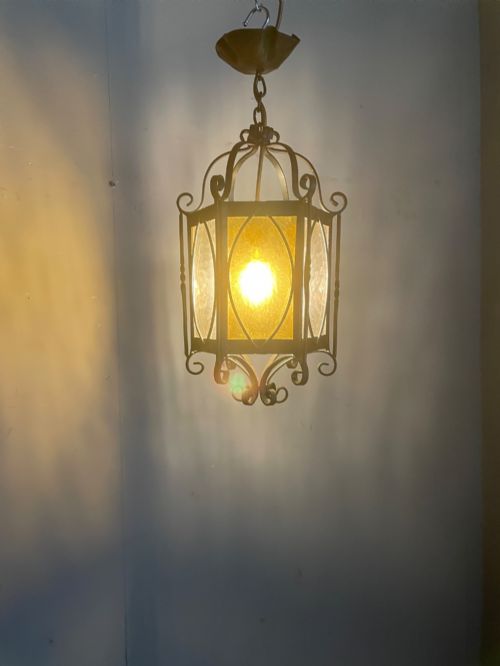


Hexagonal Hall Light
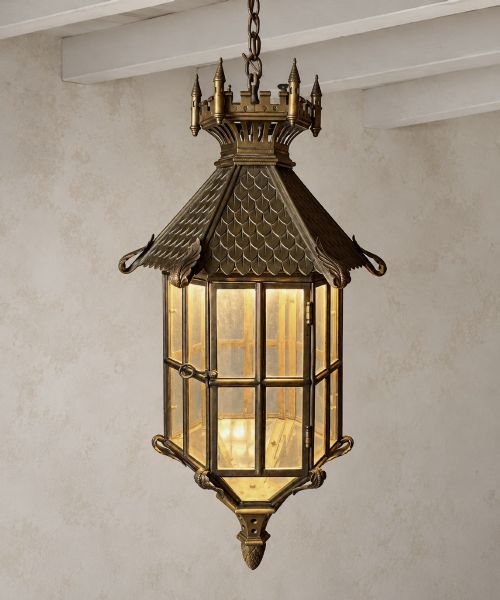
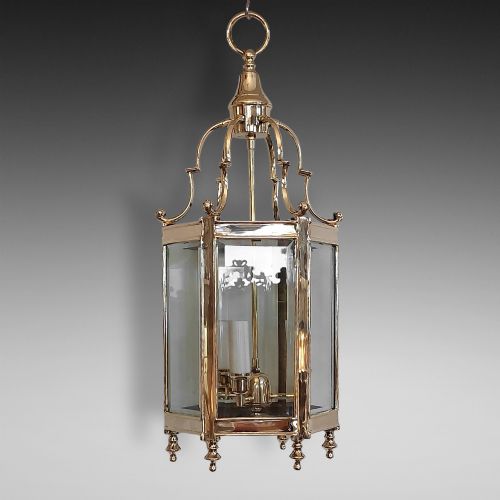
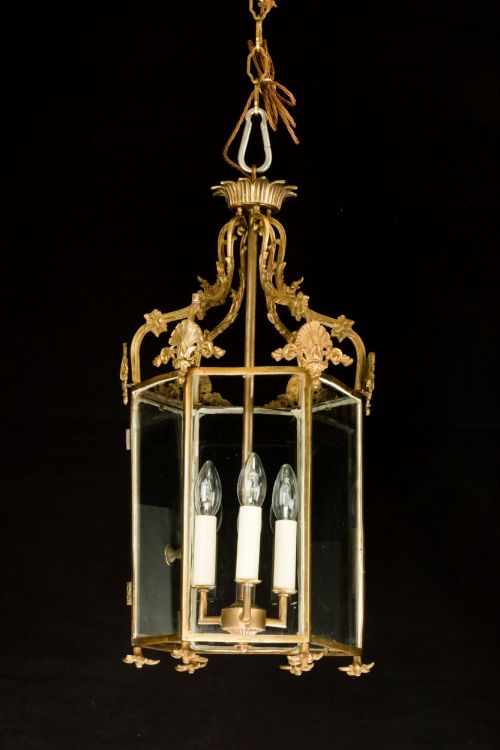
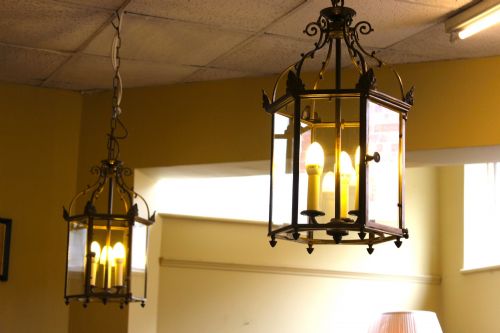
These hexagonal hall light pieces deliver immediate architectural presence to an entranceway through six-sided glazed frames suspended from ceilings.
Hexagonal Hall Light
A hexagonal hall light is a hanging lantern designed specifically for entranceways, vestibules, and corridors where vertical illumination and formal symmetry are required. The listings on this page showcase these six-sided fixtures spanning from the Victorian and Edwardian eras into the early twentieth century.
Most examples take the form of hall lanterns and pendant lights that utilise bevelled glass panels held within metal frames. The origins and styles stretch from Gothic Revival and Neo-Classical to Arts and Crafts and French Rococo interpretations.
Buyers will encounter various proportions, ranging from modest domestic hall pendants to grander architectural lanterns intended for high-ceilinged townhouses. The underlying form consistently relies on six distinct glazed sides to cast light evenly across a threshold.
Materials and construction
Makers constructed these lanterns using robust structural metals such as brass, bronze, copper, steel, and wrought iron to form the six-sided skeletal frame. Many pieces feature cast or gilded brass and ormolu mounts applied to enrich the metalwork.
The glazing typically employs bevelled glass panes that fit precisely into the frame channels, refracting the interior light through angled edges. Additional hand-finishing is evident in decorative details like green man motifs, rococo scrollwork, and riveted joints.
Hexagonal Hall Light Retail Price Guide 2026
Typical asking prices for hexagonal hall light among the pieces listed under this phrase on Sellingantiques today, from the lower quarter to the upper quarter. They describe what is for sale here now, not the wider market.
Design styles represented include Gothic Revival, Arts and Crafts, Neo-Classical, and French Rococo influences.
What determines quality
The distinction between standard domestic fixtures and finer examples lies in the weight of the metal casting and the precision of the frame assembly. Heavier bronze, gilded brass, and substantial wrought iron indicate a higher grade of production than thinner pressed sheet metal.
Quality also rests in the glasswork, where thick bevelled panes demonstrate superior craftsmanship compared to plain flat glass. The integration of period-specific decorative elements, such as intricate Neo-Classical or Regence design influences, separates mass production from bespoke workshop output.
The Hexagonal Hall Light Glossary
- Bevelled Glass
- Glass panes featuring an angled edge ground down around the perimeter. This treatment refracts light and adds decorative depth to the lantern sides.
- Ormolu
- Finely ground high-carat gold-bronze applied to metal objects. It provides a rich, durable golden finish popular in French decorative arts.
- Regence
- A French stylistic period bridging the seventeenth and eighteenth centuries. It is characterised by lighter, more curved ornament than the preceding Louis XIV style.
- Gothic Revival
- An architectural and decorative style drawing inspiration from medieval forms. It frequently incorporates pointed arches and ecclesiastical motifs into domestic metalwork.
Hexagonal Hall Light: Frequently Asked Questions
Where should a hexagonal hall light be hung?
These lanterns suit entrance halls, high-ceilinged vestibules, and stairwells where vertical hanging space allows the six-sided form to be viewed from multiple angles. They provide both direct downward illumination and ambient light through their glazed panels.
Ensure adequate clearance above floor level and proportionate sizing relative to the hallway dimensions so the fixture commands the space without obstructing movement.
How do I identify a Victorian lantern?
Victorian examples often display heavier metalwork, darker patination, and styles such as Gothic Revival or grand brass casting. They frequently incorporate robust construction techniques typical of nineteenth-century British and continental workshops.
Examining the fixings, screw types, and framing thickness helps distinguish these mid-to-late nineteenth-century pieces from lighter twentieth-century adaptations.
Are these lights suitable for low ceilings?
Most hexagonal hall lights are designed for tall hallways and require significant vertical drop to hang correctly. Shortening the suspension chain excessively can disrupt the intended proportions of the lantern.
Check the overall height including the hanging loop before purchase to ensure it fits the vertical clearance of your entranceway.
What maintenance do antique metal lanterns need?
Routine care involves gentle dusting of the glass panels and metal frame using a soft dry cloth. Avoid harsh chemical cleaners that can strip original patination or damage gilded and bronze surfaces.
Period wiring should be inspected by a qualified electrician to ensure safety standards meet modern requirements before installation.