




Heavy Wood Sideboard
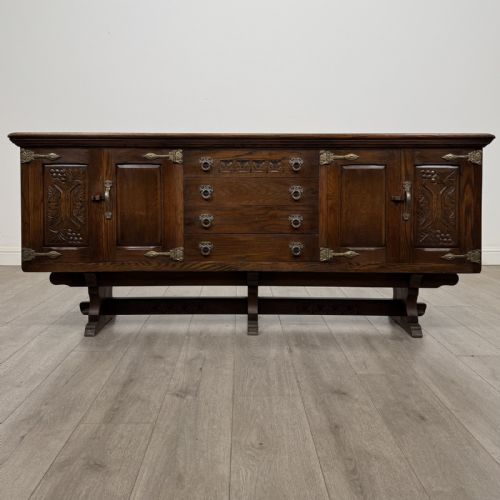
A heavy wood sideboard anchors a dining room with substantial timber and centuries of carving history.
Heavy Wood Sideboard
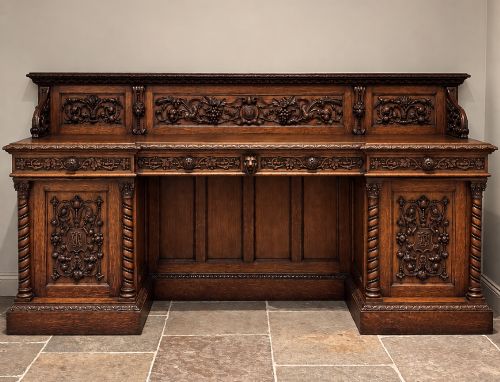
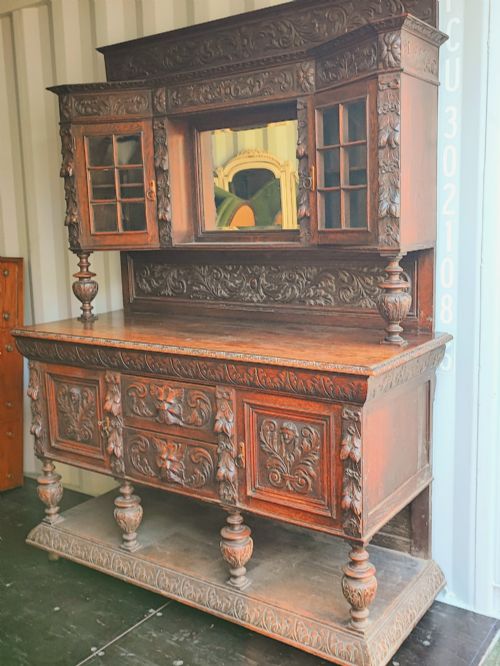
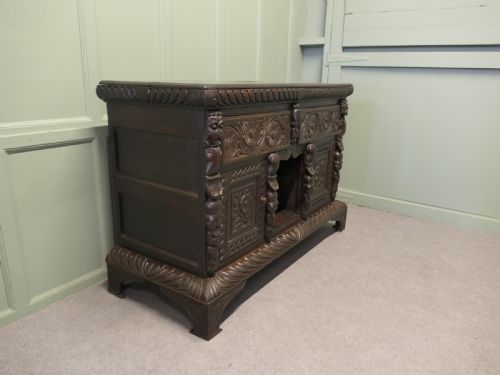
A heavy wood sideboard is a substantial storage piece built for dining rooms and large halls, primarily seen here in solid oak from the nineteenth century alongside select teak and beech examples. These pieces frequently emerge in styles such as Victorian, Jacobean Revival, and French Renaissance Revival, showing deep relief carving and architectural mouldings.
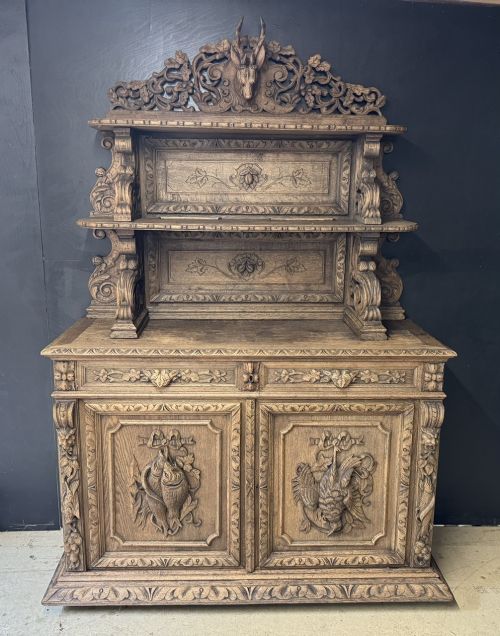
Buyers seeking a heavy wood sideboard will encounter grand proportions, stretcher bases, and mirrored backs, often featuring traditional motifs like the Green Man or hunting scenes. Alongside conventional sideboards and buffets, the selection includes related heavy forms such as Welsh dressers, storage cupboards, and artisan workbenches fitted with vices.
The material presence is dominated by dark oak, shaped by historical revivals that look back to earlier centuries with heavy panels and robust framing. Whether a French hunting piece or an English Victorian buffet, each item offers deep storage drawers and heavy cupboards designed to anchor a room.
Materials and construction methods
Construction relies heavily on solid oak timbers, joined with traditional framing methods that support the immense weight of the superstructures and marble or wooden tops. Artisans utilised thick planks for tops and sides, ensuring stability across large furniture pieces that often exceed standard domestic scales.
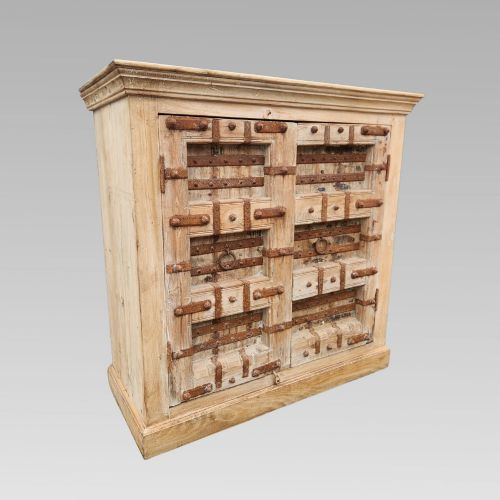
Carving is executed directly into the solid wood, creating high-relief panels, figures, and scrollwork characteristic of revivalist cabinet making. Iron and brass hardware, including hinges, drop handles, and vices on workbench variants, provide both structural reinforcement and functional utility.
Heavy Wood Sideboard Retail Price Guide 2026
Typical asking prices for heavy wood sideboard among the pieces listed under this phrase on Sellingantiques today, from the lower quarter to the upper quarter. They describe what is for sale here now, not the wider market.
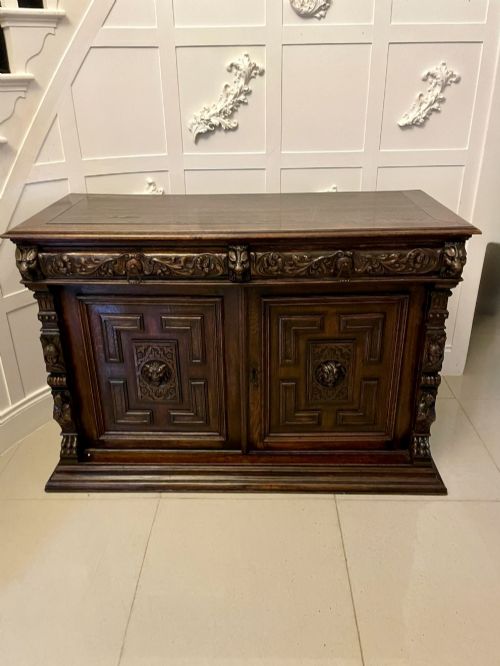
Several heavy sideboards keep watch with traditional Green Man carvings peeking out from the foliage.
Judging the quality of construction
Quality in a heavy wood sideboard rests upon the depth and crispness of the hand-carved ornamentation, where skilled chisel work separates standard production from exceptional artistry. The selection of timber grain, particularly in quartersawn oak panels, dictates the visual richness of the facade.
Structural integrity depends on the original joinery of the stretcher bases and the integration of heavy cabinet doors without warping over time. Original hardware, including cast iron brackets and brass fittings, contributes to the overall authenticity and enduring strength of the piece.
The Heavy Wood Sideboard Glossary
- Stretcher base
- A horizontal timber connecting the legs near the base to provide additional structural rigidity. This feature is common in heavy furniture to prevent leg splay under substantial weight.
- Green Man
- A sculptural motif depicting a human face entwined with foliage, leaves, or vines. It appears frequently as a carved decorative element on nineteenth century oak furniture.
- Flemish carved
- A regional style of deep, ornate wood carving characterised by scrolling foliage, architectural elements, and figural scenes. It heavily influenced nineteenth century revival furniture.
- Workbench
- A heavy utilitarian table fitted with a wooden vice, utilised by artisans for manual work. French examples in beech and oak are often repurposed as large sideboards or kitchen islands.
- Welsh dresser
- A traditional combination of a lower sideboard or cabinet with open shelving fixed above. These pieces provide both enclosed storage and display space for ceramics.
Heavy Wood Sideboard: Frequently Asked Questions
How do I care for a heavy oak sideboard?
Maintain the timber by applying natural beeswax periodically to nourish the dry wood and preserve the deep patina built up over generations.
Keep the piece away from direct heat sources and dramatic humidity fluctuations to prevent the thick oak panels from splitting or warping.
What periods do these sideboards come from?
The pieces span the nineteenth century, including specific dates from the eighteen-eighties and the Victorian era, alongside early nineteenth century examples.
Revival styles from this period often borrow aesthetic cues from earlier centuries, such as Jacobean and Renaissance designs.
Can workbenches function as sideboards?
Workbenches provide a sturdy surface and long proportions that suit modern kitchens or dining rooms as alternative storage and preparation spaces.
Their integrated vices and heavy wooden construction add industrial character while offering practical lower shelving.
How do I identify a revival style piece?
Revival pieces exhibit exaggerated proportions and heavy ornamentation that reflect nineteenth century interpretations of older craftsmanship rather than original period manufacture.
Look for machine-sawn timber marks hidden behind hand-carved facades to distinguish nineteenth century revival work from earlier antiques.