




Heavy Wood Cupboard
A heavy wood cupboard brings immediate substance to a room, offering robust storage built from durable timbers designed to endure.
Heavy Wood Cupboard
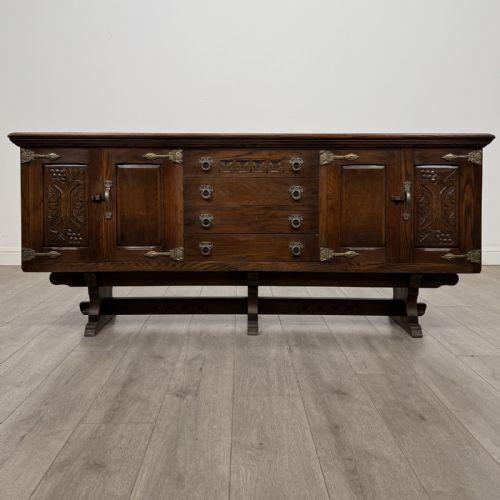
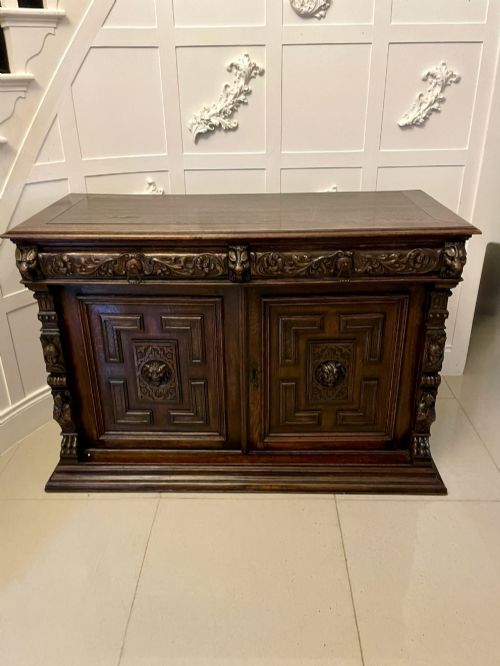
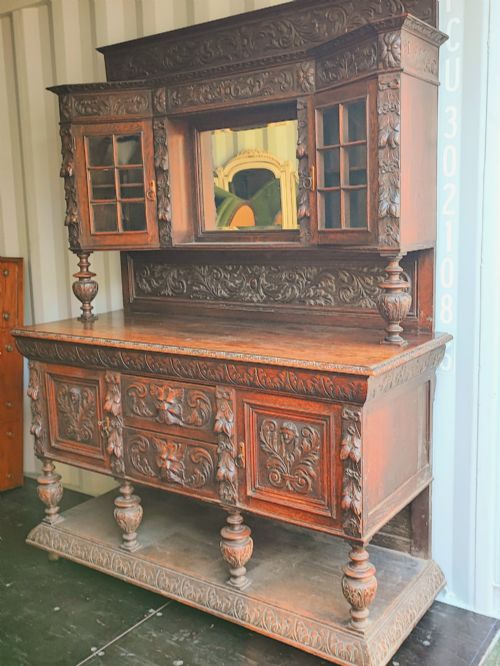
When you search for a heavy wood cupboard, you encounter substantial storage furniture built primarily from oak, teak, mahogany, and rosewood. These items span various forms, including sideboards, dressers, buffets, and filing cabinets, originating from the early nineteenth century through to the early twentieth century.
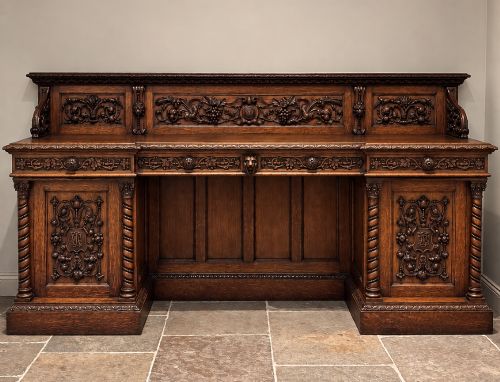
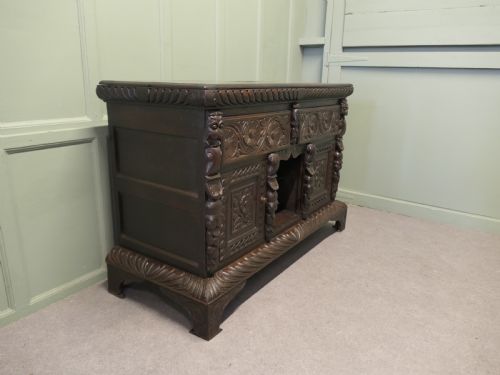
The versions most frequently met on this page are carved oak sideboards and dressers from the Victorian era and the early twentieth century. Many incorporate elaborate detailing such as Green Man carvings, stretcher bases, and Renaissance or Jacobean revival styles.
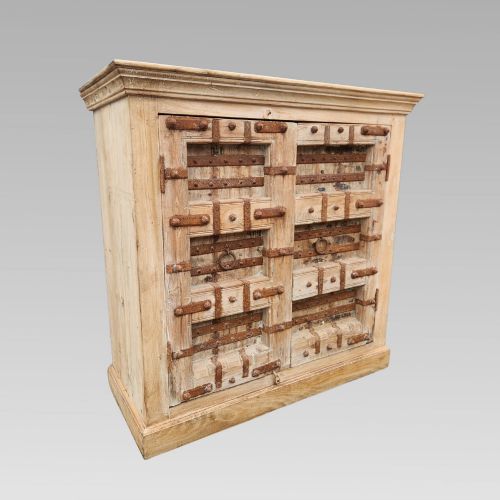
Beyond domestic sideboards, the selection occasionally includes utilitarian or architectural forms like banker's drawers with safe pedestals and reclaimed teak storage units. Each piece shares a heavy construction and a reliance on solid timber frames.
How they were made
Makers constructed these cupboards using dense hardwoods, predominantly oak, alongside teak, mahogany, and rosewood. Structural integrity relied on thick planks and substantial stretcher bases to support the considerable weight of the timber.
Craftsmen applied deep relief carving directly to the wood, frequently executing Renaissance and Jacobean revival motifs, Green Man imagery, and Flemish panels. Metal hardware, including brass and iron handles or hinges, provided functional reinforcement to doors and drawers.
Heavy Wood Cupboard Retail Price Guide 2026
Typical asking prices for heavy wood cupboard among the pieces listed under this phrase on Sellingantiques today, from the lower quarter to the upper quarter. They describe what is for sale here now, not the wider market.
Object forms documented here range from traditional Welsh dressers and sideboards to banker's drawers and modular storage cupboards.
What varies in quality
The distinction between standard examples and exceptional pieces rests in the depth and execution of the carved ornamentation. Sharply defined relief work, particularly on figural elements like Green Man masks, indicates superior workshop execution.
Proportion and timber selection also drive differences in quality, with uniform grain patterns and heavier gauge hardware elevating a piece. Comprehensive structural survivals, such as intact stretcher bases and original brass or iron fittings, mark the higher tiers of the range.
The Heavy Wood Cupboard Glossary
- Stretcher base
- A configuration of horizontal wooden bars connecting the lower legs of a cupboard to increase stability. This structural feature provides additional rigidity to heavy oak sideboards.
- Green Man
- A sculptural motif depicting a human face entwined with foliage or vines. It appears frequently as a decorative carved element on nineteenth-century oak furniture.
- Renaissance Revival
- A nineteenth-century design movement drawing inspiration from sixteenth-century European architecture and ornament. Pieces in this style utilise heavy moulding, symmetry, and classical carved panels.
- Jacobean Revival
- A nineteenth-century style replicating the ornate, rectilinear forms of early seventeenth-century English furniture. It is characterised by deep geometric panels and heavy turned supports.
- Buffet
- A low sideboard or cabinet traditionally used for serving food or storing dining wares. In nineteenth-century examples, these take the form of heavy carved oak case pieces.
Heavy Wood Cupboard: Frequently Asked Questions
How do I date a heavy oak cupboard?
Dating relies on examining the timber preparation, joinery methods, and the specific decorative style present on the case. Stylistic markers like Jacobean revival carvings or specific period revival motifs offer the primary clues.
Hardware and secondary woods also assist in establishing an approximate decade of manufacture. Comparing the construction details to dated comparative examples helps narrow down the origin.
Were these cupboards used only in dining rooms?
While many sideboards and buffets served dining spaces for storing plate and linens, other forms had different domestic or commercial roles. Banker's drawers and safe cupboard pedestals functioned in offices or studies.
Large dressers and storage cabinets also found placement in kitchens, hallways, or libraries. Their heavy timber build suited any area requiring secure, substantial storage.
How should I care for heavy antique wood?
Maintaining heavy wood furniture involves keeping pieces away from direct heat sources and dramatic humidity fluctuations. Regular dusting with a dry cloth prevents particle buildup on carved surfaces.
Occasional application of appropriate wax preserves the finish without sealing moisture into the grain. Heavy furniture should be lifted rather than dragged when repositioning to protect the base joints.
What is the difference between a sideboard and a buffet?
A sideboard generally denotes a long, low piece designed for dining rooms with storage compartments and surface space for serving. A buffet often shares a similar purpose but historically refers to specific cabinet proportions.
In nineteenth-century British furniture, these terms sometimes overlap in description. Both forms prioritise heavy wooden construction and decorative carving.