

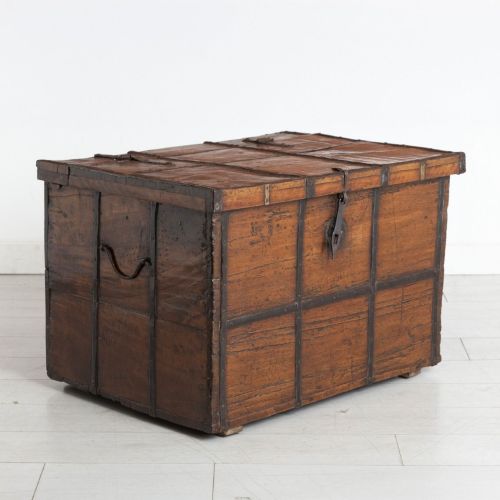
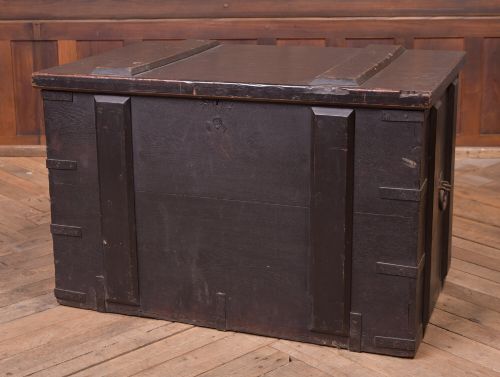


Heavy Wood Blanket Chest
These heavy wood blanket chest examples are solid storage pieces built to last, offering character and utility for any room.
How they were made
Carpenters utilised dense timbers such as teak, oak, mahogany, and camphor wood to withstand heavy use and transport. These woods provide natural durability and resistance to wear.
Metal reinforcement is integral to the construction, employing iron bands, brass binding, and studded details to secure the corners and edges. These additions protected the chests during travel and military campaigns.
What varies in quality
The sophistication of the metalwork and hardware distinguishes standard utility pieces from finer examples. Elaborate iron banding, brass mounts, and original carrying handles elevate the visual weight of the chest.
The choice of timber and panel construction dictates the integrity of the piece. Selected hardwoods and tightly joined panels show superior cabinetmaking compared to utilitarian pine boxes.
Camphor wood smells distinct even after two centuries, keeping mothballs entirely redundant.
The Heavy Wood Blanket Chest Glossary
- Campaign chest
- A portable storage trunk designed for military officers on the move, typically featuring recessed brass handles and reinforced corners. These chests often split into sections for ease of transport.
- Coffer
- A heavy wooden box traditionally used for storing valuables, linens, or documents. They feature sturdy panelled construction and often heavy lid hinges.
- Strongbox
- A secure iron-bound chest designed for the safekeeping of currency and precious items. These utilise thick wood encased or banded in robust metal.
- Camphor wood
- An aromatic hardwood favoured for travel chests due to its natural insect-repellent properties. It protects stored blankets and textiles from moths.
Heavy Wood Blanket Chest: Frequently Asked Questions
What were heavy wood blanket chests used for?
These chests served primarily for storing blankets, woollens, and household linens in domestic settings. Many examples also travelled with military officers or merchants to hold personal belongings.
The robust construction and secure fastenings made them suitable for long journeys by ship or carriage, protecting contents from moisture and rough handling.
How do I identify a campaign chest?
Campaign chests are characterised by flush brass handles and reinforced corners designed to prevent snagging during travel. They often separate into multiple modular sections.
Many incorporate durable woods like camphor or teak and exhibit a practical, utilitarian aesthetic intended for frequent relocation.
Are camphor wood chests safe for modern homes?
Camphor wood emits a distinct, natural fragrance that repels insects and keeps stored textiles fresh. This scent is a traditional characteristic of nineteenth-century trunk storage.
Placing these chests in well-ventilated rooms allows the natural aroma to remain subtle while protecting blankets and woollens effectively.
How should I care for an iron-bound wooden chest?
Maintain the wood with appropriate wax or polish to preserve the finish and prevent the timber from drying out. Keep iron and brass bands clean and dry to avoid oxidation.
Avoid placing these heavy pieces in areas with fluctuating humidity or direct heat sources to protect the structural integrity of the timber and metal joints.