



Heavy Iron Vessel
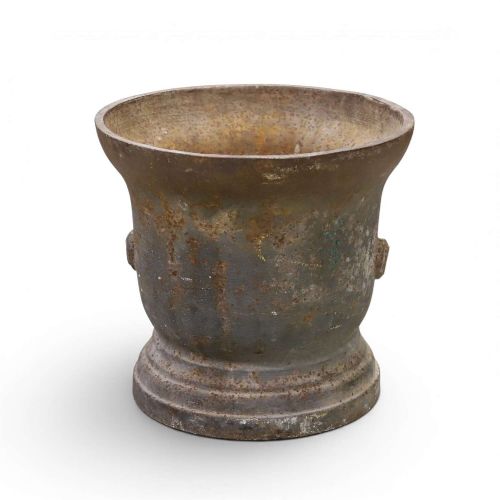
A heavy iron vessel is a utilitarian object forged or cast to endure, prized for its sheer mass and honest metalwork.
Heavy Iron Vessel
A heavy iron vessel spans utilitarian forms such as mortars, cauldrons, garden urns, and pots, alongside related metalware in copper and brass. The search for a heavy iron vessel leads directly to robust examples cast or wrought during the eighteenth, nineteenth, and early twentieth centuries.
Surviving examples range from French chateau kitchen mortars and garden jardinières to industrial measures and hearth accessories. Pieces from nineteenth-century France and Georgian England appear frequently on this page, reflecting domestic and agrarian utility.
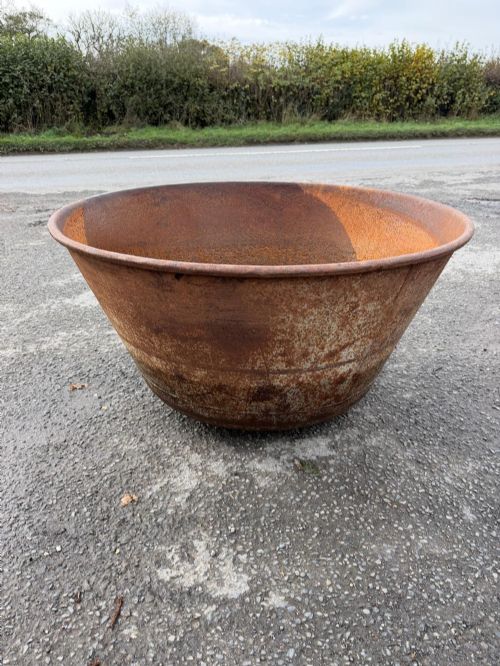
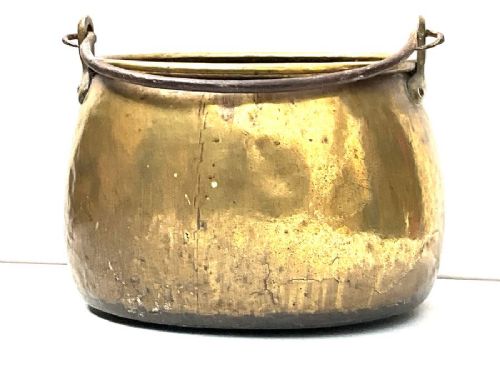
Forms vary from monumental cauldrons with wrought iron swing handles to substantial garden planters designed to withstand the elements. Each object retains the physical heft of its original workshop or garden function.
How they were made
Iron vessels are primarily produced through casting or wrought construction, utilising pig iron poured into sand moulds or shaped at the forge with hammer and anvil. Associated items combine cast and wrought elements, such as cauldrons fitted with hand-forged swing handles.
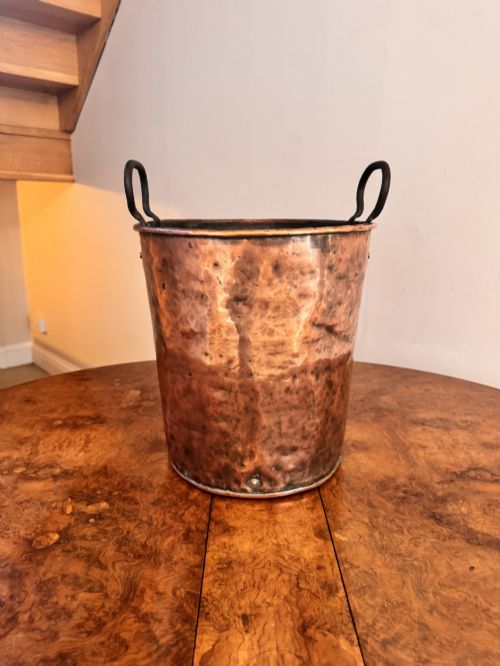
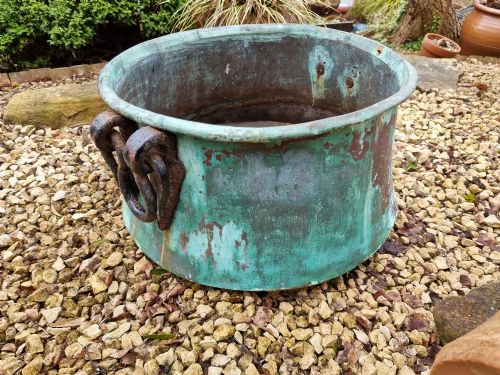
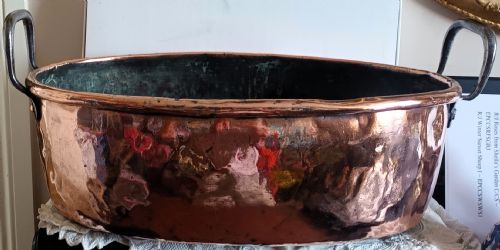
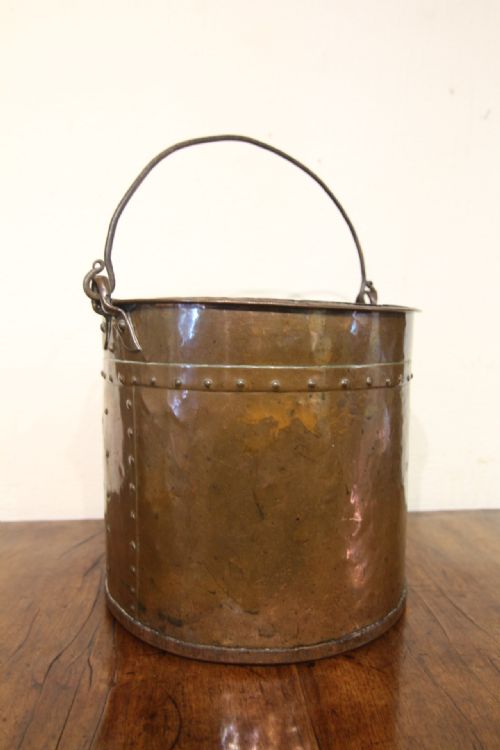
Complementary metals like copper and brass are utilised in pan and pot construction, often shaped by hand-beating and secured with heavy rivets. Surface finishes range from natural verdigris and patinated paint to dark, unpolished cast iron.
Heavy Iron Vessel Retail Price Guide 2026
Typical asking prices for heavy iron vessel among the pieces listed under this phrase on Sellingantiques today, from the lower quarter to the upper quarter. They describe what is for sale here now, not the wider market.
Listings feature items spanning the eighteenth century through the Victorian era and early twentieth century, constructed from cast iron, wrought iron, copper, and brass.
What varies in quality
Quality rests upon the crispness of the casting, the integrity of the metal, and the harmony of proportion across heavy forms. Superior pieces display substantial weight and balanced construction without clumsy repairs.
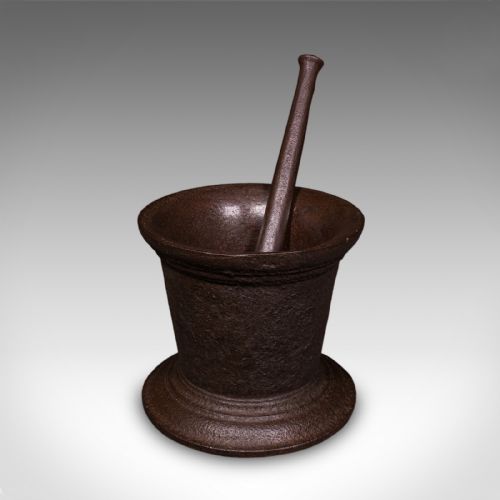
The degree of surface patination and the survival of original associated elements, such as wrought iron handles or matching pestles, distinguish exceptional specimens from standard workshop production.
The Heavy Iron Vessel Glossary
- Mortar
- A heavy bowl in which substances are crushed or ground with a pestle. These pieces often feature thick cast iron walls designed to absorb heavy impacts.
- Cauldron
- A large metal pot used for boiling over an open fire. They typically incorporate swing handles forged from wrought iron.
- Verdigris
- A green patina formed naturally on copper or brass surfaces through atmospheric oxidation. This layer develops over long periods of exposure.
- Wrought iron
- Iron that has been heated and hammered into shape by a smith. It is distinguished by its fibrous internal structure and durability.
- Jardiniere
- An ornamental pot or stand for holding plants or flowers. Large examples are frequently cast in iron for garden placement.
Heavy Iron Vessel: Frequently Asked Questions
What were heavy iron vessels used for?
These vessels served demanding practical roles in kitchens, pharmacies, and gardens, handling tasks from pounding materials to boiling liquids and planting large shrubs.
Their substantial mass ensured stability during heavy labour, whether used as dye maker mortars or utilitarian cauldrons.
How do I date a cast iron piece?
Dating relies on surface texture, casting seams, and the form of associated handles or feet. Earlier examples often show more irregular surface textures from sand casting.
Comparing the object's proportions and metal thickness to documented pieces helps narrow down the period.
Can these iron vessels live outdoors?
Cast and wrought iron items handle outdoor environments well, developing a stable protective rust layer over time. Garden urns and planters are specifically suited to exterior display.
Protecting them from standing water helps preserve the metal integrity over many winters.
Why do some copper pots have iron handles?
Wrought iron handles provided the necessary strength to lift heavy copper cauldrons filled with boiling contents. Iron resisted bending under loads that would distort softer metals.
This combination of copper bodies and iron handles reflects practical requirements of domestic and industrial kitchens.