

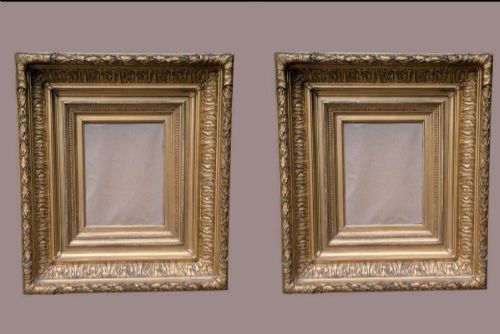
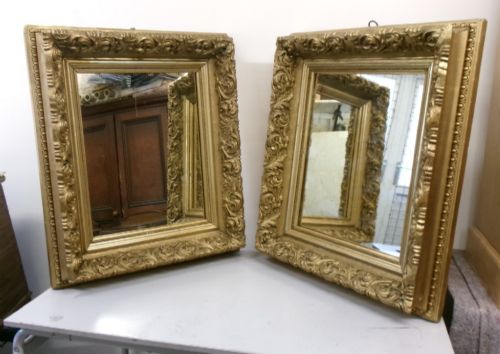

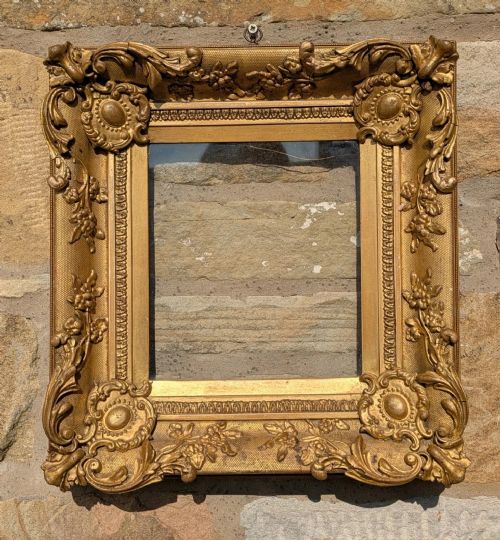


Heavy Gilt Mirror
A heavy gilt mirror brings immediate depth and nineteenth-century presence to a room through substantial scale and reflective brilliance.
Heavy Gilt Mirror
A heavy gilt mirror is a substantial wall-hanging or overmantle piece built around a deep wooden framework and finished in gold leaf or composition. These pieces primarily date from the nineteenth century, encompassing Victorian interpretations of earlier Baroque and Rococo revivals.
Buyers encounter pier glass mirrors, large overmantle designs, and deep picture frames adapted to hold glass. Forms range from ornate Victorian Rococo Revival wall mirrors to dark gilt pieces carrying sand finishes.
The most common examples on this page are nineteenth-century Victorian frames and overmantle mirrors designed for prominent interior placement. They combine heavy timber construction with elaborate moulded gesso ornament.
How they were made
Makers constructed these frames from solid wood bases, applying layers of gesso to build up high-relief ornament before gilding. Detail work relied on carved wood elements combined with moulded composition to achieve intricate Victorian revival motifs.
Finishing involved the application of gold leaf or dark gilt surfaces, sometimes paired with sand finishes to create contrasting matte textures against bright reflective areas. Mirror glass was then fitted securely into the deep rebated backs of the heavy frames.
Heavy Gilt Mirror Retail Price Guide 2026
Typical asking prices for heavy gilt mirror among the pieces listed under this phrase on Sellingantiques today, from the lower quarter to the upper quarter. They describe what is for sale here now, not the wider market.
Object forms on this page concentrate on large wall mirrors, pier glass mirrors, overmantle designs, and deep picture frames.
What varies in quality
Depth of carving and sharpness of gesso moulding set the finest examples apart from standard production pieces. Superior frames retain crisp detail across scrolling foliage and architectural borders without softening from excessive secondary layers of later finish.
The choice between genuine gold leaf and composition or paint finishes dictates the warmth and longevity of the surface. Original mirror glass with genuine foxing and heavy timber backing boards complete the indicators of higher craftsmanship.
The Heavy Gilt Mirror Glossary
- Giltwood
- Wood that has been gilded with gold leaf. This material forms the primary structural and decorative basis for high-status frames.
- Gesso
- A plaster-like mixture applied to wood frames and carved or moulded into decorative relief. It provides the smooth base needed for subsequent gilding.
- Overmantle mirror
- A large wall mirror designed specifically to hang above a fireplace mantelpiece. These pieces anchor nineteenth-century room proportions.
- Pier glass
- A tall mirror designed to hang on the wall space between windows. They maximise available light in period interiors.
- Sand finish
- A textured ground created by embedding sand into the gesso before gilding. It provides a contrasting matte background for polished ornament.
Heavy Gilt Mirror: Frequently Asked Questions
Where should I hang a heavy gilt mirror?
These pieces suit principal reception rooms, hallways, and chimney breasts where their substantial weight and scale command the space.
Ensure wall fixings anchor directly into structural brickwork or timber studs to safely support the considerable mass of wood and glass.
How do I identify a Victorian gilt mirror?
Look for deep timber construction, nineteenth-century gesso mouldings, and characteristic revival styles such as Rococo or Baroque ornamentation.
Backing boards, fixings, and the composition of the frame material generally align with nineteenth-century manufacturing methods.
Are these mirrors suitable for daily use?
They function as practical looking glasses while serving as primary architectural decoration within a room.
Original mirror glass remains functional, though centuries of use may introduce minor age spots that do not impede reflection.