



Heavy Crystal Bottles
Heavy crystal bottles are substantial vessels shaped by weight and light, offering collectors brilliant cut glass and lead crystal forms from the nineteenth and twentieth centuries.
Heavy Crystal Bottles
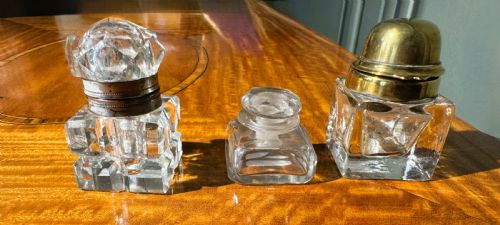
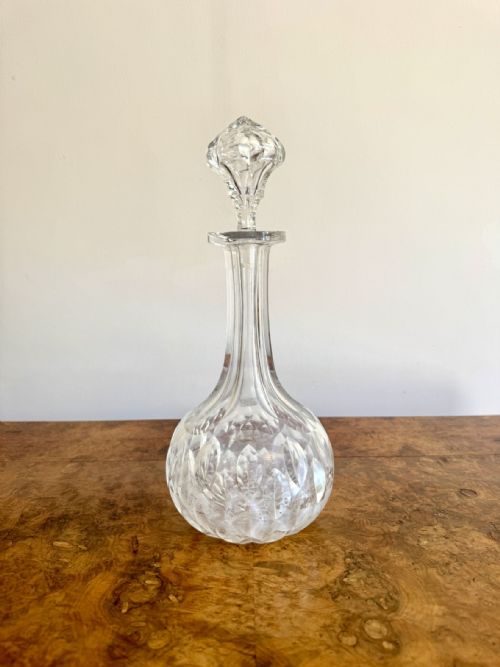
Heavy crystal bottles encompass decanters, inkwells, carafes, and cruet sets spanning the Georgian, Victorian, Edwardian, and Art Deco periods. Decanters dominate the selection, appearing in single examples, pairs, and trios shaped from cut glass, lead crystal, and cut crystal.
Early nineteenth-century examples include three-ring carafes and Regency lead crystal pieces, whilst later Victorian and Edwardian periods provide robust tablewares. A mid-century brandy decanter and an Art Deco five-piece cruet set hand cut in heavy lead crystal demonstrate the persistence of these utilitarian forms into later decades.
Buyers encounter distinct utilitarian configurations, from inkwells paired with silver or brass mounts to multi-piece cruet sets and large spirit decanters. The material spans standard glass to dense lead crystal, each form retaining the heft and refractive clarity characteristic of its production era.
Materials and production methods
Makers utilised lead glass, lead crystal, and heavy cut crystal, shaping the molten material into thick-walled vessels capable of sustaining deep wheel-cutting. The high lead content increased the refractive index of the glass, yielding the signature brilliance seen across Victorian and Edwardian decanters.
Decoration relied on manual hand-cutting techniques, where artisans ground geometric patterns, flutes, and rings directly into the hardened surface. Certain vessels integrated secondary materials such as silver, silver gilt, brass, and metal mounts to form collars, caps, and hinged lids.
The combination of heavy glass casting and skilled abrasive cutting produced durable objects designed for domestic service on sideboards and writing desks. Subsequent hand-polishing restored transparency to the cut facets, contrasting with the matte texture of the ground-in stoppers.
Heavy Crystal Bottles Retail Price Guide 2026
Typical asking prices for heavy crystal bottles among the pieces listed under this phrase on Sellingantiques today, from the lower quarter to the upper quarter. They describe what is for sale here now, not the wider market.
The listings span eight distinct production periods, stretching from the year 1800 through the mid-twentieth century.
Distinctions in craftsmanship
Quality rests in the depth and crispness of the hand-cutting, where sharper facet intersections and deliberate geometric precision distinguish finer vessels from simpler moulded wares. The density and clarity of the lead crystal base metal further separate standard domestic production from exceptional output.
The integration of precious metal mounts, such as silver and silver gilt collars or hinged caps by identifiable silversmiths, elevates the status of a decanter or inkwell. Balance, wall thickness, and the retention of matching original stoppers contribute significantly to the standing of any given piece.
Freeman & Son Ltd
The Heavy Crystal Bottles Glossary
- Lead crystal
- A type of glass containing a substantial percentage of lead oxide, which increases weight, brilliance, and softness for easier cutting. This material is standard in better-quality decanters and cruet sets.
- Decanter
- A vessel used for holding and serving wine or spirits, typically fitted with a ground glass stopper. Examples range from early three-ring carafes to heavy Edwardian cut glass editions.
- Cruet set
- A matched collection of small bottles or containers designed to hold condiments, oils, or vinegars at the dining table. They frequently appear mounted in frames alongside matching stoppers.
- Three-ring carafe
- A bottle featuring three applied glass rings around the neck, serving as a secure gripping point for the hand during pouring. These are particularly associated with the Regency and early nineteenth-century periods.
- Silver gilt
- Silver that has been coated with a thin layer of gold on its surface. This technique appears on high-end mounts and bottle collars.
Heavy Crystal Bottles: Frequently Asked Questions
What are heavy crystal bottles used for?
These vessels served primarily as functional containers for decanting wine and spirits, holding writing ink, or dispensing table condiments. Their dense walls and tight stoppers kept liquids secure during daily domestic use.
Today, collectors utilise them on dining tables, sideboards, and desks, appreciating their dual role as decorative objects and practical tableware.
How do I date a heavy crystal bottle?
Dating relies on observing the vessel form, cutting style, and neck construction, such as the three-ring configurations found on Regency and early nineteenth-century pieces. Heavier wheel-cutting and specific stopper shapes provide further clues to whether a piece originates from the Georgian, Victorian, or Edwardian eras.
Secondary materials like silver mounts or maker stamps also help anchor the piece within a specific manufacturing decade.
What is the difference between glass and lead crystal?
Lead crystal contains added lead oxide that increases the overall weight, density, and refractive index of the material. This composition allows artisans to cut deeper, sharper facets that catch the light more brilliantly than standard glass.
Lead crystal bottles feel noticeably heavier in the hand and produce a distinct ringing tone when tapped gently.
How do I care for antique crystal bottles?
Maintenance involves gentle hand washing in warm water with mild detergent, avoiding sudden temperature changes that can stress old glass. Wooden or metal mounts should be kept dry to preserve the integrity of the secondary materials.
Stoppers should be stored carefully or kept slightly loose within the necks to prevent them from becoming permanently stuck over time.