


Heavy Copper Log Vessel
A heavy copper log vessel brings warmth and texture to a hearth, offering a durable and handsome home for firewood.
Heavy Copper Log Vessel
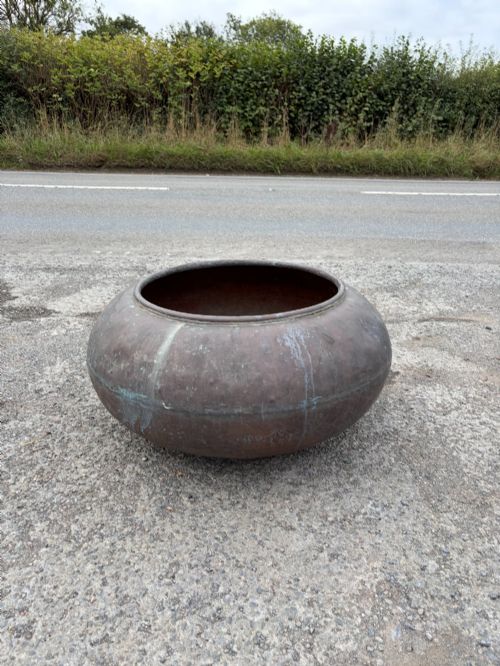
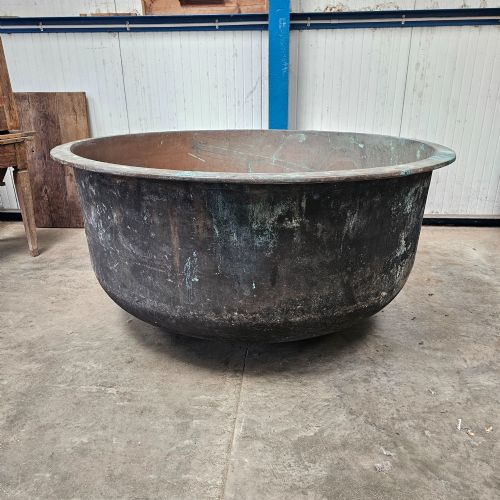
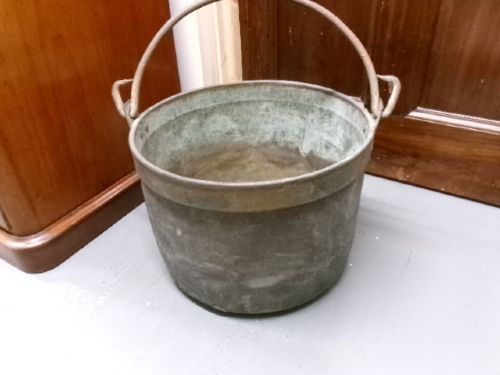
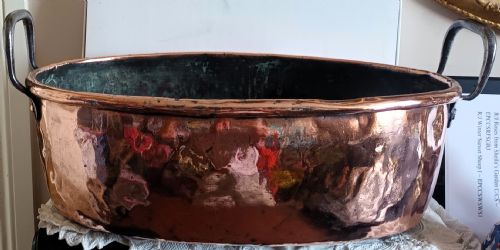
When you search for a heavy copper log vessel, you encounter utilitarian containers originally forged for cooking, boiling, or storing grain during the nineteenth century. These sturdy vessels include cauldrons, boilers, cheese vats, and coal buckets that now find a second life by the fireplace.
The pieces you meet most often on this page date from the Victorian era and the broader nineteenth century, spanning rustic country styles to industrial kitchenware. Many of these sturdy items cross boundaries between log bins, garden planters, and traditional fireside accessories.
Originating from British and French provincial workshops, these metal containers display the honest wear of past agricultural and domestic labour. Their generous proportions and robust build make them practical for holding logs beside an open hearth.
How they were made
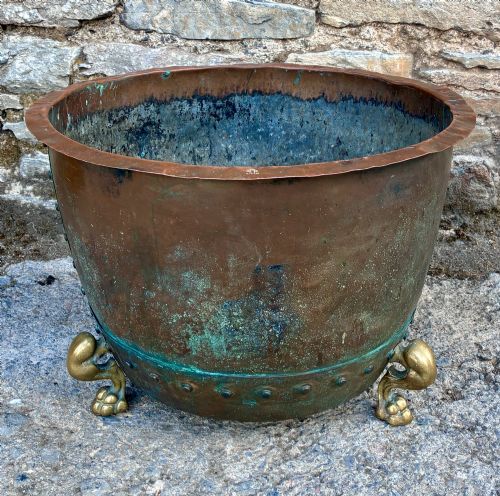
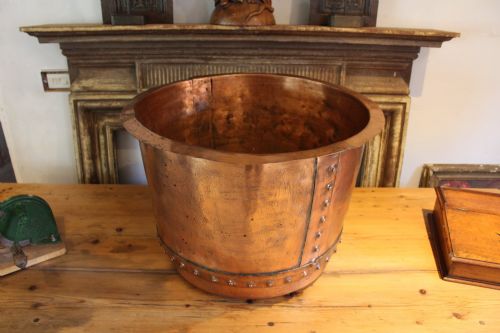
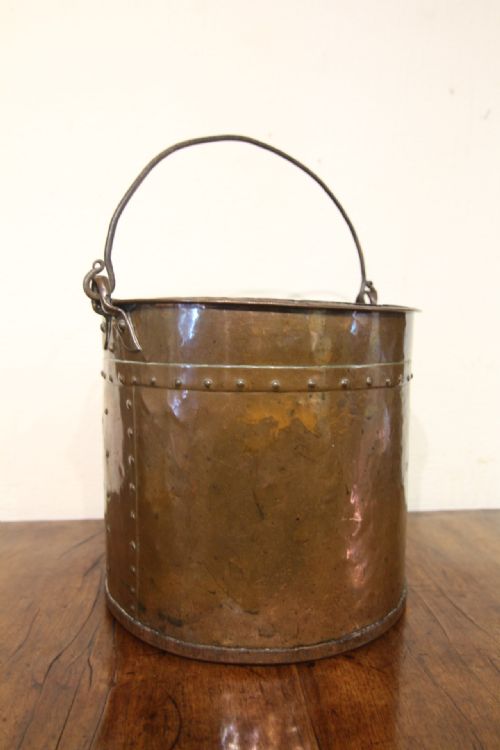
The fabrication of these vessels relies on heavy sheet copper, shaped and joined with visible hand-beaten rivets that secure the overlapping seams. Wrought iron or brass swing handles are typically attached via robust mounts, providing the structural strength needed to lift heavy loads.
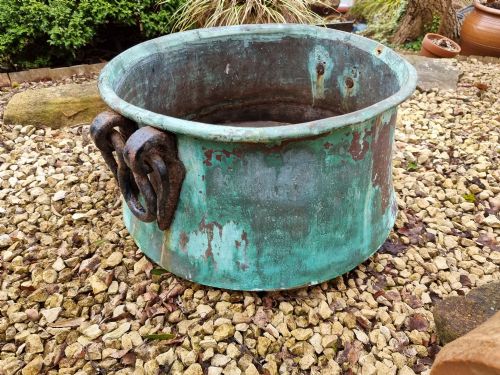
Makers reinforced the rims and bases with iron bands or folded edges to withstand the rigours of daily kitchen or farm use. Over decades of service, the metal acquired a natural patina, sometimes showing traces of verdigris from exposure to moisture.
Some containers started life churning cheese in French valleys before retiring to British fireplaces as log bins.
What varies in quality
Substance and wall thickness dictate the integrity of a piece, distinguishing robust vessels meant for heavy hauling from lighter decorative items. Weight plays a primary role, as thicker metal plates ensure the container maintains its structural form under the pressure of stacked timber.
The character of the surface finish and the integrity of the original joints also set examples apart. Vessels retaining honest patination, secure iron handles, and tight riveting demonstrate superior craftsmanship from their working days.
The Heavy Copper Log Vessel Glossary
- Verdigris
- A green patina that forms naturally on copper and brass through long-term exposure to atmospheric elements or moisture. This surface oxidation provides visual depth and authentic age to old metalwork.
- Riveted
- A method of joining sheet metal where metal pins are driven through overlapping sections and hammered flat to secure the seam. This technique precedes modern welding and ensures lasting durability.
- Cauldron
- A large round metal pot with a wide opening and a swing handle, traditionally used over an open fire for boiling or cooking. These deep vessels translate well into fireside log holders.
- Dinanderie
- European brass and copper hollowware, encompassing decorative and utilitarian vessels produced in towns along the Meuse valley and beyond. The term describes objects beaten from sheet metal.
- Patina
- The surface sheen and colour acquired by metal through age, handling, and use over many decades. It serves as a visual record of an object's history.
Heavy Copper Log Vessel: Frequently Asked Questions
Can I use these vessels for real logs?
These robust metal containers were built for heavy kitchen and farm work, making them well-suited for holding firewood by the hearth.
Their solid construction and riveted seams easily withstand the weight and rough handling of logs.
How do I clean old copper?
Most collectors prefer to leave the accumulated patina and natural surface character untouched rather than polishing the metal to a bright shine.
A gentle wipe with a soft, dry cloth removes dust while preserving the historic appearance.
Are these pieces waterproof for plants?
Many of these vessels double as garden planters and plant pots, though checking individual seams for water retention is sensible.
Placing a liner inside protects the historic metal from prolonged contact with damp soil.
How do I date a copper vessel?
Dating relies on observing construction methods, such as hand-beaten rivet patterns, handle attachments, and overall form.
Nineteenth-century examples typically display heavy sheet construction and forged iron elements rather than modern machine stamping.