





Heavy Carved Cupboards
Heavy carved cupboards bring significant presence to a room, offering robust storage shaped by centuries of revival styles.
Heavy Carved Cupboards
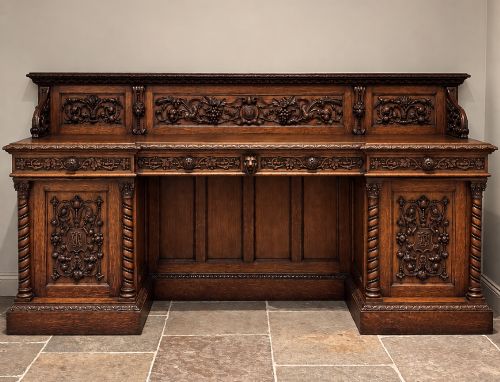
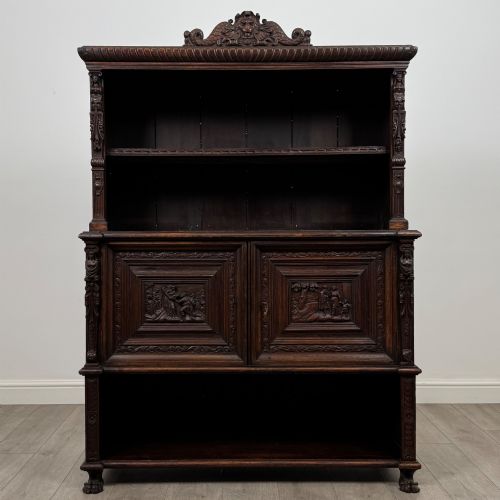
Heavy carved cupboards encompass substantial storage furniture built primarily during the Victorian period and the nineteenth century. These pieces include large sideboards, dresser bases, bookcases, and hall cupboards designed to anchor a room.
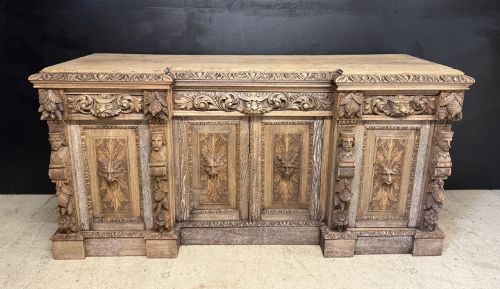
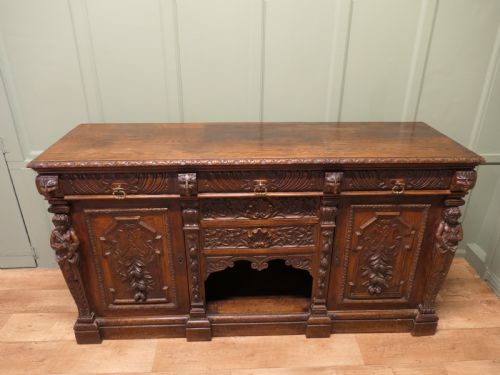
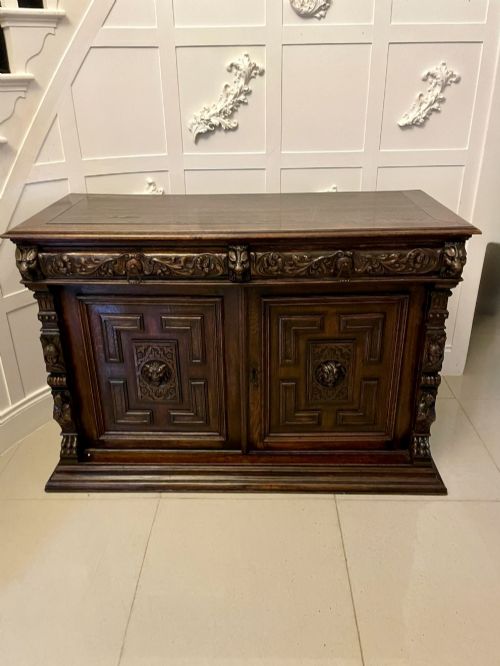
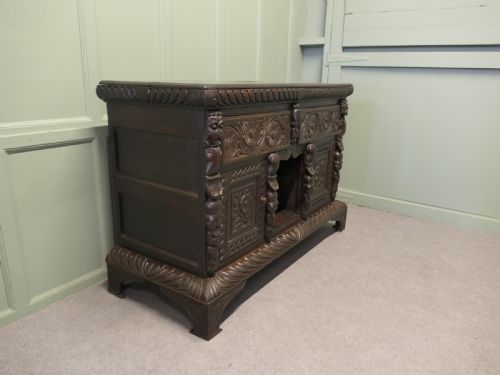
The dominant material found in these items is oak, frequently worked into deep relief panels displaying figures such as the Green Man or architectural motifs drawn from earlier centuries. Alongside traditional oak, variations feature teak and rosewood.
Buyers frequently encounter revival styles that emulate Jacobean, Renaissance, Gothic, and Flemish Baroque aesthetics. These designs use heavy timber and dense carving to project authority and age.
How they were made
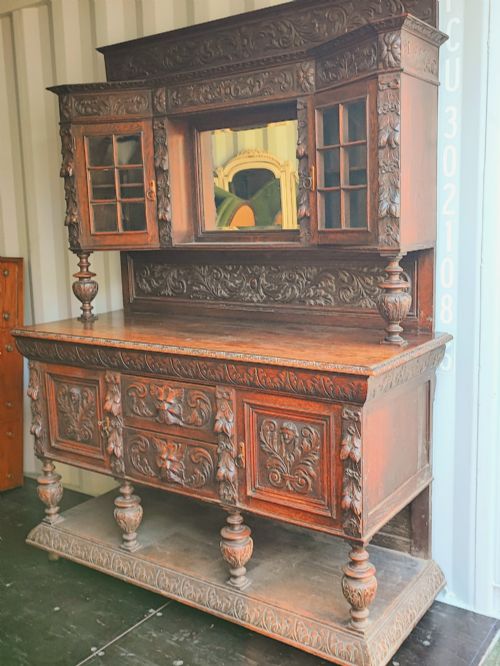
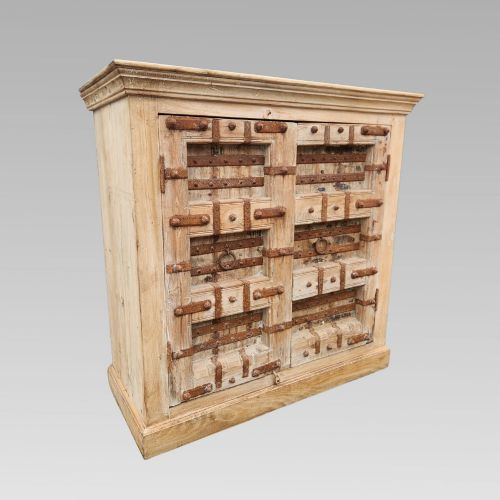
Makers constructed these substantial pieces from solid timber planks, with oak forming the vast majority of the carcasses and door panels. Selected pieces integrate secondary materials such as brass fittings, iron hardware, and mirror glass.
Woodcarvers worked directly into the thick wood to create high-relief scenes, foliate scrolls, and figural details like Green Man masks. Joinery relied on traditional methods suited to supporting heavy superstructures and mirrored backs.
Heavy Carved Cupboards Retail Price Guide 2026
Typical asking prices for heavy carved cupboards among the pieces listed under this phrase on Sellingantiques today, from the lower quarter to the upper quarter. They describe what is for sale here now, not the wider market.
Green Man carvings watch over household supplies with leafy expressions, reminding users that nineteenth-century storage could possess a distinct personality.
What varies in quality
Quality rests primarily on the depth and crispness of the carving, where hand-tooled execution displays sharper detail than mechanical or shallow work. The thickness of the timber and the architectural proportion of cornices and pilasters also separate standard production from monumental examples.
Hardware and secondary elements contribute to the overall standard, distinguishing simple utilitarian storage from grander sideboard and bookcase commissions.
The Heavy Carved Cupboards Glossary
- Green Man
- A sculptural motif depicting a human face emerging from or entwined with foliage. It appears frequently as a central carved mask on Victorian oak cupboards.
- Stretcher base
- A lower framework connecting the legs of a cupboard or sideboard for added stability. These often feature heavy turned members.
- Renaissance Revival
- A nineteenth-century design movement drawing inspiration from sixteenth-century European architecture. Pieces in this style utilise heavy moulding and symmetrical carved panels.
- Flemish Baroque
- A revival style characterised by exuberant scrolling ornamentation, high-relief figures, and dramatic architectural pediments. It is frequently seen on large nineteenth-century oak cabinets.
- Bevelled glass
- Glass panes with edges cut and polished at an angle. This technique adds depth and reflects light within mirrored back sideboards and cabinet doors.
Heavy Carved Cupboards: Frequently Asked Questions
Where should I place a heavy carved cupboard?
These substantial items require adequate floor space and strong structural support due to their solid timber weight. They function best anchored against a principal wall in a dining room, hallway, or large living space.
Ensure the chosen wall allows the piece to command the room without obstructing pathways, as proportions are often monumental.
How do I care for antique oak surfaces?
Maintain the wood by dusting regularly with a soft, dry cloth to prevent particulate buildup in deep carvings. Avoid commercial silicone sprays, opting instead for traditional beeswax applied sparingly.
Keep the timber away from direct heat sources and strong sunlight to prevent the grain from drying out or splitting.
What periods do these cupboards date from?
The available pieces originate predominantly from the Victorian era and the broader nineteenth century, with examples stretching into the early twentieth century. Makers drew stylistic inspiration from Jacobean, Gothic, and Renaissance models.
Dates are typically determined by construction methods, hardware types, and the specific revival style employed.
How do I identify a Green Man carving?
Look for a face surrounded by or composed of leaves, vines, or branches emerging from the mouth or cheeks. This pagan symbol of rebirth was revived during the Victorian period to decorate furniture panels.
It serves as a primary decorative focal point on many nineteenth-century cupboard doors and dresser bases.