


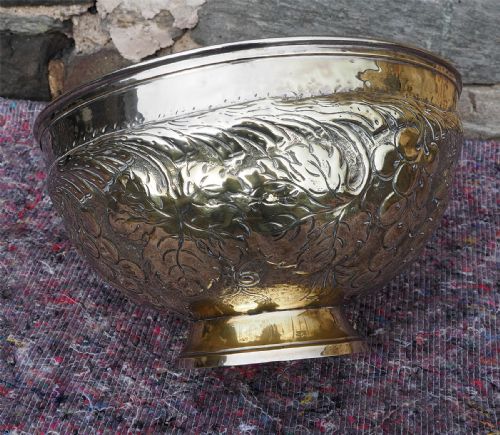


Heavy Brass Bucket
A heavy brass bucket is a sturdy hearth vessel built to hold fuel or water, prized for its robust metalwork and warm metallic sheen.
Heavy Brass Bucket
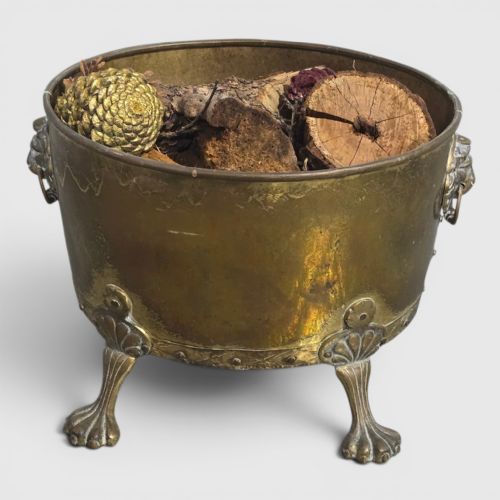
A heavy brass bucket combines practical utility with decorative presence, frequently serving near the fireplace as a log bin, coal bucket, or fireside tub. These vessels range from Victorian and Georgian domestic items to specific styles like Anglo-Indian campaign pieces and Art Deco cauldrons.
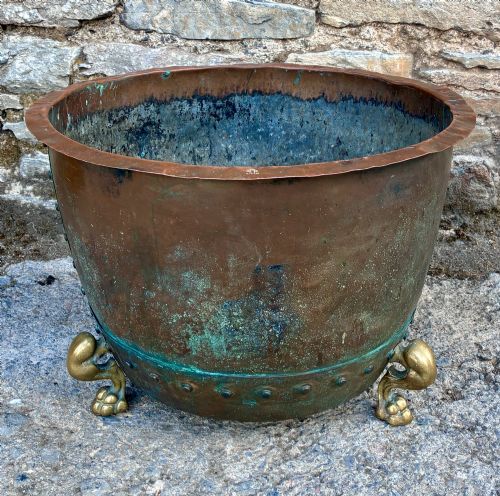
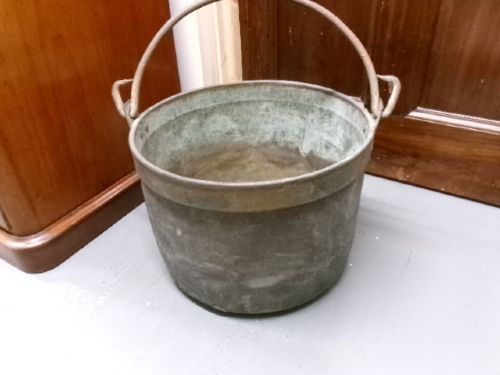
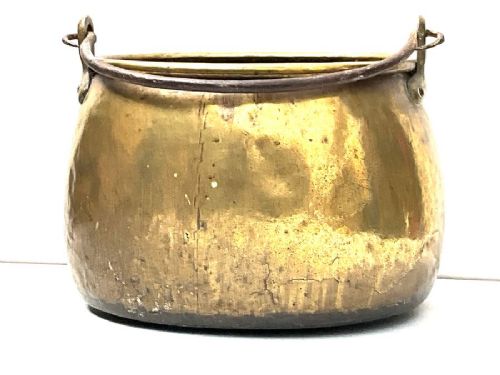
You are most likely to encounter Victorian and nineteenth-century examples on this page, often formed as large brass pails, coal scuttles, or swing-handled pans. Many pieces integrate iron handles, copper bodies, or wrought iron elements alongside the primary brass construction.
Beyond fireside use, these items frequently function as plant jardinières, display pans, or wine and champagne coolers. Their substantial weight and durable metal build allow them to transition easily from utilitarian kitchenware to decorative interior objects.
How they were made
Construction relies heavily on sheet brass, copper, and cast brass components, often joined by visible riveting that adds structural strength and visual character. Artisans shaped these metals through hammering, spinning, or casting, creating thick walls capable of withstanding heavy daily use.
Many items incorporate contrasting materials, pairing brass bodies with wrought iron handles, iron swing bails, or silver plating for reinforcement and decorative effect. Surface finishes vary from smooth polished metal to hammered dinanderie textures and patinated antique patinas.
Listings span the nineteenth century through the 1930s, featuring brass, copper, and wrought iron forms.
What varies in quality
Quality rests on the thickness of the metal sheet and the integrity of the construction, where heavier gauge brass and secure riveting distinguish superior vessels from lighter utilitarian ware. Substantial handles, solid mounting brackets, and well-fitted bases indicate careful manufacturing.
Design sophistication also separates ordinary containers from exceptional pieces, evident in refined proportions, hand-hammered detailing, and maker attribution. Pieces bearing specific workshop marks or distinctive regional styles command greater interest among collectors.
William Soutter And Sons
The Heavy Brass Bucket Glossary
- Dinanderie
- An umbrella term for decorative brass and copper ware, often associated with beaten or etched metal vessels produced in Europe.
- Coal scuttle
- A household bucket or bin specifically shaped with a sloping mouth or scoop for carrying coal to a fireplace.
- Jardinière
- An ornamental pot or stand designed to hold growing plants or flowers indoors.
- Campaign bucket
- A sturdy, portable metal vessel originally built for travel and military use during the nineteenth century or earlier.
- Swing handle
- A movable arched metal bail attached to the sides of a bucket or pan by pivoting mounts.
Heavy Brass Bucket: Frequently Asked Questions
What were heavy brass buckets originally used for?
These vessels primarily served domestic utility roles around the hearth, carrying coal, logs, or water to stoke fires in period homes. Their durable metal construction made them ideal for heavy daily transport before central heating.
Over time, many of these robust containers transitioned into decorative display roles, holding plants, kindling, or ice for beverages in formal rooms.
How do I clean a vintage brass bucket?
Maintenance depends on the preferred finish, as some owners enjoy a dark, undisturbed antique patina while others prefer a polished glow. Gentle washing with warm soapy water removes dust and surface grime without stripping the metal's history.
Avoid harsh chemical abrasives that can thin the brass sheet or damage riveted joints. A soft cloth and mild metal cleaner suffice for light maintenance.
Are these buckets safe for holding logs?
Most nineteenth-century and Victorian brass buckets are thick-walled and structurally sound enough to hold firewood without sustaining damage. Their substantial weight helps prevent tipping when loaded with heavy logs.
Checking the strength of the handle attachments and the stability of the base ensures the vessel handles the weight safely.
How can I tell a Victorian bucket from an earlier piece?
Dating relies on observing construction methods, material combinations, and stylistic markers recorded across nineteenth-century and Georgian examples. Earlier pieces often display heavier cast components and hand-forged iron fittings.
Victorian pieces frequently feature machine-rolled edges, standardised riveting, and distinct stylistic revivals ranging from rustic farmhouse to ornate display forms.