

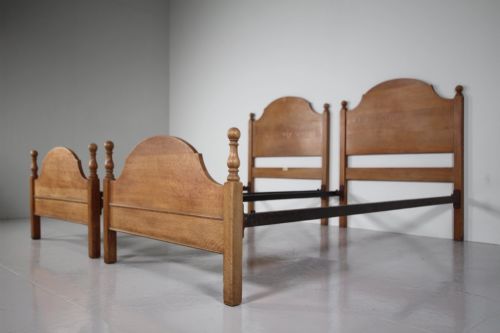


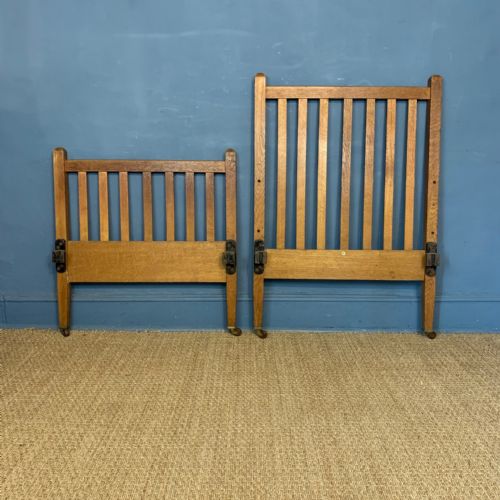

Heals Wooden Bed
Heals wooden bed designs bring straightforward Arts and Crafts utility and Edwardian craftsmanship directly into a bedroom.
Heals Wooden Bed
A heals wooden bed brings together practical single bedframes and child's furniture produced by the maker across the Edwardian, Victorian, and early twentieth-century periods. Buyers searching for a heals wooden bed generally encounter single bed sizes, pairs of single beds, and occasionally cribs or cradles.
The material selection leans heavily toward oak, walnut, and mahogany, reflecting the Arts and Crafts and Edwardian styles associated with the maker. Pieces often include labelled examples, panelled headboards, and inlaid details that mark them out from generic furniture of the era.
Most examples found on this page date from 1900 through to the 1940s, capturing the transition from Victorian output to limed oak designs and pieces in the manner of the firm. Single beds predominate, making them suitable for guest rooms or period bedroom schemes.
How they were made
Construction relies upon solid timbers such as oak, mahogany, and walnut, often shaped into sturdy bedframes and panelled bedsteads. Joinery is straightforward and robust, emphasising the natural grain of the wood rather than excessive ornamentation.
Surface treatments range from polished mahogany and walnut to limed oak finishes, alongside occasional inlaid details. Some pieces incorporate cane or rattan panels, particularly within rocking cribs and lighter headboard designs.
Heals Wooden Bed Retail Price Guide 2026
Typical asking prices for heals wooden bed among the pieces listed under this phrase on Sellingantiques today, from the lower quarter to the upper quarter. They describe what is for sale here now, not the wider market.
The listings span from 1900 through to 1940, utilising oak, mahogany, walnut, iron, and brass.
What varies in quality
The presence of original maker labels or clear attribution provides a distinct marker of authenticity for these wooden beds. Stamped or paper labels from Heal & Son elevate a piece above unattributed items or those merely in the manner of the maker.
Material choice and decorative refinement also distinguish the range, from simple oak single frames to inlaid mahogany or walnut panelled bedsteads. The complexity of the woodwork and the integrity of integrated materials like cane panels further define the standard of execution.
Heal and Son·Heal's
The Heals Wooden Bed Glossary
- Edwardian
- Dating from the reign of King Edward VII, this period produced lighter, simpler furniture designs that moved away from heavy Victorian styles. It frequently appears in the dates of these listings.
- Arts and Crafts
- A design movement emphasising handcraftsmanship, simple forms, and local materials. Heal & Son heavily influenced this aesthetic in domestic furniture.
- Limed oak
- A wood finish created by applying a white or pale compound to oak to highlight the grain. It became popular in early twentieth-century modern furniture.
- Panelling
- Flat sections of wood framed by stiles and rails, commonly used on headboards and footboards. It adds structural rigidity and decorative depth to bedsteads.
Heals Wooden Bed: Frequently Asked Questions
Are these beds standard modern sizes?
Older single beds often differ from contemporary mattress dimensions, meaning custom mattresses may be required for a proper fit.
Checking exact internal measurements before purchasing ensures modern bedding will sit correctly within the antique frame.
How do I identify a labelled piece?
Original paper labels or stamps from the maker are typically affixed to the inner rails or headboard timbers.
These marks confirm the workshop origin and help distinguish authenticated pieces from similar furniture of the same period.
Can these wooden beds be easily dismantled?
Most period single bedframes utilise standard wooden or iron bed bolts that allow the headboard, footboard, and rails to separate.
This modular construction makes transport and assembly straightforward within domestic spaces.
What maintenance do limed oak finishes need?
Limed oak surfaces benefit from gentle dusting with a dry cloth and should be kept away from excessive moisture and direct sunlight.
Avoiding harsh chemical polishes preserves the pale grain filler characteristic of the finish.