







Hardwood Vase Table
A hardwood vase table brings the quiet gravity of carved timber and cool stone into a room, offering a sturdy stage for ceramics or foliage.
Hardwood Vase Table
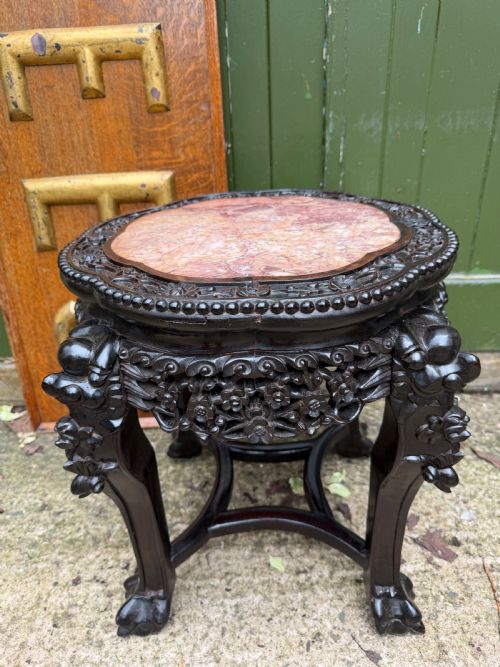
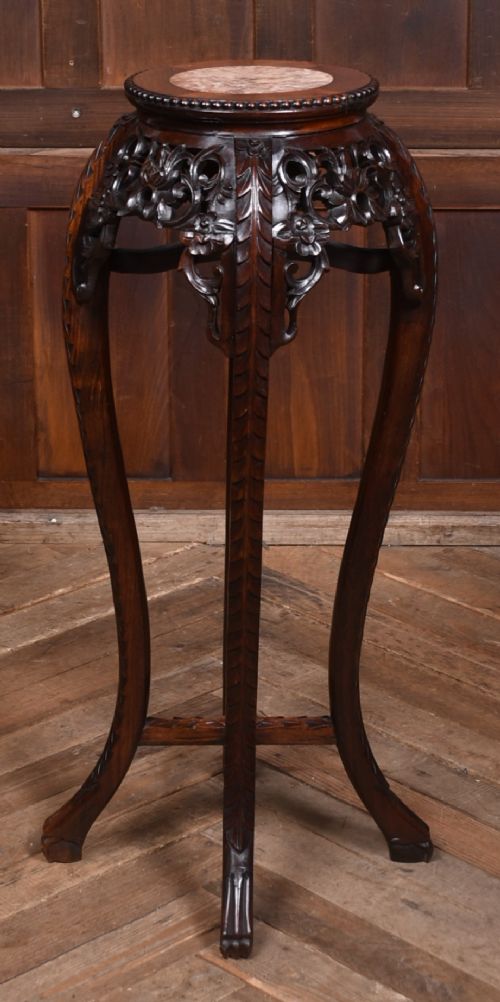
When you search for a hardwood vase table, you are looking at low occasional pieces and tall plant pedestals designed to elevate ceramics, urns, and lamps. These items appear across nineteenth-century and early twentieth-century dates, predominantly reflecting Chinese export and Qing Dynasty traditions.
The versions most commonly met on this page are carved stands featuring inset marble tops, functioning equally well as side tables, jardiniere stands, or display surfaces. They range from compact low tables to taller pedestals intended for prominent corners of a room.
Materials and construction
Makers utilised dense timbers such as rosewood, mahogany, huali wood, hongmu, and ebonised wood to build these stands, ensuring structural stability for heavy stone and ceramic vessels. These heavy hardwoods permitted deep, intricate carving without compromising the integrity of the frame.
Many examples incorporate inset panels of variegated rouge marble, fitted precisely into the timber top to create a durable, cool surface. Lacquer finishes and traditional joinery methods complete the construction, binding the components together without reliance on modern fasteners.
Hardwood Vase Table Retail Price Guide 2026
Typical asking prices for hardwood vase table among the pieces listed under this phrase on Sellingantiques today, from the lower quarter to the upper quarter. They describe what is for sale here now, not the wider market.
Some nineteenth-century makers carved wooden aprons to mimic the natural roots of trees, reminding owners of the forest inside the parlour.
Judging the work
The distinction between standard examples and superior pieces lies in the depth and crispness of the carving, alongside the selection of the timber. Finely rendered floral or geometric motifs demonstrate a higher degree of artisan skill than repetitive, shallow incision.
The quality of the inset marble also sets pieces apart, particularly the complexity of the natural veining and how smoothly the stone sits flush within the wooden frame. Heavier, more substantial timber scantlings denote a superior standard of manufacture.
The Hardwood Vase Table Glossary
- Hongmu
- A dense, dark tropical hardwood favoured for traditional Chinese furniture and decorative stands. It takes a high polish and supports intricate relief carving.
- Huali wood
- A fragrant and highly prized Chinese hardwood known for its rich grain patterns and durability. Pieces constructed from this material command particular attention.
- Jardiniere stand
- A tall or low pedestal specifically built to support a ceramic flower pot or plant container. These stands often feature water-resistant stone insets.
- Marble top
- A slab of polished stone inserted into the surface of a table or stand. This feature provided a cool, heat-resistant area for vessels.
- Qing Dynasty
- The final imperial dynasty of China, spanning from the seventeenth to the early twentieth century. Many decorative stands originate from its later decades.
Hardwood Vase Table: Frequently Asked Questions
What is a hardwood vase table used for?
These pieces were originally built to elevate vases, planters, and decorative objects, lifting them away from the floor to display them properly.
Today, they function well as compact side tables, lamp stands, or pedestals for contemporary ceramics and sculptures.
How do I date a Chinese vase stand?
Dating relies on observing the timber species, the style of the carving, and construction techniques. Late nineteenth-century examples often display deep Qing carving patterns.
Changes in finish and the integration of the marble top also help place a piece within the Victorian or Edwardian periods.
Are these tables sturdy enough for daily use?
The dense hardwoods utilised in their construction make them exceptionally strong and stable. They were engineered to bear the weight of heavy stone and ceramic vessels.
Their robust frames handle the demands of holding lamps or cups without difficulty.
What is the difference between a plant stand and a vase table?
Plant stands tend to be taller and narrower, designed to showcase foliage and trailing plants from a corner position. Vase tables are frequently lower and wider, intended for display at seating height.
In practice, makers and buyers often used the terms interchangeably for similar carved hardwood furniture.