
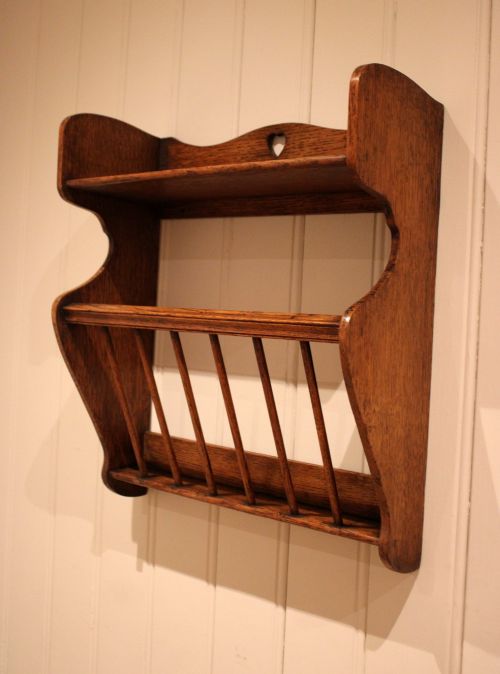


Hanging Oak Shelf Unit
These hanging oak shelf unit pieces bring period timber and practical wall storage straight into modern rooms without eating up floor space.
Hanging Oak Shelf Unit
A hanging oak shelf unit provides sturdy vertical storage mounted directly to the wall, saving precious floor space in compact rooms. These pieces combine utilitarian wall hanging designs with the rich grain of solid timber.
The selections range from the straightforward utility of the 18th century down through Victorian Gothic Revival and Arts and Crafts iterations. Buyers frequently encounter simple wall shelves alongside specialised pieces featuring integrated magazine racks, mirrors, or small cupboards.
Originating largely from English country workshops and domestic settings, these pieces suit kitchens, hallways, and bathrooms alike. Their straightforward forms prioritize durable utility alongside the natural warmth of oak.
How they were made
Construction relies heavily on solid oak boards, frequently supported or contrasted by secondary timbers such as beech in structural framework. Joinery tends toward traditional pegging and housing joints designed to bear weight securely against a wall.
Hardware plays a functional role, utilising brass fixings, hinges, and wrought iron brackets to secure doors and hanging points. Glass panels occasionally appear in door inserts on enclosed hanging cupboards, adding transparency to heavier timber frames.
Some nineteenth-century units doubled as cloakroom mirrors, proving that Victorians loved checking their hair just as much as we do.
What varies in quality
Quality separates in the crispness of timber preparation and the subtlety of decorative joinery details rather than mere age. Better examples display carefully selected oak grain that runs harmoniously across boards, joined with tight, enduring tolerances.
The integration of secondary functions, such as built-in magazine racks, mirrors, or small cupboards, distinguishes finer vernacular workshop output from basic utility items. Hardware integration also marks the difference, with hand-forged or cast brass and iron fittings elevating the overall execution.
The Hanging Oak Shelf Unit Glossary
- Oak
- A dense, durable hardwood prized for its pronounced grain pattern and structural longevity in period furniture. It forms the primary material basis for these wall hanging units.
- Arts and Crafts
- A design movement emphasising handcraftsmanship, simple forms, and honest materials over mass production. Pieces from this style often feature exposed joinery and utilitarian honesty.
- Victorian Gothic Revival
- A style drawing inspiration from medieval architecture, characterised by pointed arches, deep moulding, and heavy proportions. This aesthetic appears on more ornate nineteenth-century wall shelving.
- Beech
- A hard, fine-grained timber frequently utilised for secondary framing or internal structural elements. It provides reliable strength where visible grain is less essential.
- Wrought iron
- Tough, malleable iron worked by hand into brackets, hinges, and hooks. It offers robust structural support for heavy wall-mounted furniture.
Hanging Oak Shelf Unit: Frequently Asked Questions
What rooms suit a hanging oak shelf unit?
Kitchens benefit greatly from open oak shelving for everyday crockery and provisions, utilising vertical wall space efficiently. Hallways and bathrooms also accommodate these units well, particularly versions incorporating mirrors or cloakroom hooks.
Living rooms and studies provide an ideal backdrop for displaying books or decorative objects on sturdy timber ledges. The natural grain of the wood warms up smaller spaces without cluttering the floor.
How do I date an antique oak shelf?
Dating relies heavily on construction methods, tool marks visible on the timber, and the overarching stylistic period of the piece. Eighteenth-century examples often display hand-sawn board edges and simpler, pegged joinery compared to later Victorian iterations.
Nineteenth-century pieces may introduce machine-sawn elements, factory-cast brass hardware, or distinct revival motifs like Gothic arches. Comparing the wood patina and overall design against known periods helps narrow down the decade of manufacture.
How do I care for antique oak?
Maintain the timber by dusting regularly with a soft, dry cloth and occasionally applying a traditional beeswax polish to nourish the grain. Avoid placing oak furniture in direct sunlight or near sudden heat sources, which can cause the wood to dry out and split.
Keep moisture away from unfinished surfaces to prevent water staining the antique timber. Gentle maintenance preserves the natural patina built up over centuries of domestic use.