







Hanging Ceiling Bowl
A hanging ceiling bowl brings functional elegance to high rooms, casting diffused overhead illumination through fine glass or alabaster.
Hanging Ceiling Bowl
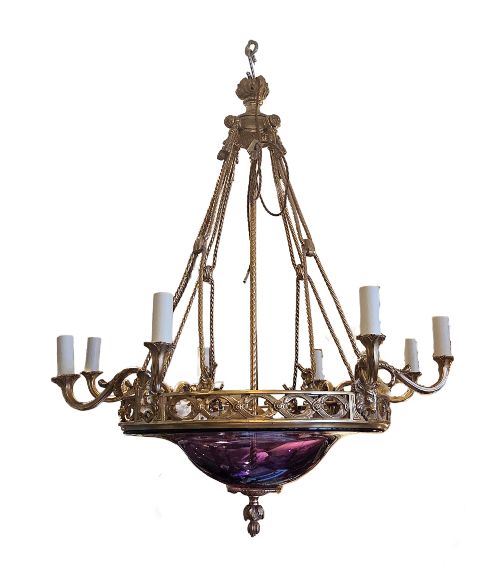
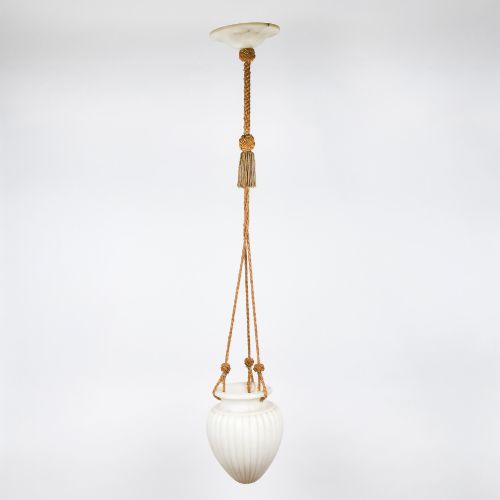
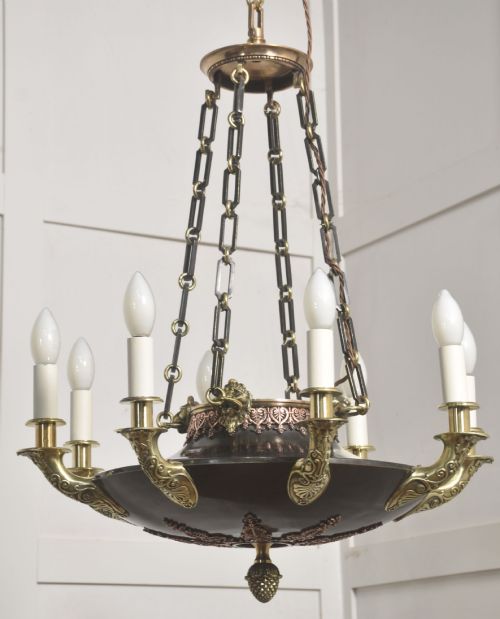
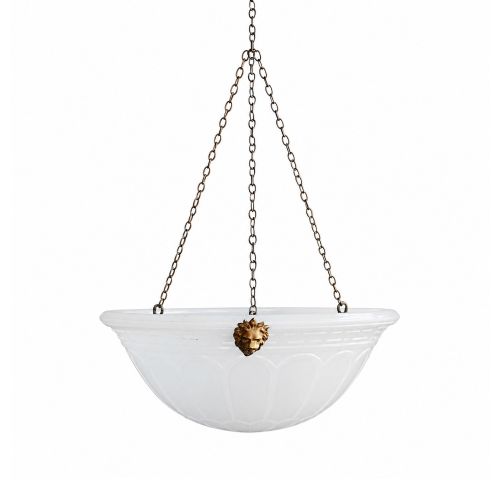
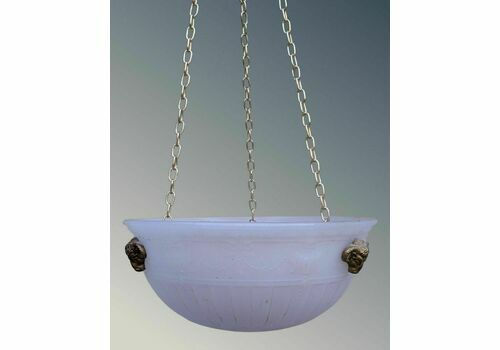
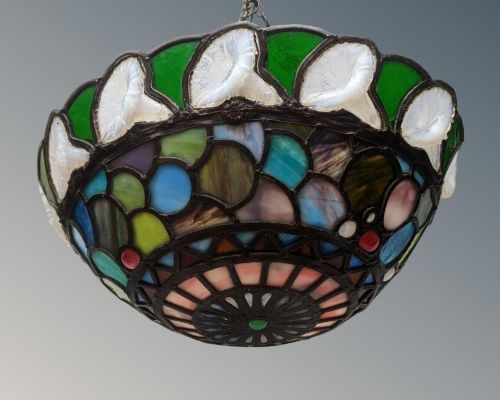
A hanging ceiling bowl offers a distinctive way to light a room from above, suspended by chains or cords from the ceiling roses. When you search for a hanging ceiling bowl, you encounter fixtures that span from the late nineteenth century through the art deco period. These pieces take the form of shallow dishes, deep bowls, and plafonniers designed to hold single bulbs or multi-light clusters.
The most frequent examples you meet on this page date from the Edwardian era and the 1920s, showing styles from classical revival to striking art deco geometry. They utilise bowls made of alabaster, frosted glass, or cut crystal, held by brass, bronze, or copper mounts. Such lighting works well in hallways, living rooms, and dining spaces where direct glare needs softening.
Makers and designers from these periods produced various configurations, including single suspension chains and elaborate multi-light frameworks. You will find pieces described variously as pendant lights, dish lights, and bowl chandeliers. Each variant serves to distribute light evenly across a space while acting as a decorative architectural feature.
What varies in quality
Quality rests upon the purity and depth of the materials, from translucent white alabaster with fine natural veining to heavy, crisply cast bronze mounts. Superior pieces display harmonious proportions between the suspension hardware and the central bowl, avoiding clumsy junctions or mismatched replacement chains. The refinement of decorative details, such as hand-cut facets on crystal or detailed metal casting, separates standard production from finer examples.
Condition and originality dictate much of the appeal, particularly where original suspension systems, patinated brass, and undamaged glass bowls remain intact. Pieces that retain their period fabric cords, matching ceiling roses, and undamaged rims show greater integrity. The visual weight and presence of the fixture depend on the clarity of the glass and the substantial nature of the metal components.
Hanging Ceiling Bowl Retail Price Guide 2026
Typical asking prices for hanging ceiling bowl among the pieces listed under this phrase on Sellingantiques today, from the lower quarter to the upper quarter. They describe what is for sale here now, not the wider market.
Listings feature items spanning the late nineteenth century through the 1930s, encompassing Edwardian, Art Deco, and Neoclassical styles.
The Hanging Ceiling Bowl Glossary
- Plafonnier
- A ceiling-mounted or close-hung bowl light fixture designed to sit flush or close to the ceiling surface. These shades direct illumination upward against the ceiling or diffuse it softly downward.
- Alabaster
- A fine-grained, translucent stone used extensively for carved lighting bowls during the early twentieth century. Its natural opacity creates a warm, even glow when illuminated from within.
- Moonstone glass
- An opalescent type of art glass characterised by a milky, luminous appearance that resembles the gemstone. It softens bulb glare effectively while maintaining high light transmission.
- Ceiling suspension
- The complete hardware assembly comprising chains, rods, and canopies used to hang a light fixture from the ceiling. Original suspensions often incorporate matching metal finishes and wiring channels.
Hanging Ceiling Bowl: Frequently Asked Questions
How do I hang a heavy alabaster bowl?
Hanging a heavy alabaster or glass bowl requires secure anchoring into ceiling joists using rated hooks and fixings that can support the substantial dead weight of stone and metal.
Professional installation is normally recommended to ensure the electrical supply and suspension chains safely share the load without straining the ceiling plaster.
What rooms suit a ceiling bowl light?
These fixtures suit rooms with adequate ceiling height, such as entrance halls, dining rooms, and high-ceilinged living spaces where overhead clearance allows safe suspension.
Because they cast diffused light outward and upward, they create a welcoming atmosphere without harsh focal points in general living areas.
How do I clean antique glass and alabaster?
Cleaning requires gentle dusting with a dry microfiber cloth and occasional wiping with a damp cloth using mild, non-abrasive soap for stubborn grime.
Alabaster is porous and sensitive to moisture, so water should be used sparingly to avoid staining or damaging the stone surface.
How do I date a hanging ceiling bowl?
Dating relies on stylistic markers, such as the geometric lines of 1930s art deco pieces or the classical motifs found on Edwardian and nineteenth-century brass mounts.
Examining the manufacturing techniques, such as hand-cut glass versus moulded pieces and the type of wiring hardware, helps narrow down the period of production.