

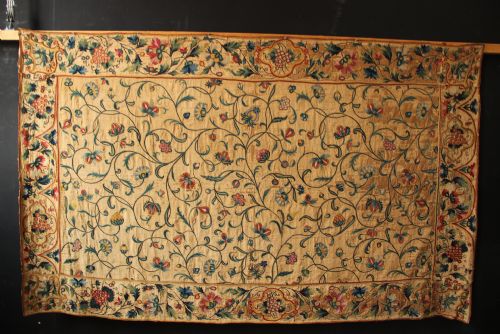
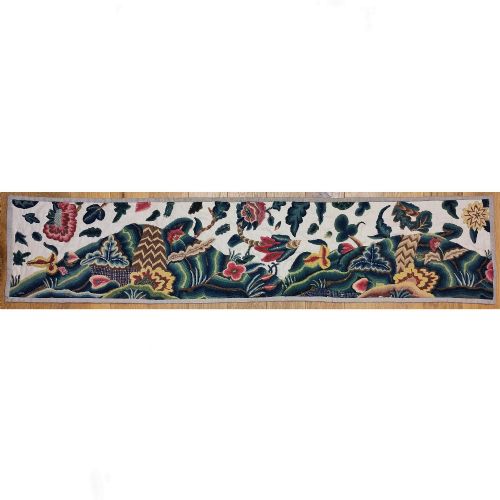


Hand Embroidered Linen Panel
These hand embroidered linen panel examples are historic textile works that bring tactile depth and traditional needlecraft into an interior space.
Hand Embroidered Linen Panel
A hand embroidered linen panel encompasses diverse textile forms, ranging from early English crewelwork to Greek Island bedsheet borders and Central Asian Suzanis. Buyers seeking a hand embroidered linen panel will encounter wall hangings, framed samplers, and decorative covers originating from the seventeenth century through to the twentieth century.
Materials and construction
Makers utilised a linen foundation cloth, working designs across the surface using wool thread, silk, and cotton yarns. The stitching methods vary by region and period, encompassing crewelwork techniques, delicate needlework samplers, and bold folk art compositions.
Framed examples preserve fragile textile fragments under glass, while larger panels and bedcovers retain their flexible textile structure for display. The combination of plant-based linen grounds and protein-based wool or silk threads dictates the preservation requirements of each piece.
Hand Embroidered Linen Panel Retail Price Guide 2026
Typical asking prices for hand embroidered linen panel among the pieces listed under this phrase on Sellingantiques today, from the lower quarter to the upper quarter. They describe what is for sale here now, not the wider market.
Current listings encompass materials such as linen, silk, wool, cotton, wood, and glass, spanning periods from the seventeenth century to the twentieth century.
Assessing quality
Quality in a hand embroidered linen panel rests upon the density of the stitching, the intricacy of the design, and the survival of the original materials. Superior examples display masterful handling of wool and silk threads, creating complex pictorial or geometric patterns with clear definition.
Condition and provenance further distinguish the range, as pieces retaining vibrant historic dye colours and stable linen grounds stand apart from heavily degraded fragments. Signed or dated samplers carrying the maker's name and age introduce a documented personal history that elevates the textile's character.
The Hand Embroidered Linen Panel Glossary
- Crewelwork
- Embroidery executed with wool yarn on a linen or twill ground, prominent in seventeenth-century English decorative textiles. This technique allows for rich texture and shading across floral and foliate motifs.
- Sampler
- A piece of needlework produced to demonstrate proficiency in various stitches and alphabets, often bearing a maker's name and date. These works served as both practice pieces and family records.
- Suzani
- A type of embroidered tribal textile from Central Asia, traditionally worked in silk thread on a cotton or linen foundation. They feature bold sunburst and floral roundels.
- Bedcover
- A large textile designed to cover a bed, frequently featuring repeating regional borders or central medallion designs. Surviving examples are often repurposed as wall hangings today.
Hand Embroidered Linen Panel: Frequently Asked Questions
How do I hang a textile panel?
Larger panels and bedcovers require careful mounting to distribute weight evenly across the linen ground without causing fibre stress. Professional framing behind conservation glass protects fragile antique threads from dust and environmental damage.
Smaller fragments are often mounted directly onto neutral backing fabrics within a traditional frame. This secures the piece while keeping the stitched surface entirely visible.
Are these textiles signed by makers?
Certain needlework samplers include the stitched name and age of the maker, along with specific dates. Examples bearing names like Mary Mason or Jane Pattinson provide a direct link to the individual who worked the piece.
Regional folk embroideries and traditional bedsheet borders from the Greek Islands typically remain unsigned. These items reflect communal design traditions rather than individual authorship.
How do I date an antique panel?
Dating relies on stylistic analysis of the motifs, the palette of the wool or silk threads, and the weave structure of the linen ground. Seventeenth-century crewelwork exhibits distinct floral styles compared to Victorian alphabet samplers or nineteenth-century Central Asian Suzanis.
Inscribed dates on samplers offer precise chronological markers for specific pieces. Comparative study of regional Greek and Ottoman textiles helps place undated fragments within broader historical periods.