



Hand Carved Book Supports
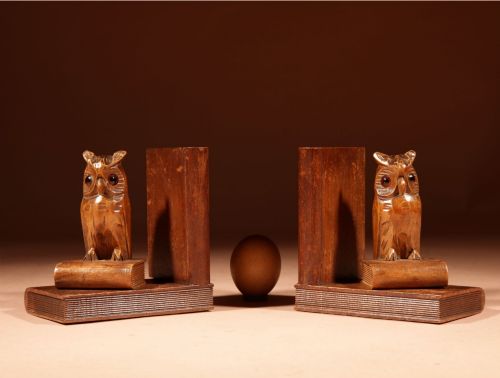
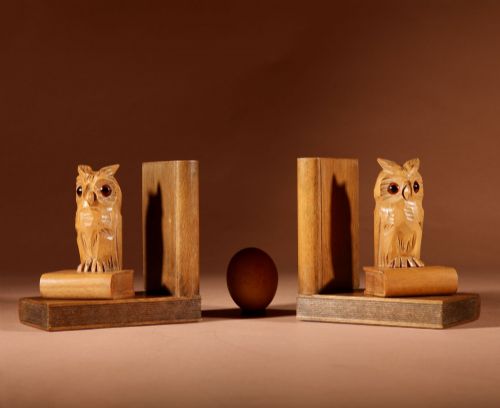
Hand carved book supports hold heavy volumes upright while displaying exceptional sculptural detail.
Hand Carved Book Supports
The versions you are most likely to meet on this page originate from the Victorian and Edwardian eras, extending into the early twentieth century. Common forms include animals such as owls, bears, and elephants, alongside sporting themes and architectural revivals.
Makers utilised various natural timbers to create these utilitarian objects, ranging from dense fruitwood and oak to exotic ebony. Their presence transforms standard bookshelf organisation into a display of traditional woodworking skill.
How they were made
Artisans carved these objects directly from blocks of timber such as linden wood, beech, pine, and fruitwood using hand chisels and gouges. This subtractive method allowed craftsmen to define fur, feathers, and facial expressions with considerable precision.
Makers occasionally combined carved wooden elements with contrasting materials like bone or glass to accentuate specific details. Surfaces were typically finished with wax or polish to protect the timber and highlight the natural grain beneath.
Hand Carved Book Supports Retail Price Guide 2026
Typical asking prices for hand carved book supports among the pieces listed under this phrase on Sellingantiques today, from the lower quarter to the upper quarter. They describe what is for sale here now, not the wider market.
Owls and bears stand guard over the library shelves, occasionally joined by a bat and ball ready for a cricket match.
What varies in quality
Material selection also defines the tier of the piece, with dense native timbers and well-figured grain commanding greater attention. The harmony between the sculptural subject and the structural base indicates the care taken during production.
Thornton Smith Co.
The Hand Carved Book Supports Glossary
- Black Forest
- A regional style of wood carving originating from central Europe, characterised by realistic depictions of animals, particularly bears and owls. These items often display deep undercutting and textured surfaces.
- Anglo-Indian
- A designation for decorative items produced in the Indian subcontinent during the British colonial period, frequently featuring intricate foliage and indigenous motifs carved into native hardwoods.
- Fruitwood
- A dense, fine-grained timber sourced from fruit-bearing trees such as pear, apple, or cherry, favoured by carvers for its ability to hold sharp, delicate details without splitting.
- Georgian Revival
- An aesthetic movement that reinterprets eighteenth-century design principles, focusing on classical symmetry and traditional proportion within later craftsmanship.
- Folk Art
- Objects created by self-taught or traditional makers outside academic traditions, prioritising utilitarian purpose and direct expression over formal artistic rules.
Hand Carved Book Supports: Frequently Asked Questions
How were they used historically?
Owners placed them at either end of a loose collection of books to prevent the volumes from sliding or tipping over. They sat upon library tables, mantelpieces, and bookshelves in domestic studies.
Beyond simple organisation, they served as decorative conversation pieces that displayed the owner's appreciation for fine craftsmanship.
How do I live with them?
Place them on sturdy shelving or heavy desks where their weight can properly anchor a line of books. Keep them away from direct sunlight and excessive heat sources to protect the natural timber.
Dust them gently with a dry, soft cloth to maintain the finish without introducing moisture that could harm the aged wood.
How can I tell periods apart?
Victorian and Edwardian examples often display dense detailing and heavier proportions, reflecting contemporary tastes for ornate decoration. Pieces from the early twentieth century frequently show streamlined forms or specific thematic interests like vintage sporting motifs.
Examining the tool marks, timber choice, and overall sculptural style helps connect an item to its period of origin.