



Hammered Metal Mirror
These hammered metal mirror pieces bring tactile texture and warm reflectivity into a room.
Hammered Metal Mirror
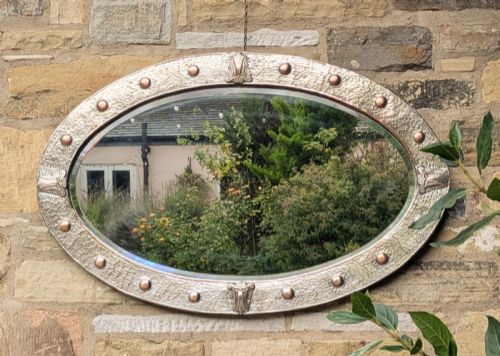
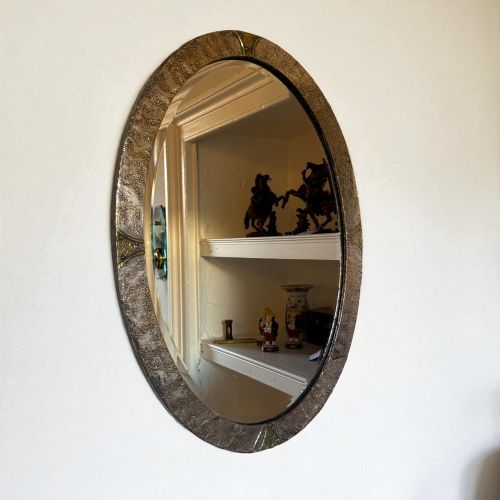
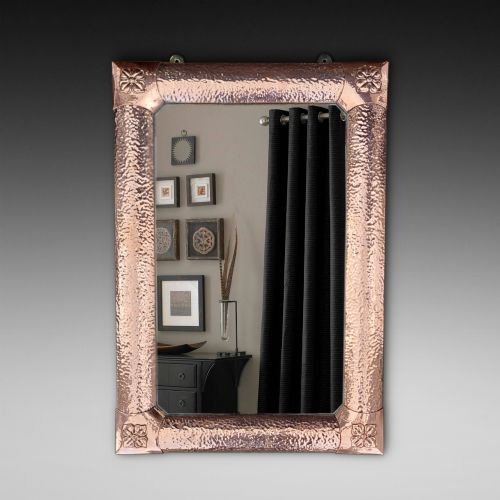
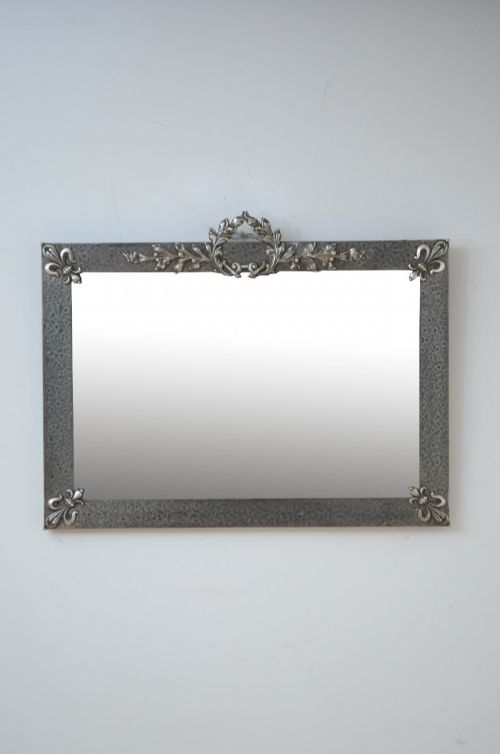
A hammered metal mirror is a reflective glass panel set within a hand-worked metal frame, most frequently appearing in the Arts and Crafts style. These pieces span the early twentieth century, including Edwardian examples and later mid-century Peruvian colonial revival work.
The wall mirror is the primary form you will encounter on this page, alongside occasional table mirrors. Frames are constructed from copper, brass, silvered copper, or pewter, sometimes mounted on wood backing and embellished with ceramic cabochons or seed pod motifs.
Makers from the 1900 period through to the 1950s favoured these reflective domestic accessories for their distinct hand-finished character. They provide both utility and a strong decorative focal point rooted in historical craft traditions.
How they were made
Makers shaped metal frames by hand using repoussé and beating techniques on copper, brass, or pewter sheets. This process created undulating, textured surfaces that caught the light differently than mass-produced stamped metal.
Frames incorporated organic motifs such as stylised trees and honesty seed pods, frequently secured to wooden foundations. Workshops occasionally set glazed ceramic cabochons into the metalwork to add contrasting colour and focal weight.
Hammered Metal Mirror Retail Price Guide 2026
Typical asking prices for hammered metal mirror among the pieces listed under this phrase on Sellingantiques today, from the lower quarter to the upper quarter. They describe what is for sale here now, not the wider market.
Some copper frames feature honesty seed pods permanently immortalised in beaten metal, saving you the trouble of watering them.
What varies in quality
Quality rests in the depth and control of the hand-beaten relief work across the metal frame. Crisp, deliberate tool marks demonstrate superior craftsmanship compared to shallow or uniform stamping.
The integration of decorative elements like Ruskin ceramic cabochons and specialised patination elevates certain examples above standard production. The preservation of the original mirror glass and structural wooden backing also defines the better specimens.
Liberty & Company
The Hammered Metal Mirror Glossary
- Repoussé
- A metalworking technique where the metal is hammered from the reverse side to form a raised design in relief. This method defines the sculptural surface texture of many period frames.
- Cabochon
- A polished, convex gemstone or ceramic piece lacking facets, often set centrally into the metal frame. These additions provide a vibrant spot of colour against the darkened metal.
- Arts and Crafts
- A design movement valuing handcraft, traditional materials, and simple forms over industrial manufacturing. Most items here draw directly from this aesthetic philosophy.
- Pewter
- A malleable metal alloy historically used for domestic vessels and decorative frames. It offers a dull grey lustre that complements the reflective mirror glass.
Hammered Metal Mirror: Frequently Asked Questions
What periods do these mirrors come from?
The selection spans from the Edwardian era and the early nineteen hundreds through to the nineteen fifties.
Most examples originate from the height of the Arts and Crafts movement around nineteen hundred to nineteen ten.
How do I clean a beaten copper frame?
Dust the frame gently with a soft dry cloth and avoid harsh chemical polishes that strip away the aged patina.
Preserving the original surface colour maintains the character of the hand-beaten metal work.
Are table mirrors and wall mirrors constructed differently?
Table mirrors incorporate a structural support stand on the reverse to allow upright placement on furniture surfaces.
Wall mirrors rely on hanging loops or brackets fixed directly to the wooden frame backing.