




Hammered Copper Mirror Frame
A hammered copper mirror frame brings tactile texture and hand-wrought warmth to any interior through its distinctive metalwork.
Hammered Copper Mirror Frame
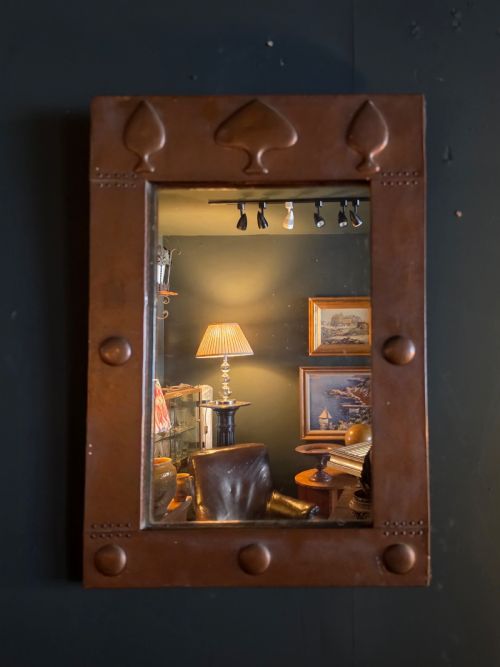
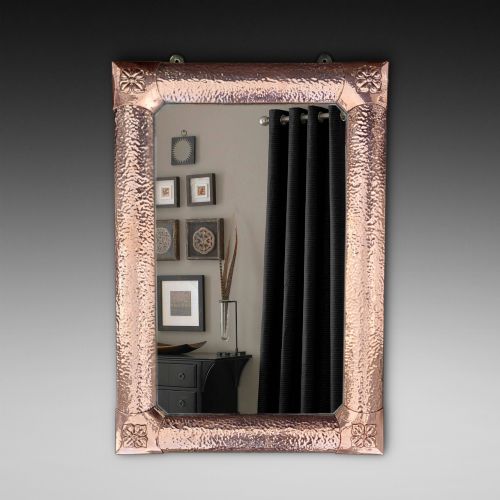
When you search for a hammered copper mirror frame, you encounter wall mirrors defined by their metalwork, primarily produced during the Arts and Crafts period between 1890 and 1920. These pieces combine functional glass with hand-worked metal borders, sometimes mounted on wooden structures like oak.
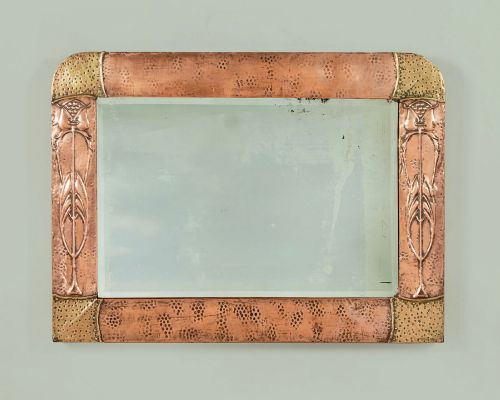
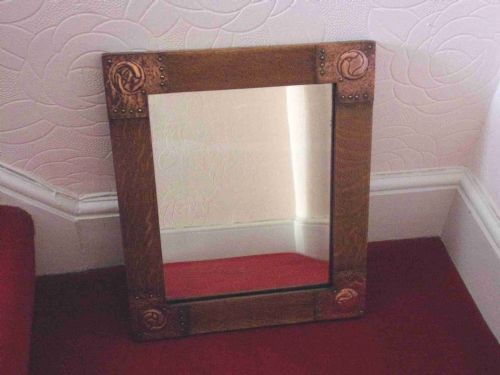
The versions most commonly met on this page take rectangular or oval forms. They frequently incorporate decorative motifs such as stylised trees, birds, Celtic knots, or ceramic cabochons into the metal surround.
How they were made
Makers utilised sheet metal, beating and hammering the surface to create a textured finish. Techniques like repoussé allowed artisans to push the metal from the reverse to form raised designs on the front.
These metal panels were then mounted onto wooden backing frames, typically oak, or secured around bevelled glass and mirror glass using brass fixings and ceramic elements like Ruskin cabochons.
Birds and trees frequently stare out from the metal borders, bringing a touch of the outdoors straight onto the wall.
What varies in quality
The distinction between standard examples and exceptional pieces lies in the depth and complexity of the hand-work. Artistry in the repoussé detailing and the integration of specific motifs, such as stylised trees or birds, elevate the visual impact.
Materials also differentiate the range, with some frames combining plain copper sheets while others incorporate inset ceramic cabochons or solid oak mounts, demonstrating greater ambition in design and construction.
Liberty and Company
The Hammered Copper Mirror Frame Glossary
- Repoussé
- A metalworking technique where the artisan hammers metal from the reverse side to create a raised design on the front. This method gives the surface its distinctive relief work.
- Arts and Crafts
- A design movement spanning the late nineteenth and early twentieth centuries that prioritised hand-craftsmanship and traditional materials over mass production. It heavily influences the style of these metal frames.
- Bevelled glass
- Glass cut with an angled edge around the perimeter, catching the light and adding depth to the mirror. It appears frequently in better quality wall mirrors.
- Cabochon
- A polished, convex gem or ceramic piece without facets, often set into the copper frame for colour and contrast. Ruskin examples are particularly notable.
- Stylised tree
- A simplified, decorative plant motif commonly embossed into the copper panels during the early twentieth century. It reflects the movement's interest in natural forms.
Hammered Copper Mirror Frame: Frequently Asked Questions
What periods do these mirrors come from?
The pieces span the late nineteenth and early twentieth centuries, specifically concentrating around 1890 to 1920.
Most examples align with the height of the Arts and Crafts movement, reflecting the design priorities of that era.
How were they used originally?
These items functioned as practical wall mirrors for domestic interiors, placed in hallways, living rooms, and bedrooms.
Beyond utility, they served as decorative focal points that brought handcrafted warmth and metallic sheen to household decor.
What materials make up the frames?
Construction primarily involves hammered copper sheet metal mounted onto wooden structures, usually oak.
Additional materials include brass fixings, mirror glass, and occasionally ceramic cabochons set into the metalwork.
How do I identify Arts and Crafts metalwork?
Look for visible hand-hammered textures, repoussé motifs like trees, birds, or Celtic knots, and honest construction methods.
Makers often embraced natural materials and avoided machine-tooled perfection in favour of individual artisan character.