






Hammered Copper Frame
A hammered copper frame brings tactile warmth and handcrafted texture to a room, most commonly seen in wall mirrors from the Arts and Crafts period.
Hammered Copper Frame
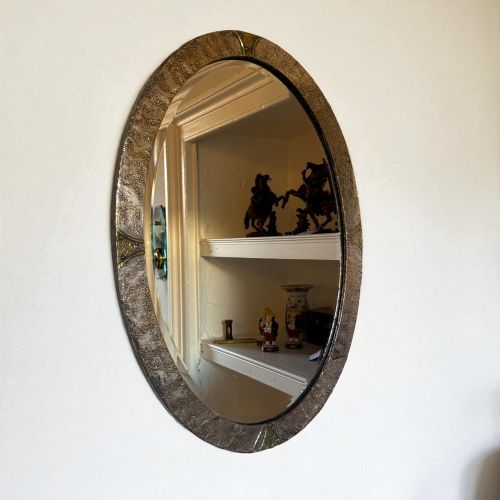
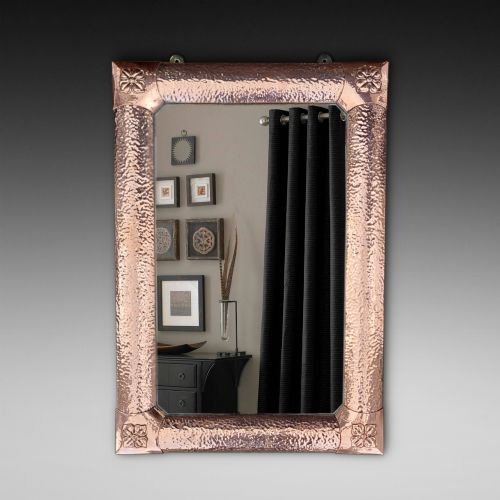
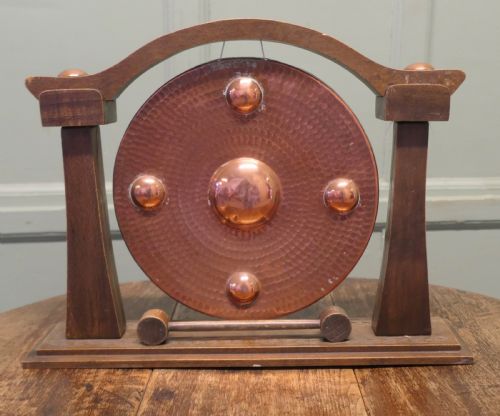
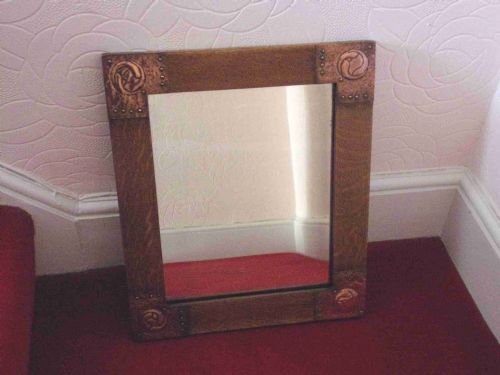
A hammered copper frame represents the domestic metalwork of the Arts and Crafts movement, spanning wall mirrors, firescreens, and fireplace fenders. These pieces combine hand-beaten metal with wooden structures, oak mounts, or ceramic cabochons to create functional household items.
You will most frequently encounter wall mirrors on this page, often circular or rectangular, alongside occasional table gongs and hearth accessories. The designs range from plain beaten surfaces to detailed stylized tree motifs and Celtic knot decorations.
Dating primarily from the late Victorian era through to the early decades of the twentieth century, these frames reflect an era that prized visible manual labour over machine production. Their forms remain sturdy and straightforward, designed to anchor a room with rich metallic tones.
How they were made
Makers formed these pieces by hand-beating sheets of copper over wooden cores or mounting them onto oak and brass frameworks. The surface texture results from repeated strikes with a planishing hammer, leaving individual marks that record the maker's hand.
Details were frequently embossed using repoussé techniques, pressing the metal from the reverse to raise motifs of trees, birds, or abstract patterns. Frames were often fitted with bevelled mirror glass, ceramic inserts, or riveted metal corners to complete the construction.
Hammered Copper Frame Retail Price Guide 2026
Typical asking prices for hammered copper frame among the pieces listed under this phrase on Sellingantiques today, from the lower quarter to the upper quarter. They describe what is for sale here now, not the wider market.
Object forms recorded here span wall mirrors, firescreens, fireplace fenders, dinner gongs, and wall signs originating from the late nineteenth and early twentieth centuries.
What varies in quality
Quality in a hammered copper frame lies in the depth and control of the hand-beaten texture and the crispness of the repoussé work. Stronger examples show deliberate, rhythmic hammer marks and harmonious proportions rather than flat, uniform machine stamping.
The integration of materials also distinguishes the standard from the exceptional, such as the inclusion of fired ceramic cabochons, carved oak surrounds, or distinct decorative motifs like stylized trees and birds. Superior pieces often exhibit careful joinery in the underlying wooden frames and secure riveting.
Liberty and Company·Ruskin
The Hammered Copper Frame Glossary
- Repoussé
- A metalworking technique where the metal is hammered from the reverse side to form a raised design on the front. This method allowed craftsmen to create detailed pictorial and floral motifs on mirror frames and panels.
- Bevelled glass
- Glass with an angled edge cut and polished to a specific width around the periphery. It adds depth and refracts light differently than flat plate glass.
- Cabochon
- A gemstone or ceramic piece shaped and polished rather than faceted. In these frames, they provide colourful focal points within the metalwork.
- Firescreen
- A portable screen placed in front of a fireplace when not in use. They often feature large copper panels decorated with embossed patterns.
- Kerb
- An alternative term for a fireplace fender, forming a low metal barrier around the hearth. They coordinate with the matching mirrors and gongs of the period.
Hammered Copper Frame: Frequently Asked Questions
How do I clean a copper frame?
Copper develops a natural patina over decades, which many collectors prefer to leave undisturbed. Light dusting with a dry cloth is usually sufficient for regular maintenance.
Avoid abrasive metal polishes that strip away the historical surface character and bright orange highlights. Gentle cleaning preserves the rich dark tones accumulated over time.
Are these frames heavy to hang?
Many of these pieces possess substantial weight due to the combination of solid oak frames, thick copper sheets, and heavy mirror glass. Proper wall fixings into masonry or wall studs are essential for secure placement.
Check the integrity of the original hanging wire or brackets on the back before mounting. Reinforcing older fixings ensures the piece remains safely supported.
How do I date an Arts and Crafts frame?
Dating relies on examining the construction methods, materials, and stylistic motifs present on the object. Pieces from the turn of the century often feature characteristic hand-beaten textures and organic designs.
Backboards, fixings, and screw types also offer clues to the period of manufacture. Comparing the specific style of repoussé work helps narrow down the decade.
Where should I place a copper mirror?
These mirrors suit rooms where their warm metallic tones complement wood furniture and natural fabrics. Placing them opposite a light source helps brighten darker corners and reflects interior spaces effectively.
They work well in hallways, living rooms, and above fireplaces as focal points. Their robust aesthetic pairs naturally with period interiors and rustic decor schemes.