

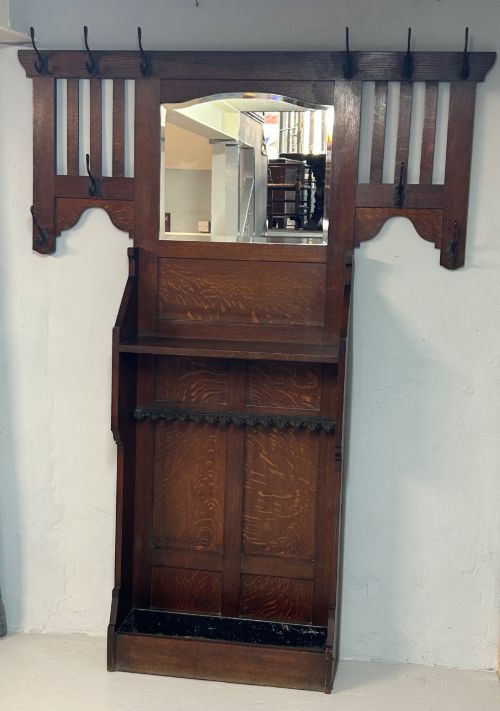


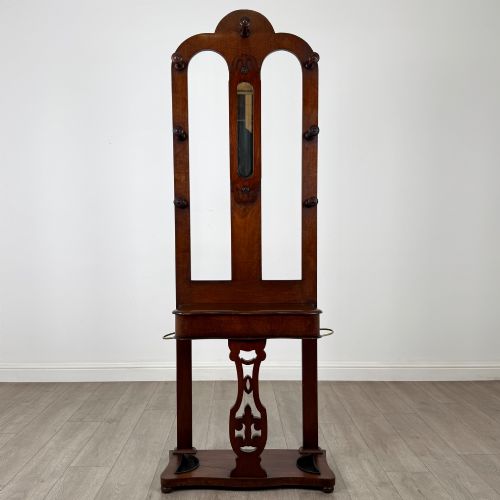
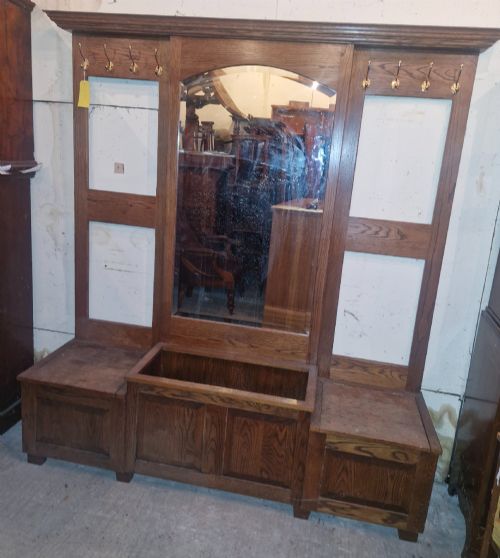
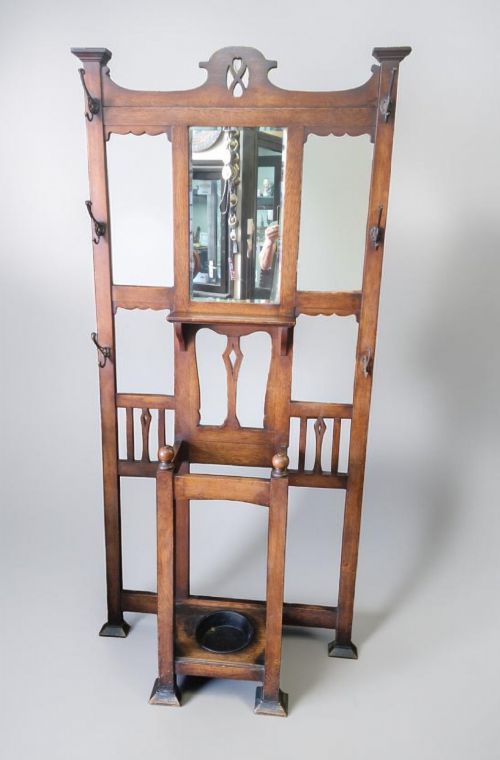


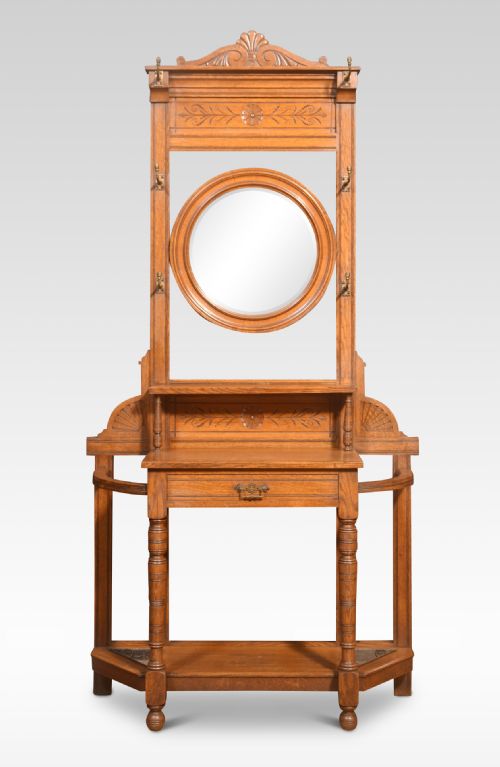

Hallway Storage Mirror
A hallway storage mirror brings practical utility and period character to an entrance, combining glass, timber and hooks for daily use.
Hallway Storage Mirror
When you search for a hallway storage mirror, you encounter pieces designed to organise entranceways through integrated coat hooks, umbrella stands and mirrored panels. The selection spans the nineteenth century up to the mid twentieth century, drawing on Victorian, Edwardian and Arts and Crafts design.
You are most likely to meet oak and mahogany hall stands featuring bevelled glass plates, brass hardware and occasionally marble shelves or built-in seats. These items combine multiple functions into a single hallway furnishing, serving as a focal point for visitors.
The objects range from compact wall-hung frames to large hall trees and console combinations. They reflect the domestic requirements of their respective periods, providing designated spots for hats, coats and outerwear.
How they were made
Cabinet makers utilised solid timbers such as oak, mahogany and walnut, often combined with applied carvings and turned supports. Metal components including brass coat hooks and cast iron drip pans were integrated to handle wet umbrellas and heavy garments.
Mirrored glass plates were set securely into wooden frames, sometimes accompanied by marble surfaces designed to withstand damp items or keys. Construction techniques included mortise and tenon joints to support the weight of heavy outerwear.
Hallway Storage Mirror Retail Price Guide 2026
Typical asking prices for hallway storage mirror among the pieces listed under this phrase on Sellingantiques today, from the lower quarter to the upper quarter. They describe what is for sale here now, not the wider market.
What varies in quality
Quality rests upon the selection of timber and the integration of hardware rather than decorative excess alone. Superior examples display thoughtful proportions, substantial framing and well-cast brass elements that remain securely anchored to the wood.
The condition of the mirrored glass and the presence of original drip pans and hooks influence the integrity of a piece. Better workshops employed select hardwoods and careful joinery to ensure the framework bears the sustained weight of coats and hats over generations.
The Hallway Storage Mirror Glossary
- Hall stand
- A composite hallway furnishing combining a mirror, coat hooks, a glove box or seat, and umbrella stands. These units appeared in various room configurations during the Victorian and Edwardian eras.
- Hall tree
- A freestanding vertical structure designed primarily for hanging hats and coats, frequently incorporating a mirror and umbrella storage. They stand independently against hallway walls.
- Pier cabinet
- A tall, narrow display cabinet designed to fit wall spaces between windows or doorways. They occasionally incorporate mirrors and complement the aesthetic of entrance furniture.
- Console table
- A table designed to fit flush against a wall, sometimes paired with a separate or attached mirror. These units offered surface space in entrance halls before the widespread adoption of fitted hall stands.
Hallway Storage Mirror: Frequently Asked Questions
How do I maintain the wooden frame?
Apply traditional beeswax periodically to nourish the timber and maintain a soft lustre on the surface.
Avoid placing the piece in areas prone to dampness or direct sunlight to protect the wood and mirror backing.
Are these pieces suitable for small spaces?
Many hallway storage mirror designs combine seating, coat hanging and mirrors into a single compact footprint.
Wall-hung options or narrow console variations suit entranceways where floor space is limited.
How do I identify a Victorian hall stand?
Victorian examples frequently utilise dark mahogany or oak with substantial carvings, brass hooks and cast iron umbrella wells.
They often incorporate high-relief architectural details and bevelled mirror plates characteristic of nineteenth-century production.
What is an Arts and Crafts hall stand?
Arts and Crafts pieces emphasise straightforward construction, visible joinery and the natural grain of oak.
They generally feature simpler, cleaner lines with less ornamentation than high Victorian counterparts.