

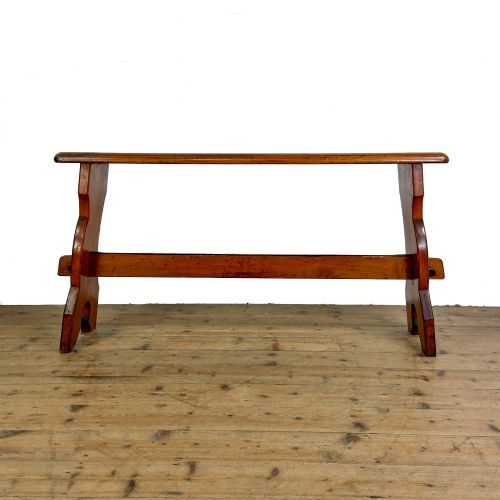
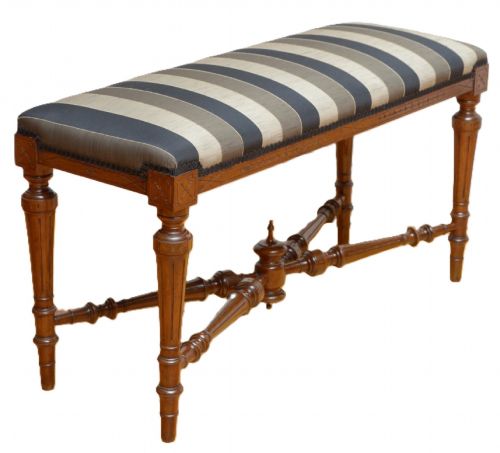


Hallway Bench Stool
A hallway bench stool offers a practical perch for pulling on boots while setting a distinct period tone right inside the front door.
Hallway Bench Stool
A hallway bench stool provides a low seating option tailored for entryways and narrow spaces, drawing heavily from nineteenth-century window seat forms, piano stools, and long footstools. These pieces emerge across periods ranging from the eighteenth century through to the Edwardian era and the 1920s.
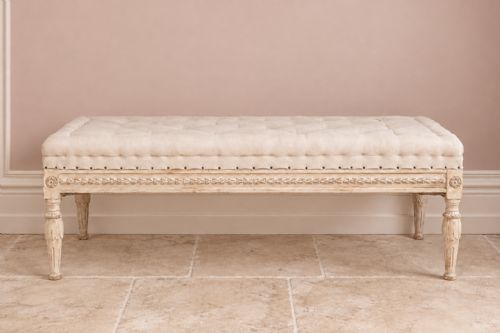
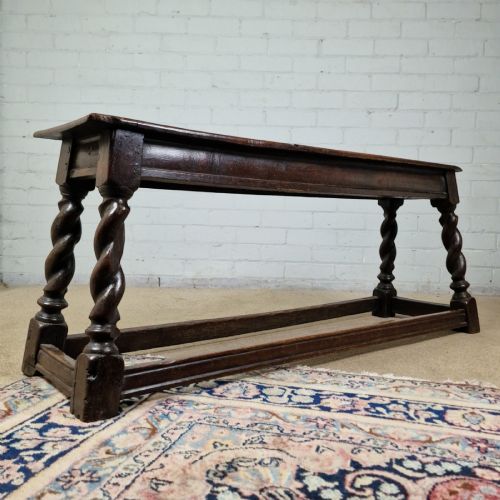
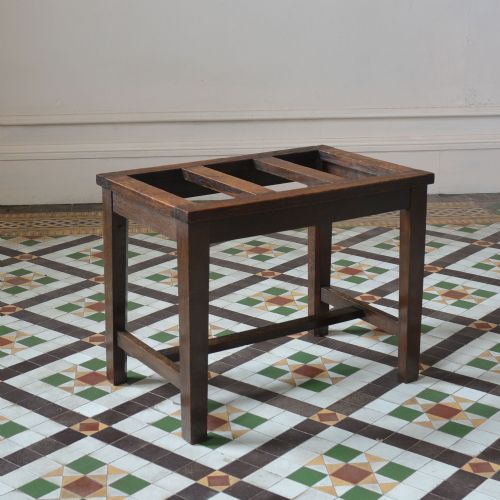
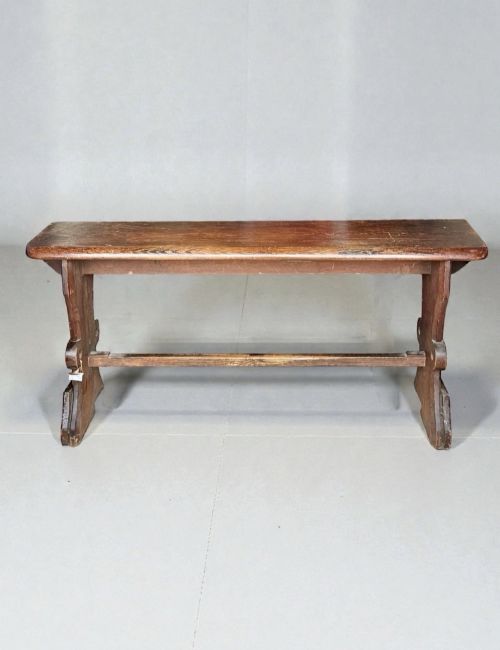
The inventory on this page relies largely on mahogany, oak, and walnut timber frames, frequently paired with textile upholstery such as linen, velvet, and various decorative fabrics. Forms range from simple long oak stools to elaborate carved window seats and luggage racks.
Geographic origins extend beyond traditional English cabinetmaking to include Swedish Gustavian pieces, French walnut and cherry wood examples, and Venetian carved works. Buyers encounter both compact duet stools and much longer hall benches designed for substantial entryways.
How they were made
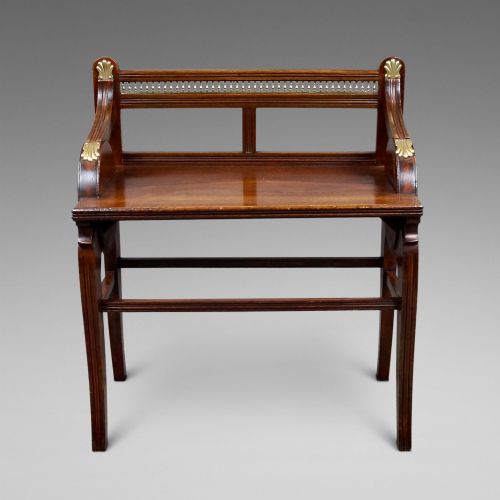
Cabinetmakers constructed the foundational frames of these benches using dense hardwoods like mahogany, oak, walnut, and pine, often employing traditional joinery to support daily weight. Decorative versions incorporate intricate hand-carved details, fluted legs, and occasional gilt or brass mounts.
Upholstered variants rely on traditional webbing and stuffing techniques before finishing the piece in textiles like Liberty or William Morris velvet, plain linen, or patterned upholstery fabric. Cane work also appears on specific long footstools and bench seating.
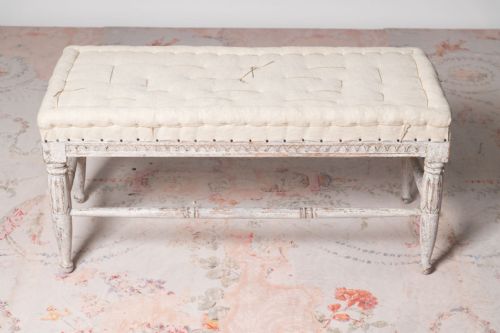
Painted finishes feature on select pieces, particularly within the Swedish Gustavian and French traditions, where pine or birch surfaces receive light or decorative pigment applications.
Hallway Bench Stool Retail Price Guide 2026
Typical asking prices for hallway bench stool among the pieces listed under this phrase on Sellingantiques today, from the lower quarter to the upper quarter. They describe what is for sale here now, not the wider market.
Listings feature eighteenth-century oak alongside Edwardian mahogany and 1920s French gilt pieces, demonstrating broad historical range.
What varies in quality
The calibre of timber selection and the crispness of the hand-carved ornamentation set finer pieces apart from standard utility furniture. Maker attribution, such as documented work from Gillows or James Shoolbred, introduces a distinct level of workshop pedigree.
Structural integrity depends on the tightness of the joinery and the condition of the underlying frame, particularly given the weight these seating forms naturally bear in domestic hallways. Refurbishment quality matters greatly when historic frames are paired with modern recovered linen or velvet.
James Shoolbred·Gillows
The Hallway Bench Stool Glossary
- Duet stool
- A wider seat designed to accommodate two people simultaneously, frequently found in piano stools and nineteenth-century window seats.
- Gustavian
- The Swedish neoclassical style characterised by pale painted finishes, restrained carving, and lighter proportions popular in the eighteenth and nineteenth centuries.
- Luggage rack
- A low bench frame topped with wooden slats or webbing, originally intended for resting travel trunks at the foot of a bed or in a hallway.
- Window seat
- A long, upholstered stool designed specifically to fit into the recess of a bay or sash window, serving equally well in narrow hallways.
- Cane
- Woven rattan strips utilised to form light, flexible panels for seat bases and footstools.
Hallway Bench Stool: Frequently Asked Questions
Where should I place a hallway bench stool?
These pieces suit narrow entryways, corridors, and boot rooms where floor space is at a premium. They provide a convenient spot for removing shoes while adding decorative character near the entrance.
Larger versions also function effectively at the foot of a bedroom bed or beneath a landing window. Their shallow depth allows them to sit flush against walls without obstructing thoroughfares.
How do I identify a Victorian hallway bench stool?
Victorian examples typically feature heavier timbers such as walnut and mahogany, accompanied by deep carving, fluted legs, and button-tufted upholstery. The proportions tend to be robust and grounded.
Cabinetmakers of this era frequently referenced earlier English styles while adopting industrial improvements in upholstery and wood turning. Look for secondary woods and traditional construction methods beneath the upholstery.
Can I use a piano stool in the hallway?
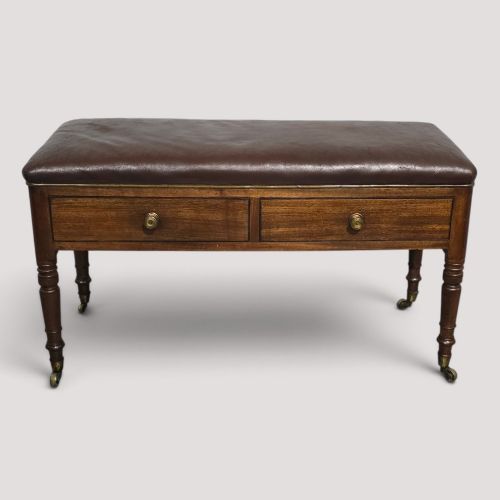
Many piano and music stools share identical proportions to compact hallway benches, making them ideal for small entry spaces. Their hinged seats often conceal practical storage for small items.
Adjustment mechanisms on certain music stools allow the height to be altered, though buyers should verify the stability of these mechanical parts for daily hallway use.
What is the difference between a window seat and a hall bench?
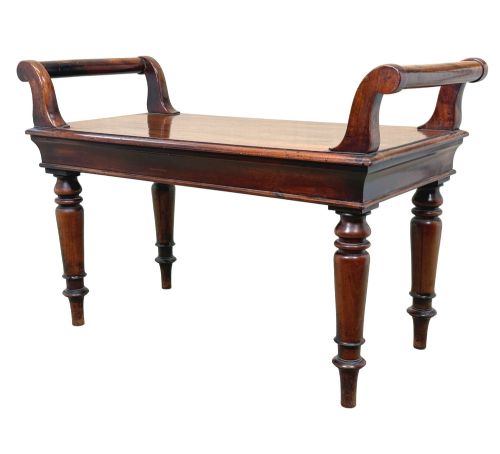
Window seats generally feature upholstered tops and open frames designed for placement in light-filled recesses, whereas traditional hall benches often incorporate wooden panels or arms.
In practice, nineteenth-century cabinetmakers used these terms interchangeably depending on the domestic context. Both forms adapt readily to contemporary hallway placement.