






Hallmarked Silver Beaker
A hallmarked silver beaker is a distinguished drinking vessel or christening mug carrying official assay office marks, valued for its solid metal and historic craftsmanship.
Hallmarked Silver Beaker
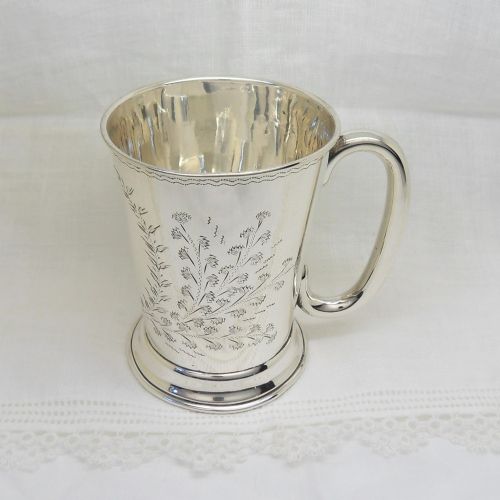
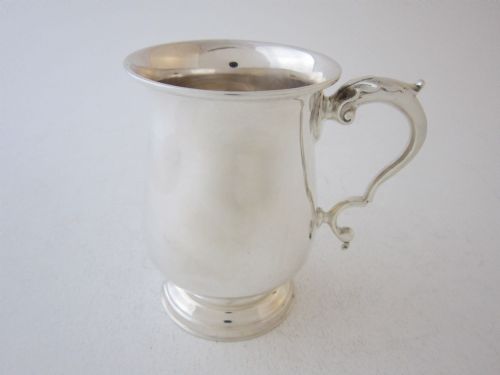
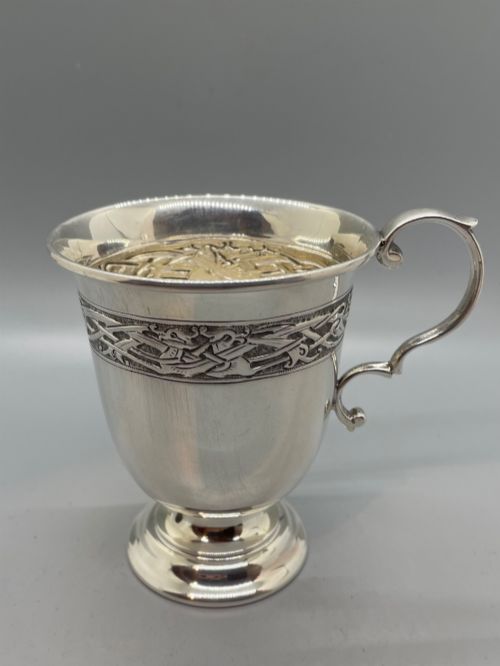
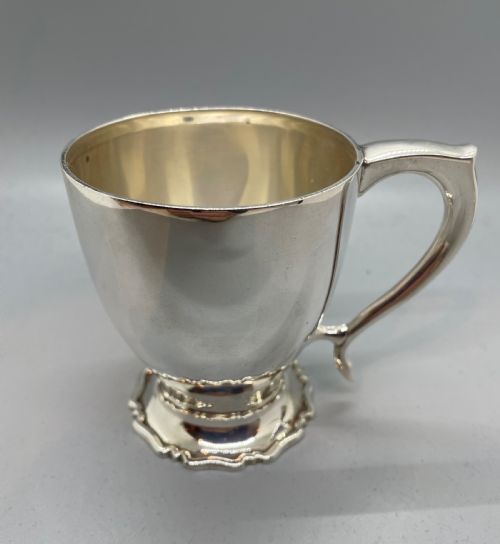
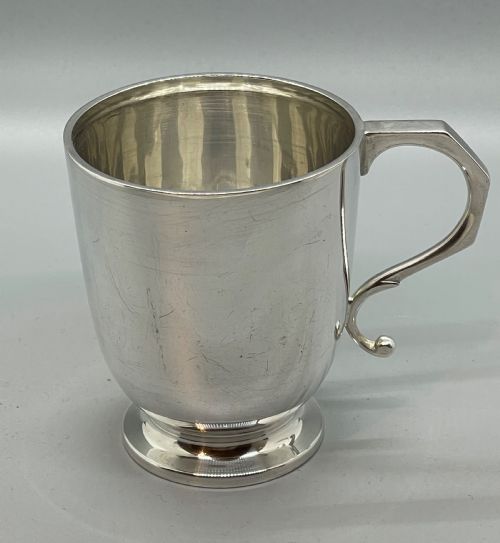
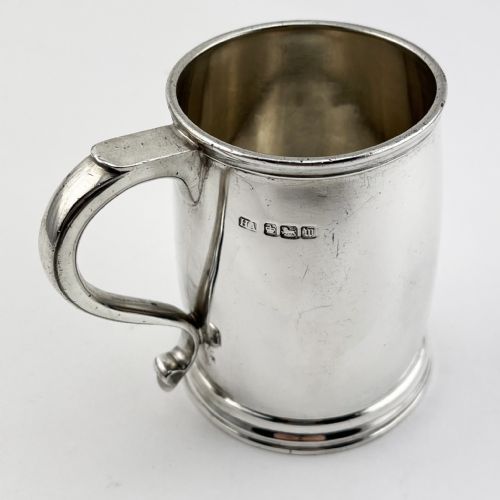
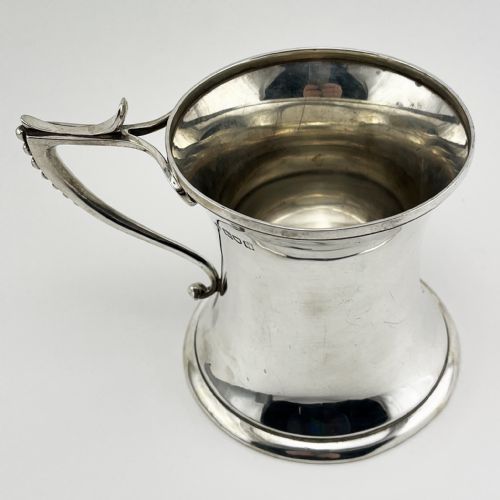
When you search for a hallmarked silver beaker, you encounter solid metal drinking vessels, christening mugs, and tankards spanning from the early eighteenth century through the mid-twentieth century. The selection ranges from plain Georgian shapes to ornate Victorian embossed designs and geometric Art Deco travel pieces.
The version you are most likely to meet on this page is the sterling silver christening mug, often featuring a handle, scroll work, or engraved decoration. These pieces originate from major assay towns such as Birmingham, Sheffield, and London across various British reigns.
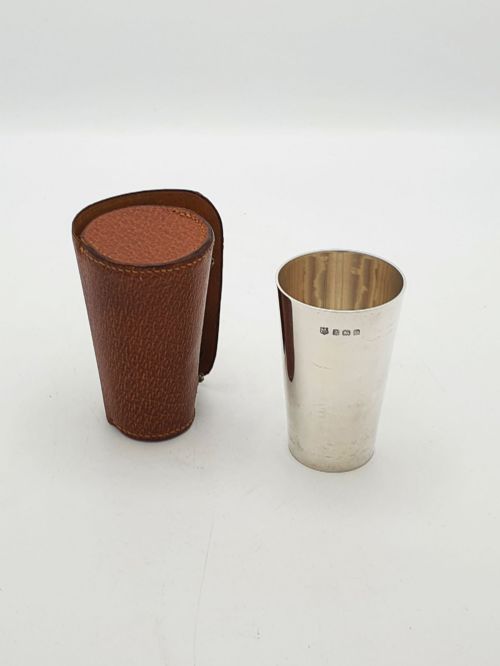
Beyond standard drinking vessels, the category broadens to include specialised forms such as silver mounted stoneware, leather-cased travel beakers, and travelling medical kits. Each piece bears official hallmarks confirming its metal purity and origin.
What varies in quality
The quality of a hallmarked silver beaker rests upon the weight and gauge of the silver used in its construction, alongside the crispness of any hand engraving or embossing. Heavier metal gauge provides structural rigidity and prevents denting during daily use.
Attention to detail in the handle attachment, the proportion of the form, and the legibility of the official hallmarks further distinguish finer examples. Pieces retaining original fitted leather cases or maintaining unblemished interior gilding demonstrate superior preservation.
Hallmarked Silver Beaker Retail Price Guide 2026
Typical asking prices for hallmarked silver beaker among the pieces listed under this phrase on Sellingantiques today, from the lower quarter to the upper quarter. They describe what is for sale here now, not the wider market.
Object forms range from traditional christening mugs and tankards to travel beakers, medical kits, and spirit flasks.
Joseph Gloster·Tiffany and Co·William Bateman
The Hallmarked Silver Beaker Glossary
- Hallmark
- An official stamp applied by an assay office to guarantee the purity of precious metal. These marks typically include symbols for the maker, the metal standard, the assay town, and the year of testing.
- Britannia Standard
- A higher purity standard of silver introduced in England, containing ninety-five point eight percent pure silver. Items bearing this standard often date from the early eighteenth century.
- Sterling Silver
- An alloy consisting of ninety-two point five percent silver and seven point five percent other metals, usually copper, chosen for durability. This is the predominant material found across British silverware.
- Vermeil
- Sterling silver that has been coated with a thin layer of gold on the surface. This technique provides the rich appearance of solid gold while utilising a silver base.
- Tankard
- A tall drinking vessel featuring a single handle, frequently cylindrical or slightly tapered in profile. Many early christening mugs adopt this traditional form.
Hallmarked Silver Beaker: Frequently Asked Questions
How can I tell the date of a silver beaker?
The date is determined by reading the official assay office marks stamped into the metal. A specific letter punch corresponds to the year the piece was tested and certified.
Additional clues come from the overarching style, such as the geometric lines of Art Deco pieces or the ornate floral embossing typical of mid-Victorian design.
Are these silver beakers safe to drink from?
Solid silver possesses natural antimicrobial properties, making historic silver beakers structurally suitable for holding beverages. However, owners often choose to display them rather than use them daily to preserve delicate engravings and antique surfaces.
Pieces with gilt interiors or glass inserts require specific care when cleaning to avoid damaging the original finishes and secondary materials.
What is the difference between sterling and Britannia standard?
Sterling silver contains ninety-two point five percent pure silver alloyed with harder metals for daily strength. Britannia standard represents a purer alloy containing ninety-five point eight percent silver.
Items stamped with the Britannia standard, such as early eighteenth-century examples, utilise a slightly softer metal and carry distinct assay marks.