




Hall Storage Unit
A hall storage unit organises coats, boots and clutter the moment you step through the front door.
Hall Storage Unit
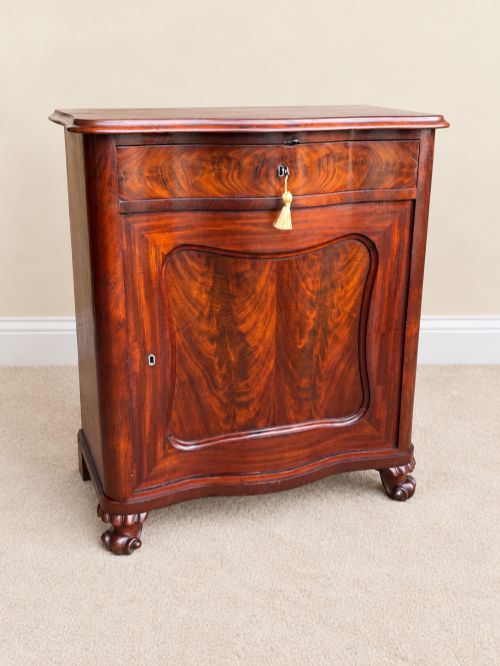
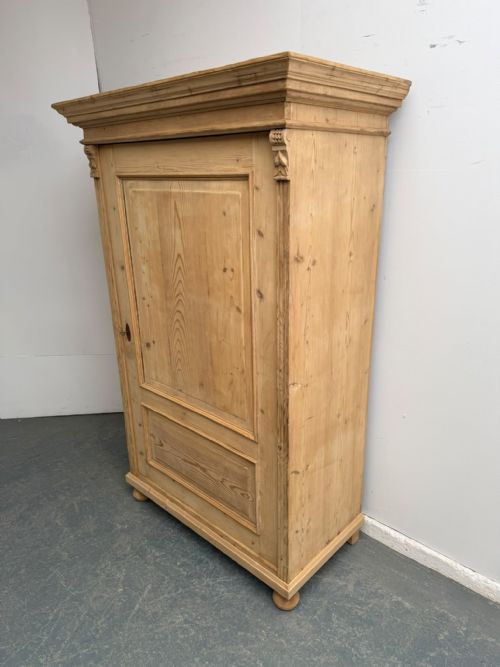
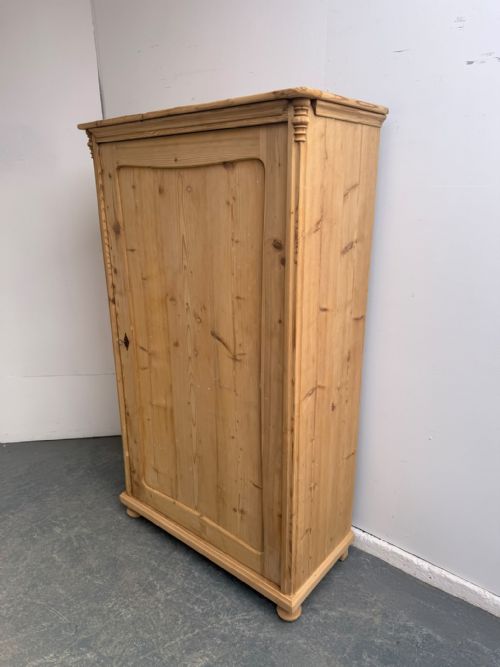
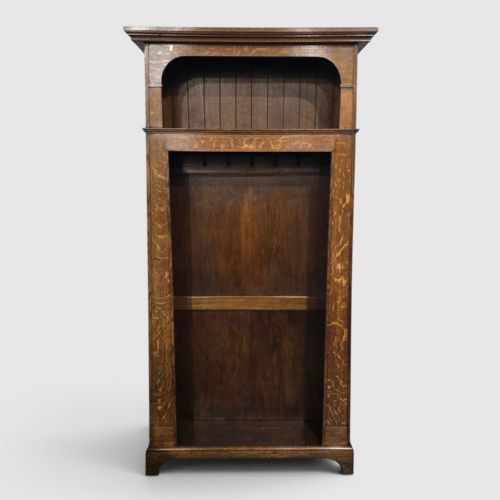
A hall storage unit encompasses heavy timber cupboards, hanging robes and side cabinets designed for entryway organisation. These pieces range from substantial Victorian pine cupboards to refined Edwardian oak fitted designs with raised galleries.
Buyers are most likely to encounter pine and oak examples across this selection, spanning Victorian, Edwardian, and 1920s periods. Forms vary from single-door standing cabinets to wide linen cupboards and carved side cabinets.
Victorian country styles sit alongside Jacobean Revival and Arts and Crafts influences, offering practical storage solutions with distinct period character. Each piece brings functional timber construction suited to narrow hallways and entrance spaces.
Materials and construction
Construction relies heavily on solid oak and pine, often joined for everyday household durability. Selected pieces also utilise mahogany and flame mahogany veneer for a more polished appearance.
Hardware details incorporate brass and iron fixtures, such as hanging rails, latches and hinges, which secure the doors and structural framework. Surfaces are typically left waxed, polished, or prepared for painting.
Hall Storage Unit Retail Price Guide 2026
Typical asking prices for hall storage unit among the pieces listed under this phrase on Sellingantiques today, from the lower quarter to the upper quarter. They describe what is for sale here now, not the wider market.
Some pine cupboards arrive ready to wax or paint, offering a blank canvas for interior colour schemes.
Assessing quality
Quality differentiates itself through the choice of timber and the sophistication of the joinery, moving from utilitarian pine storage to finely figured flame mahogany veneers. Carved detailing, raised galleries and flared cornices elevate the architectural presence of the cabinet.
Hardware execution and internal configuration also mark the upper tiers, distinguishing simple shelved cupboards from fitted interior layouts designed for specific garments.
The Hall Storage Unit Glossary
- Fielded panel
- A central wooden panel with bevelled or thinner edges that fit into a thicker surrounding frame. This technique allows the timber to expand and contract safely.
- Flame mahogany veneer
- A thin slice of mahogany timber cut from the fork of the tree where branches join the trunk. It creates a distinctive, swirling flame-like grain pattern.
- Jacobean Revival
- A design style popular in the nineteenth and early twentieth centuries that imitates seventeenth-century English furniture. It is characterised by heavy proportions and dark oak finishes.
- Side cabinet
- A low freestanding storage piece placed against a wall. These units typically combine cupboard doors with a useful top surface.
Hall Storage Unit: Frequently Asked Questions
What is a hall storage unit used for?
These pieces provide dedicated storage for outdoor garments, shoes and household linens in an entranceway. Their enclosed shelving and hanging space keep hallways tidy and free of clutter.
Larger versions accommodate bulky coats and accessories, while narrower cabinets fit tight spaces without obstructing passage.
How do I identify a Victorian piece?
Victorian examples often feature heavier proportions, solid pine or mahogany construction, and traditional waxed finishes. Look for classic joinery and period hardware like brass hinges.
Stylistic cues range from plain country utility to flared cornices and fielded panels.
Are these units suitable for narrow hallways?
Many single-door cupboards and slim side cabinets are specifically proportioned for compact entrance spaces. Their vertical orientation maximises storage capacity while maintaining a minimal floor footprint.
Dimensions vary across the selection, so measuring depth and door swing clearance is essential.
What is the difference between oak and pine units?
Oak offers a dense, durable hardwood structure with a prominent grain, frequently seen in Arts and Crafts and revival styles. Pine provides a softer, lighter alternative often finished with wax or paint.
Both materials deliver robust daily utility suited to high-traffic areas of the home.