



Hall Stand with Bench
A hall stand with bench combines seating and storage for the entrance, offering a practical piece that organises coats, hats and boots.
Hall Stand with Bench
A hall stand with bench serves as a multi-functional item placed near the entrance of a home, combining a seat with facilities for hanging outerwear and storing shoes or umbrellas. When searching for a hall stand with bench, buyers encounter various forms designed to handle the daily traffic of coming and going.
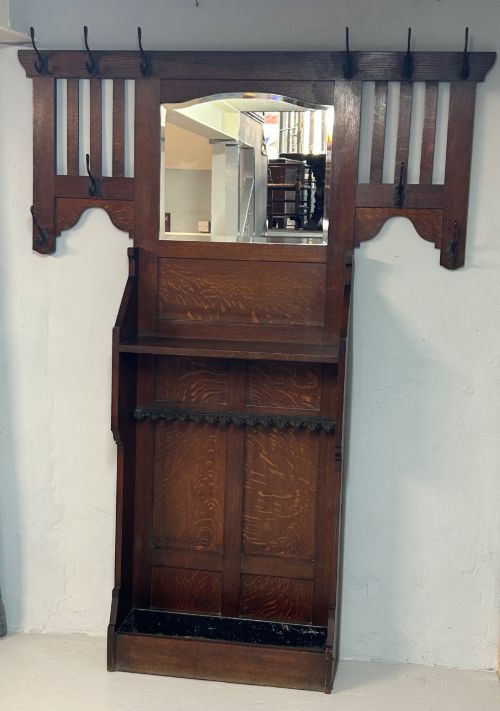
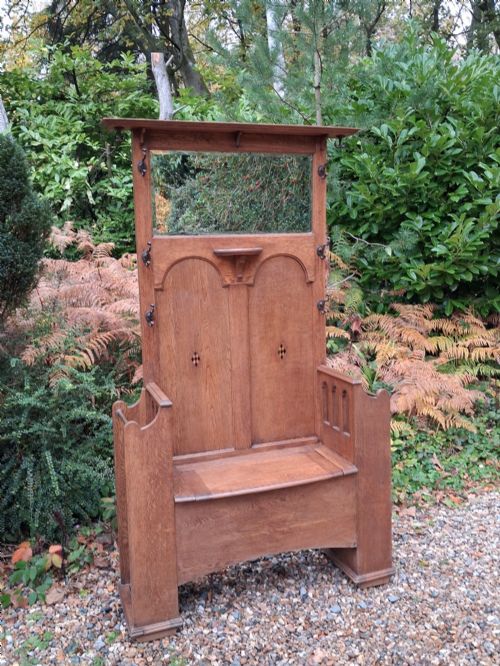
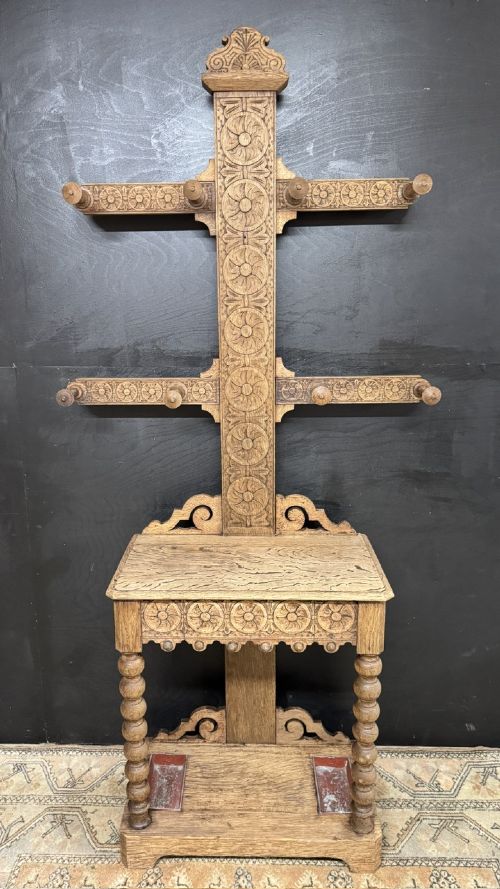
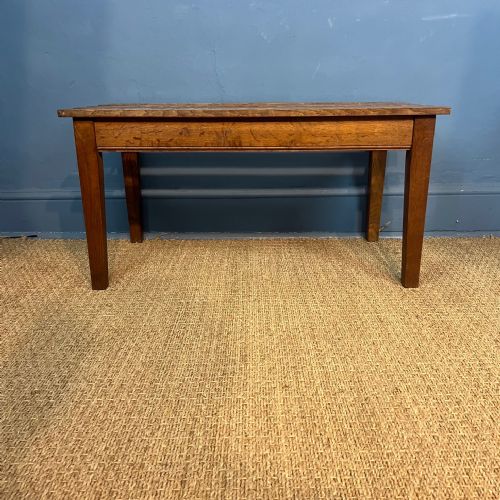
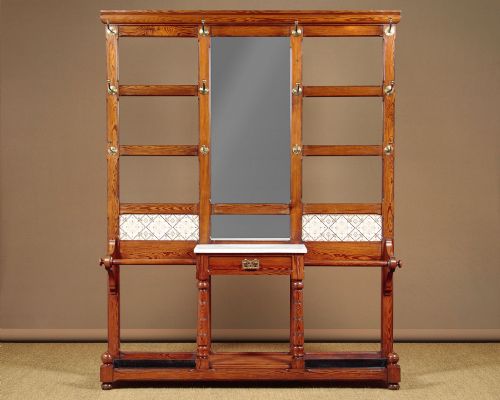
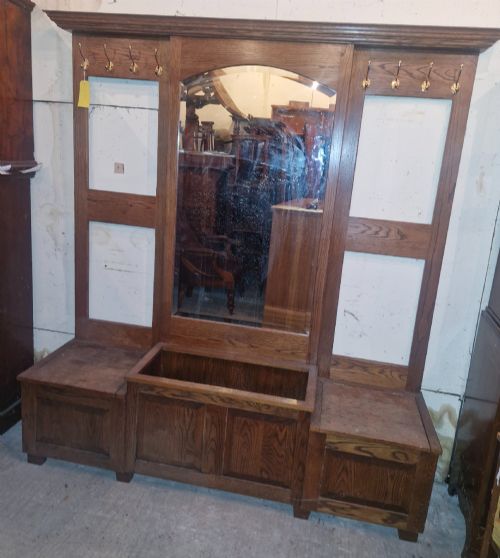
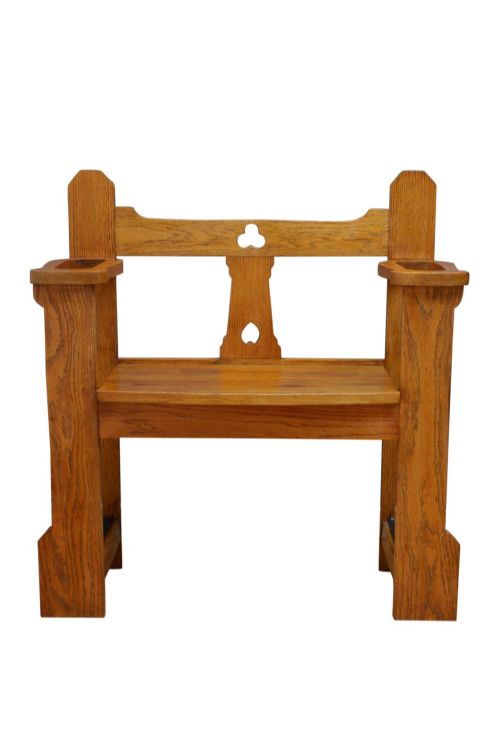
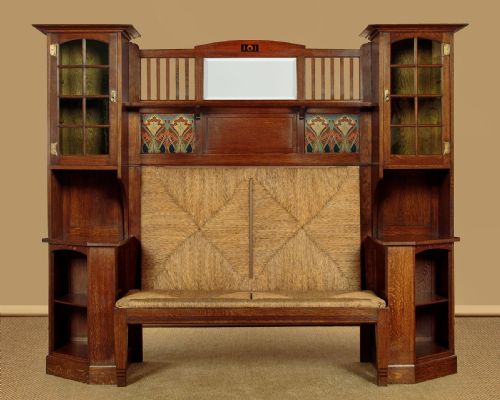
The selections available on this page span several decades and stylistic movements, predominantly featuring solid oak construction from the Victorian, Edwardian and Arts and Crafts periods. Pieces range from simple pine benches with integrated storage to large, elaborate stands incorporating carved woodwork, mirrors, and ceramic tiles.
Makers often integrated compartments such as cupboards, drawers, and shoe storage alongside coat hooks and umbrella wells. This utilitarian focus means most examples remain practical for modern hallways while reflecting the design preferences of the nineteenth and twentieth centuries.
How they were made
Construction relies heavily on sturdy timbers such as oak, mahogany, and pine, chosen to withstand the weight of heavy garments and daily seating use. Joinery techniques from the period ensure structural stability, particularly where the bench base meets the upright back panels.
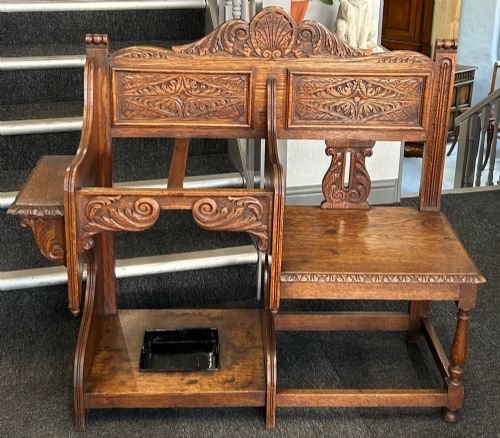
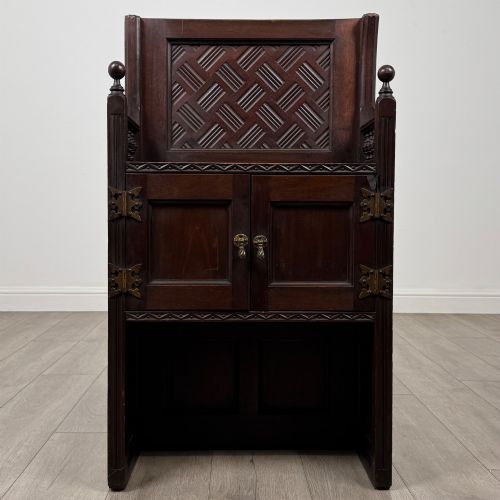
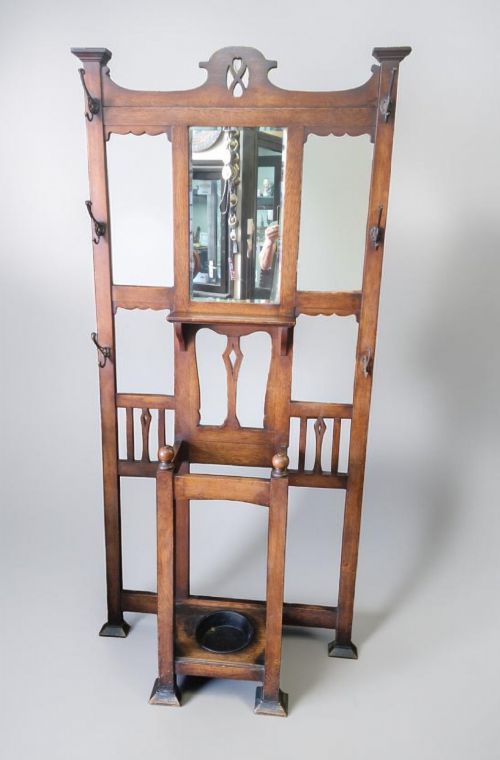
Decorative elements frequently include hand carving, turned wooden spindles, and applied mouldings that define the aesthetic of the piece. Functional additions like brass or metal coat hooks, glass mirrors, and ceramic tiles provide both utility and visual contrast against the timber frame.
Hall Stand with Bench Retail Price Guide 2026
Typical asking prices for hall stand with bench among the pieces listed under this phrase on Sellingantiques today, from the lower quarter to the upper quarter. They describe what is for sale here now, not the wider market.
Several stands include integrated umbrella wells complete with original metal drip trays to catch the English rain.
What varies in quality
Quality in a hall stand with bench often rests on the choice of timber and the ambition of the carpentry. Dense hardwoods like oak and mahogany display finer grain and hold structural carvings more sharply than softer alternatives like pine.
The integration of secondary materials such as bevelled mirror glass, decorative ceramic tiles, and solid brass hardware elevates a piece beyond basic utility. Pieces that successfully combine multiple functions, such as integrated cupboards, umbrella stands, and storage benches within a cohesive design, represent more accomplished workshop output.
Ellen E. Houghton of Minton·Shapland & Petter·Liberty
The Hall Stand with Bench Glossary
- Hall Stand
- A piece of hallway furniture designed to hold coats, hats, and umbrellas. It frequently incorporates a mirror and hooks.
- Settle
- A wooden bench with a high back and enclosed storage beneath the seat. This form provides a traditional seating option often found in country interiors.
- Luggage Rack
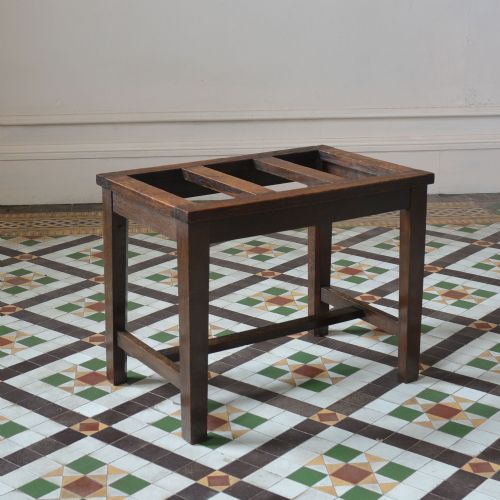
- A raised rack designed for holding bags or cases, sometimes incorporated into larger hall furniture. It offers open slatted storage.
- Arts and Crafts
- A design movement valuing handcraftsmanship and simple, honest construction. Pieces from this tradition often feature exposed joinery and minimal ornamentation.
- Art Nouveau
- A stylistic period characterised by organic, flowing lines and natural motifs. This influence appears in the curved carvings of certain hall furniture.
Hall Stand with Bench: Frequently Asked Questions
What is a hall stand with bench used for?
A hall stand with bench provides a designated spot in an entranceway to sit while removing shoes, alongside hooks for hanging coats and hats.
Many examples also include umbrella stands, mirrors, and built-in storage compartments for smaller items like gloves and scarves.
How do I care for antique hall furniture?
Maintain the wood by applying appropriate beeswax or polish periodically to nourish the surface and protect the finish from moisture.
Keep the piece away from direct heat sources and strong sunlight to prevent the timber from drying out or warping over time.
How can I tell the period of a hall stand?
The materials, construction methods, and decorative styles offer clear clues to the age of a piece. Heavy carving and dark oak often point to Victorian or Edwardian eras, while cleaner lines suggest later twentieth-century design.
Examining the fixings, hardware, and types of wood used helps narrow down the decade of manufacture.