




Hall Mirror and Coat Hooks
These hall mirror and coat hooks combine practical entrance storage with reflective glass, spanning the Victorian, Edwardian and Art Deco periods in timber and metal.
Hall Mirror and Coat Hooks
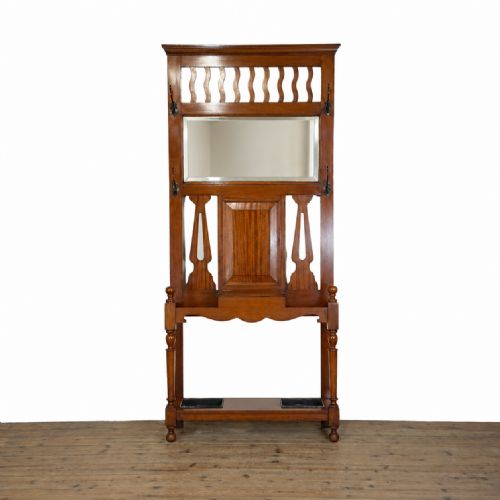
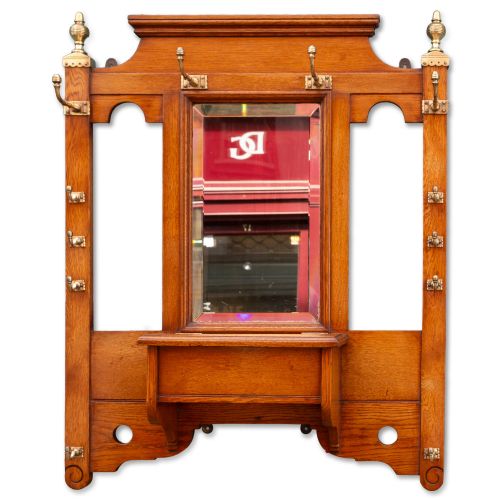
A hall mirror and coat hooks unit serves as an entrance piece combining glass for checking attire with pegs or hooks for hanging outerwear, hats and accessories. These pieces appear in various configurations, from compact wall-mounted racks to substantial floor-standing hall stands.
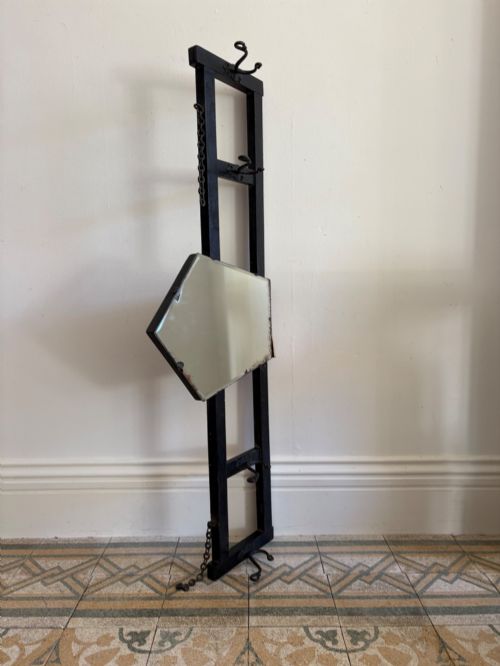
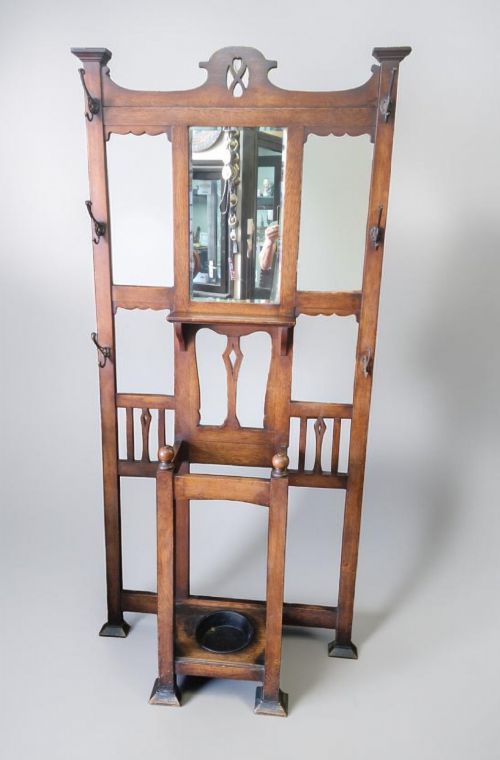
The selections available range from 19th-century mahogany and walnut wall pieces to Edwardian golden oak designs and French Art Deco iron portmanteaus. Wall-mounted variants predominate alongside floor-standing hall trees incorporating umbrella stands and benches.
Origins span British Victorian workshops, Edwardian hallways, French bistros and Dutch reception spaces, incorporating regional styles such as Gothic Revival and Black Forest carving. Buyers encounter both hanging coat racks with integrated mirror plates and expansive hall stands.
How they were made
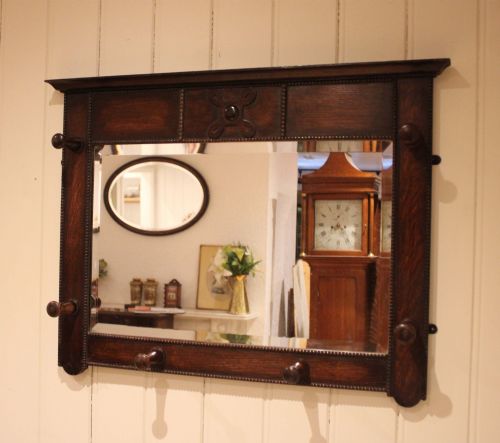
Makers utilised solid timbers including oak, mahogany and walnut, often shaping them into wall panels or structural frames to support the weight of heavy winter garments. Wrought iron, brass and other metals appear frequently for the structural hooks, hanging rails and decorative brackets.
Glass mirror plates with bevelled edges are set securely into wooden or metal frames, sometimes accompanied by ceramic tile inserts or brass fittings. Construction techniques reflect the period of origin, from the intricate joinery of late 19th-century pieces to the industrial ironwork of 1920s French designs.
Hall Mirror and Coat Hooks Retail Price Guide 2026
Typical asking prices for hall mirror and coat hooks among the pieces listed under this phrase on Sellingantiques today, from the lower quarter to the upper quarter. They describe what is for sale here now, not the wider market.
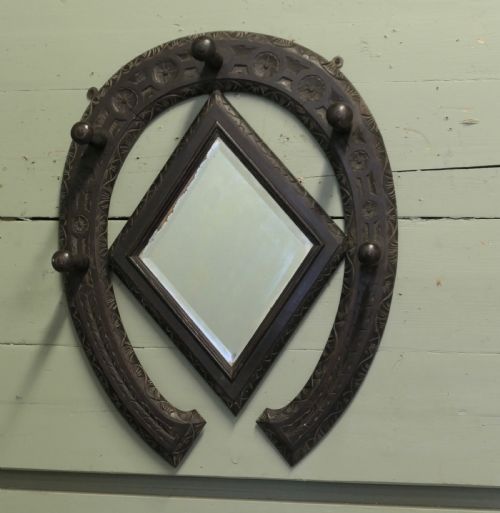
Horseshoes meet the hallway in Victorian equestrian designs, bringing stable luck directly to the front door.
What varies in quality
The calibre of a piece depends on the choice of timber and the execution of details like bevelled mirror plates and solid brass hooks rather than plated substitutes. Superior examples demonstrate thoughtful integration between the mirror frame and the hanging apparatus.
Subtlety of carving, the retention of original mirror glass and the stability of wall mounting or standing frames separate standard utility items from finer decorative pieces.
Ellen E. Houghton
The Hall Mirror and Coat Hooks Glossary
- Portmanteau
- A large hall stand combining a mirror, coat hooks and umbrella storage into a single floor-standing unit. These pieces served as central furniture items in grand Victorian and French reception halls.
- Hall Tree
- A vertical wooden piece designed for hallways, featuring hooks for coats and hats alongside umbrella wells or seats. They utilise floor space efficiently while keeping everyday outerwear organised.
- Bevelled Plate
- A mirror glass with angled, polished edges that catch the light. This traditional finishing technique adds depth and refinement to the reflective surface.
- Hall Stand
- A piece of hallway furniture that integrates storage, hooks and a mirror. They appear in materials ranging from golden oak to mahogany and wrought iron.
Hall Mirror and Coat Hooks: Frequently Asked Questions
Where should I hang a wall coat rack with mirror?
Position the unit near the main entrance at a height that allows family and guests to check their appearance while easily reaching the coat hooks. Ensure the wall structure can support the combined weight of the timber frame, mirror glass and heavy winter garments.
Adequate lighting near the entrance enhances the practical use of the mirror plate, while leaving sufficient clearance below for hanging long coats and hats.
How do I distinguish Victorian from Edwardian hall stands?
Victorian pieces tend to feature darker timbers like mahogany and walnut with heavier mouldings, deeper carvings and substantial proportions. They often reflect revival styles such as Gothic or elaborate late 19th-century ornamentation.
Edwardian designs frequently utilise golden oak and lighter woods, favouring cleaner lines and brighter finishes suited to smaller reception spaces. The construction becomes somewhat less imposing while maintaining sturdy brass hardware.
What is the difference between a hall rack and a hall stand?
A hall rack generally refers to a wall-mounted unit combining coat hooks and a mirror without floor contact. This format suits narrow hallways and smaller entranceways where floor space is limited.
A hall stand is a larger, floor-standing item that often incorporates umbrella holders, glove boxes or a small bench alongside the mirror and coat hooks. These freestanding pieces anchor the decor of larger hallways.
How do French hall pieces differ from British ones?
French designs from the Art Deco and vintage periods often incorporate wrought iron, metal frames and industrial elements alongside mirrored glass and hat shelves. Pieces like French portmanteaus emphasise decorative metalwork and slim silhouettes.
British examples rely more heavily on solid oak, mahogany and walnut, showing traditional cabinetmaking techniques and regional variations like Black Forest carving or Arts and Crafts simplicity.