
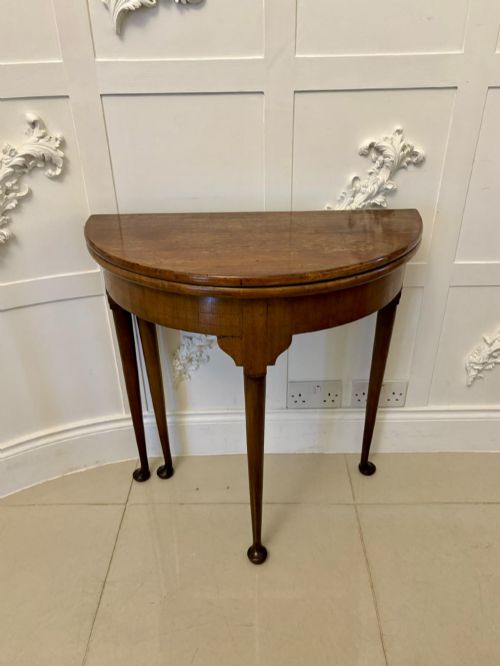
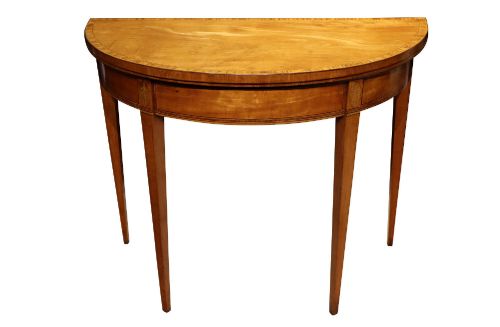
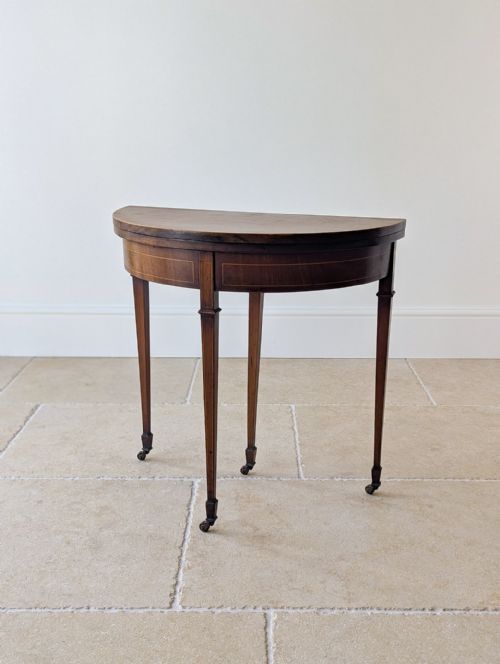

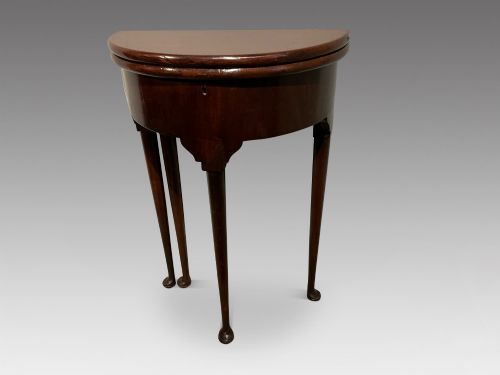


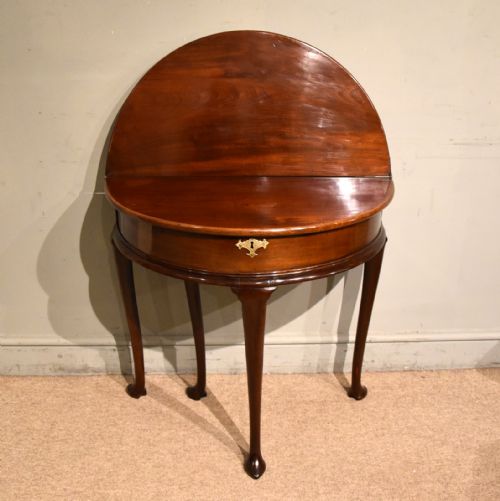


Half Moon Games Table
A half moon games table brings folding practicality and elegant crescent curves into a room, serving as a card surface or a console.
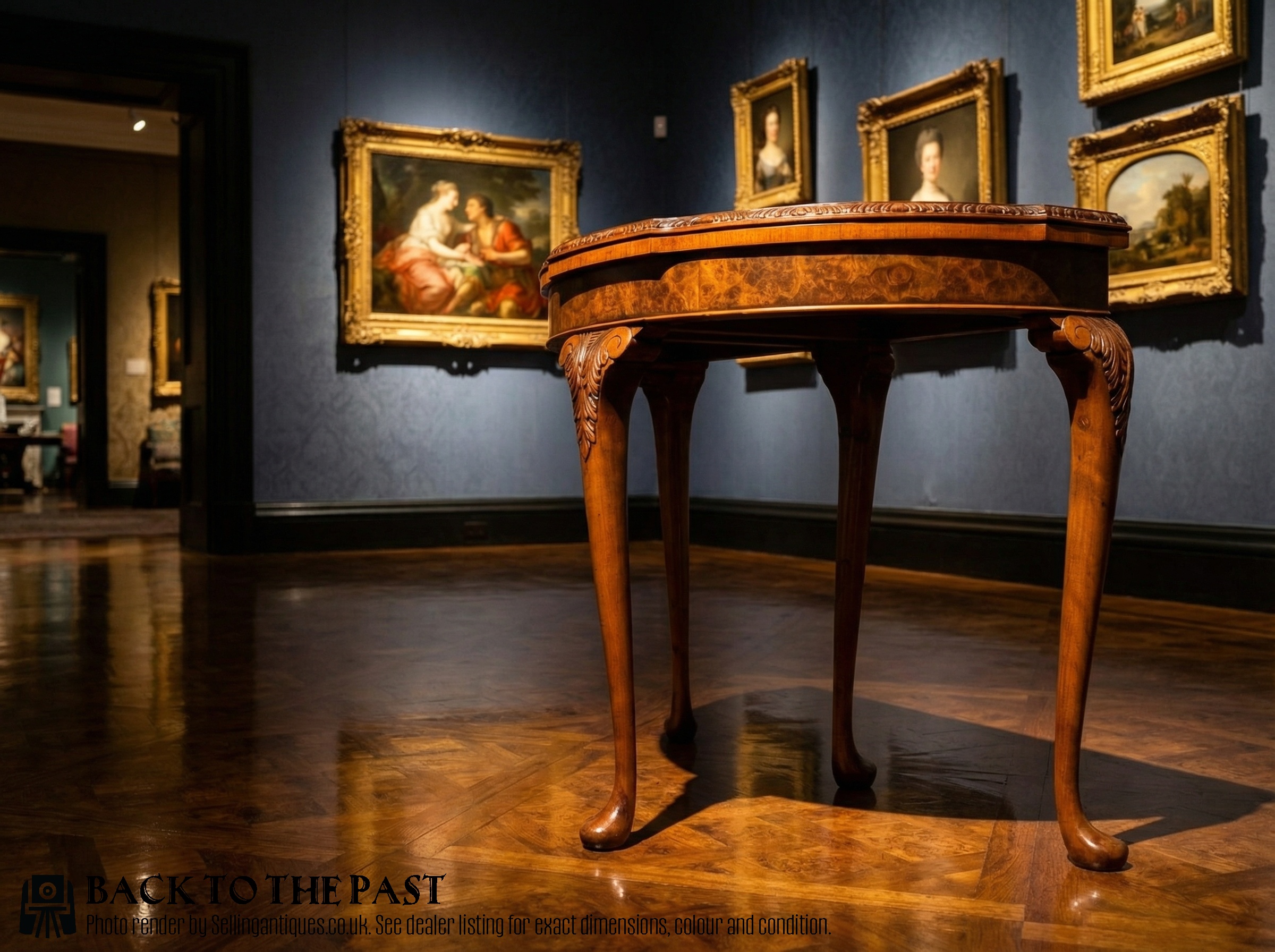
Half Moon Games Table
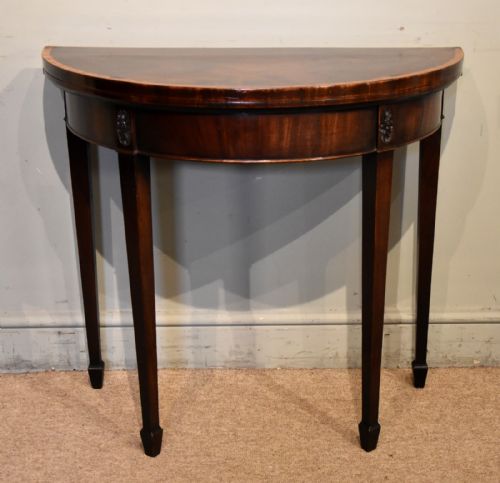
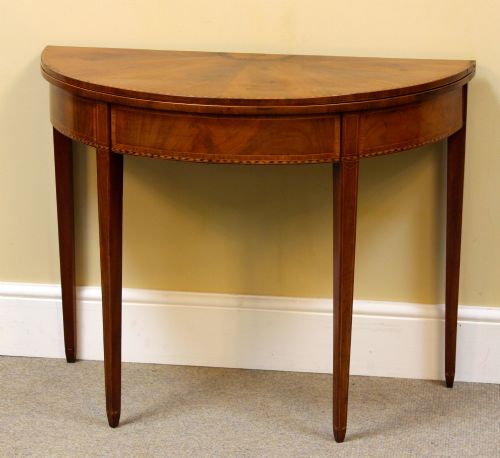
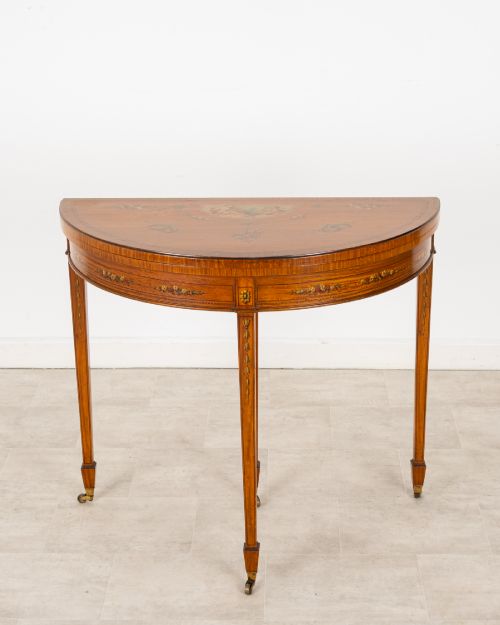
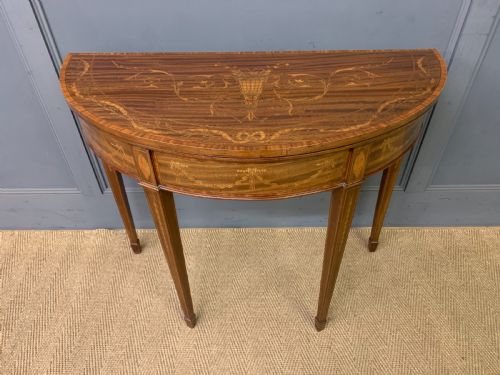
A half moon games table provides a semicircular console surface that opens on hinges to reveal a baize-lined playing area for cards. These items date from the eighteenth century through the Edwardian period and the nineteen-twenties, incorporating styles such as George III, Sheraton, and Queen Anne revival. Mahogany and satinwood versions appear frequently alongside walnut, rosewood, and fruitwood examples.
The form often doubles as a tea table or pier table when closed against a wall. Examples range from plain nineteenth-century timber variants to pieces decorated with boxwood inlay, marquetry, and painted details.
How they were made
Cabinetmakers constructed these tables using solid timbers and carefully selected veneers, applying mahogany, satinwood, walnut, and rosewood over secondary woods. Crossbanding in kingwood and contrasting stringing in boxwood define the edges and top surfaces of finer items.
Folding mechanisms rely on pivoting rear legs or swing actions to support the turn-over leaf. Inlaid motifs employ marquetry techniques, while painted Edwardian pieces feature surface decoration directly on the wood.
Several tables manage to look like polite hallway consoles until someone unfolds them for an evening of cards.
What varies in quality
The choice of timber grain and the precision of the inlay determine the visual appeal of a piece. Finer examples display figured mahogany or detailed satinwood marquetry that aligns smoothly across the folding joint.
Construction stability in the hinge mechanism and the alignment of the pivoting leg affect how solidly the top rests when open. Hand-painted surfaces and delicate brass mounts separate standard production from more ambitious workshop output.
The Half Moon Games Table Glossary
- Demi-lune
- A French term meaning half-moon, describing tables with a semicircular straight back and a curved front.
- Crossbanding
- A strip of veneer applied to the border of a tabletop with the grain running perpendicular to the centre.
- Marquetry
- Decorative patterns formed by fitting together thin pieces of coloured wood, shell, or ivory into a veneer.
- Baize
- A coarse woollen material traditionally used to line the playing surface of card tables.
- Fold-over
- A hinged top design where the surface opens to double its depth for games or dining.
Half Moon Games Table: Frequently Asked Questions
How do I use a half moon games table today?
These tables function well as console tables against a hallway or living room wall when closed. Opening the top creates a functional surface for card games or occasional display.
Their compact semicircular footprint allows them to occupy minimal floor space while offering extra surface area when entertaining.
What is the difference between a tea table and a games table?
Tea tables often feature plain wooden interiors designed for porcelain and tea wares. Games tables usually include lined surfaces intended for card play.
Many surviving examples served both purposes interchangeably depending on the domestic needs of the household.
How do I date a mahogany half moon table?
Georgian examples often exhibit solid construction with rich mahogany grain and restrained cockbeading or stringing. Edwardian and later revival pieces frequently display lighter satinwood, painted details, or machine-cut veneers.
Examining the secondary woods underneath and the style of the leg supports helps clarify the period of manufacture.
Are these tables sturdy when opened?
A well-designed pivoting rear leg or swing gate supports the weight of the folding leaf securely. The stability depends on the original hinge mechanism remaining firmly seated in the timber.
Careful alignment ensures the opened top lies level without straining the pivot joints.