

Gueridon Side Table
A gueridon side table offers a distinct circular form derived from French tradition, bringing compact elegance and practical marble surfaces to any interior.
Gueridon Side Table
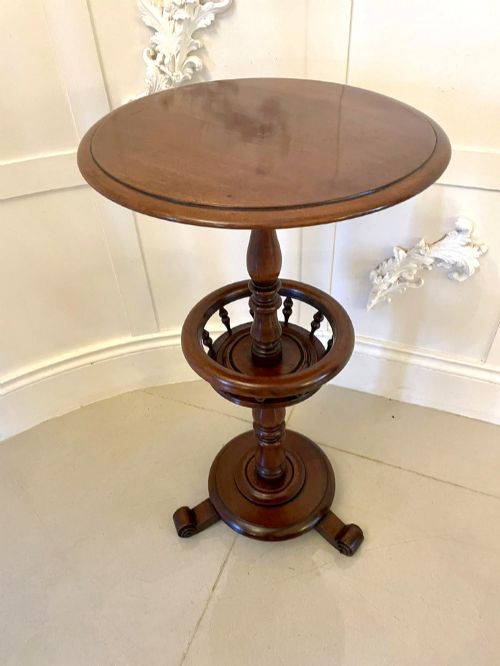
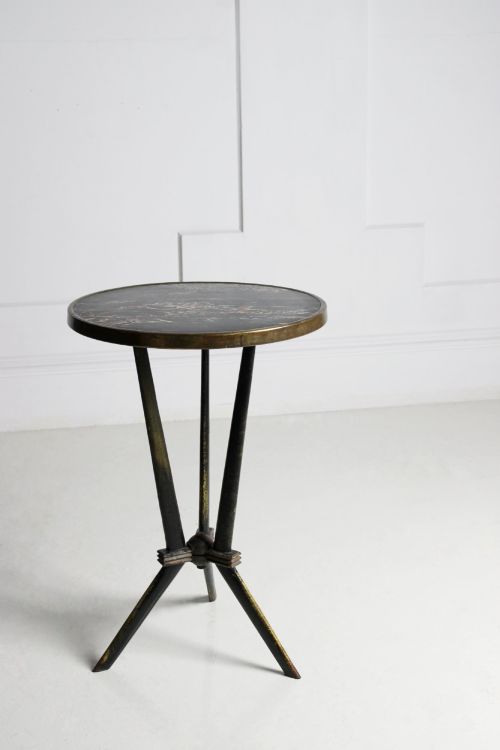
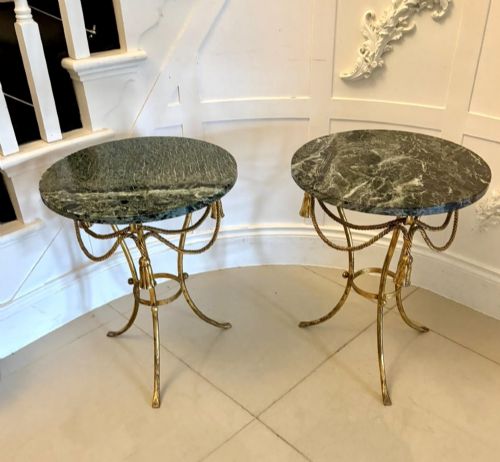
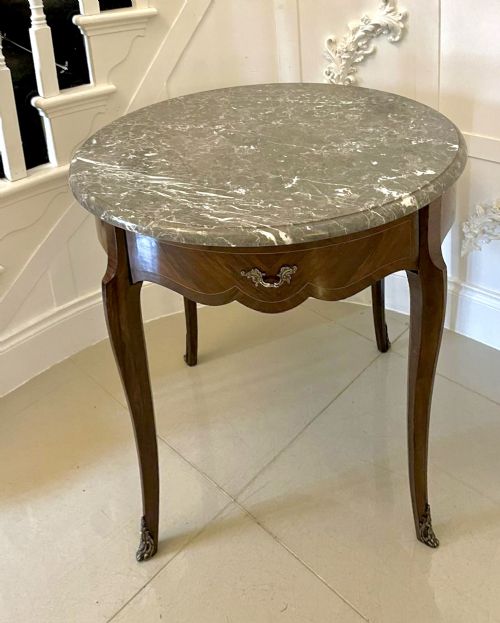
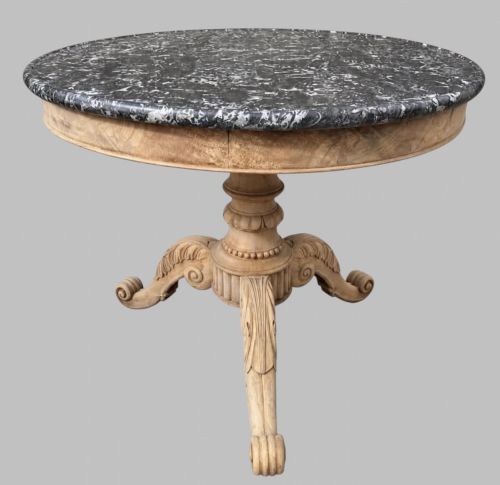
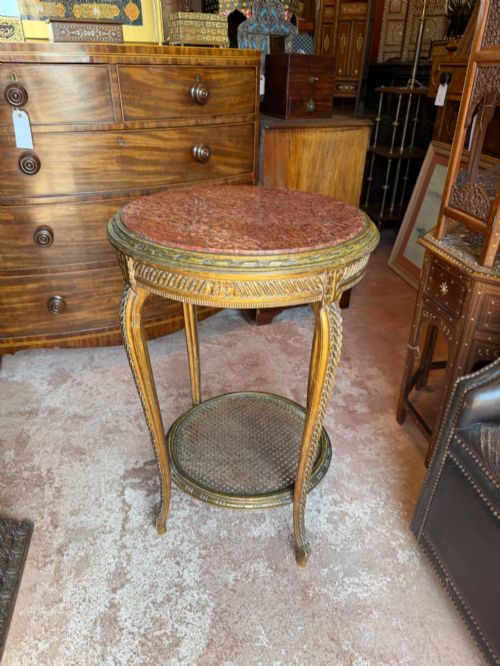
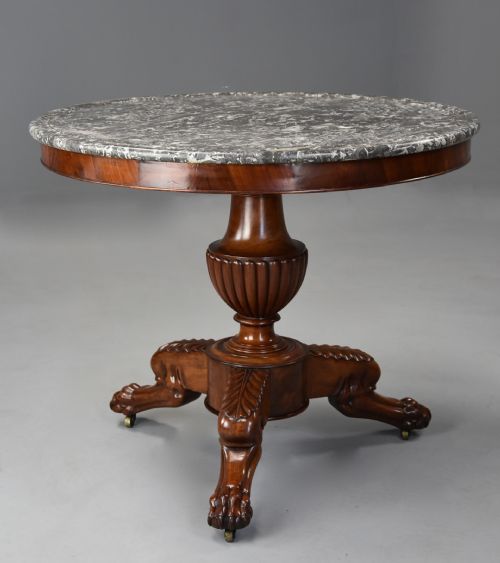
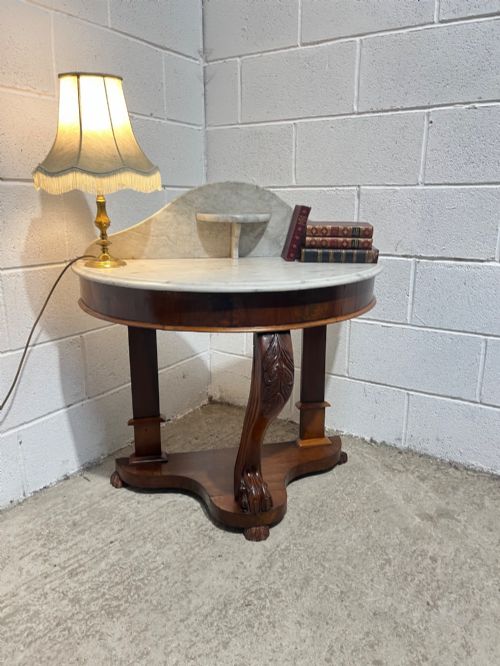
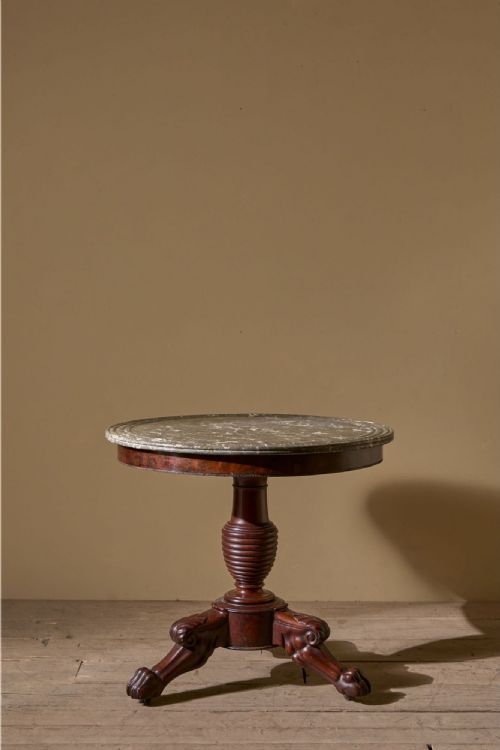
A gueridon side table is primarily a round, freestanding piece designed for occasional use, often featuring a central pedestal base or tripod support. The items found here span the nineteenth century and early twentieth century, drawing heavily on French cabinet-making traditions from periods such as the French Empire, Louis XVI Revival, and Louis XV Style.
Most examples you encounter on this page combine timber frames with inset marble tops, functioning traditionally as lamp tables, plant stands, or central display pieces. The form adapts easily to smaller footprints while retaining a formal presence through classical detailing and classical proportions.
Materials and Construction
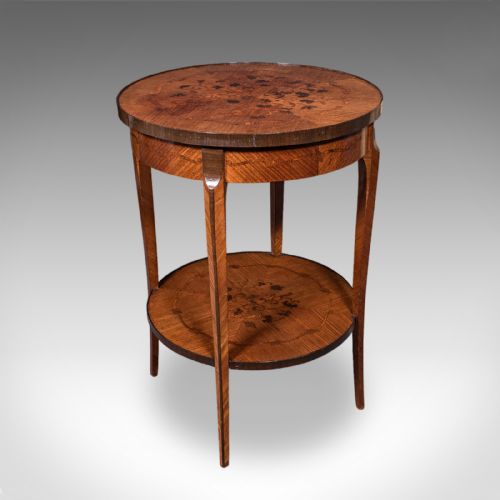
Cabinet-makers relied on rich hardwoods including mahogany, kingwood, and walnut for the structural frames, frequently applying marquetry, parquetry, or burr elm veneers to create patterned surfaces. Solid oak and lime wood appear in earlier or regional pieces, providing sturdy carcases beneath decorative outer layers.
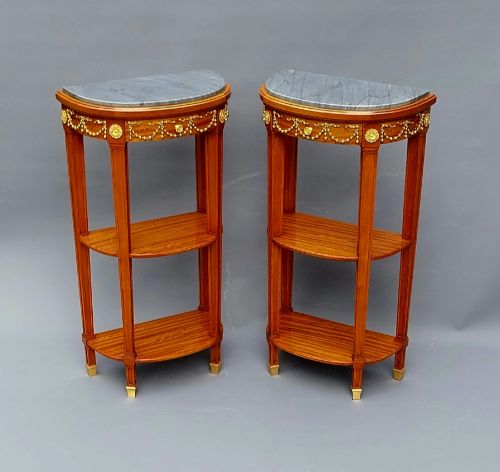
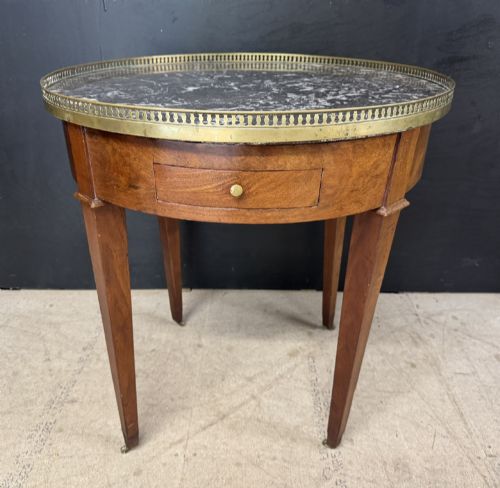
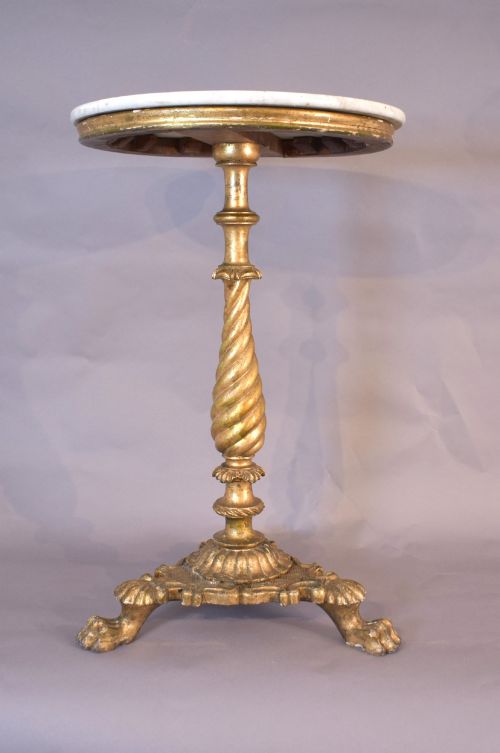
Metal mounts in ormolu, gilt brass, and cast bronze accent the timber frames, while inset slabs of white, grey, or verde marble form durable table tops. Giltwood and painted finishes also occur, reflecting the decorative tastes of the nineteenth-century French workshops that produced them.
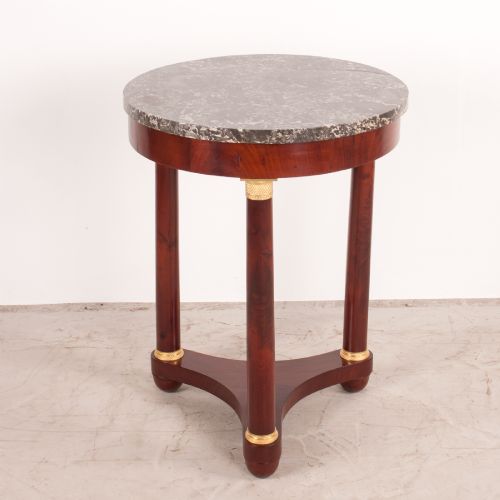
Cast brass rams heads peer outward from several nineteenth-century pillar supports, keeping a silent vigil over forgotten drawing rooms.
Craftsmanship and Proportion
Quality rests in the crispness of the bronze or ormolu mounts, the precision of the marquetry inlays, and the natural figuring of the timber veneers. Finer pieces demonstrate seamless integration between the stone top and the wooden gallery, with marble slabs that sit flush and possess distinct veining.
The architectural balance of the central column or tripod legs dictates the overall elegance of the piece, separating standard workshop production from exceptional cabinet-making associated with notable makers.
François Linke·L.Martin of Paris·A Hugnet Paris·Adam Weisweiler
The Gueridon Side Table Glossary
- Ormolu
- Gilded bronze mounts applied to furniture. This technique creates metallic highlights that contrast with dark timber veneers.
- Marquetry
- Inlaid wood pieces arranged in decorative patterns. Artisans utilise contrasting timbers to picture floral or geometric designs.
- Parquetry
- Geometric patterns formed from wood veneers. Squares and diamonds are fitted together across the table top.
- Guéridon
- A small circular French table supported by a central pillar or tripod legs. The design originated in seventeenth-century France.
Gueridon Side Table: Frequently Asked Questions
What is a gueridon table used for?
These tables traditionally served as small decorative stands for lamps, vases, or ornaments within formal drawing rooms and salons. Their compact circular surface makes them suitable for modern spaces as bedside stands or beside living room seating.
The raised rims on many marble tops helped prevent items from sliding off during use. They function primarily as accent furniture rather than heavy-use dining surfaces.
How do I identify French Empire style?
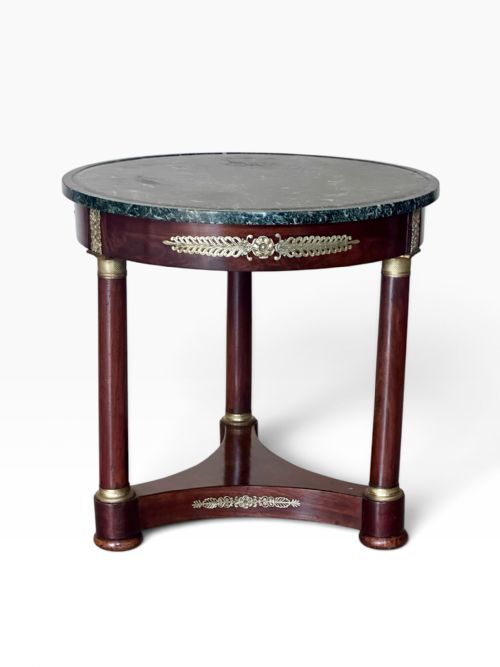
French Empire pieces display classical motifs inspired by ancient Rome and Greece, including cast brass mounts shaped as sphinxes, swans, or rams heads. The timber used is predominantly dark mahogany, contrasting sharply with bright ormolu mountings.
Columns and pilasters frequently support the structure, giving the tables a severe yet monumental architectural character. This aesthetic dominated the early nineteenth century under Napoleonic influence.
Are marble tops original to these tables?
Most nineteenth-century examples retain their original inset stone slabs, which were cut specifically to fit the wooden rebated frames. You can often see historical numbering or mason marks on the underside of the stone.
Replacement marble is sometimes fitted if the original top suffered damage over generations of domestic use. Examining the edges and underside helps determine whether the stone matches the age of the base.
How do I care for a marble top?
Marble is a porous material that absorbs liquids quickly, so spills require immediate wiping with a soft, damp cloth. Avoid acidic cleaners or lemon-based products that etch the polished stone surface.
Applying a neutral stone wax helps protect the finish from moisture rings and everyday wear. Wooden bases benefit from occasional beeswax polishing to maintain the timber lustre.