



Grey Wood Chairs
Grey wood chairs bring continental painted elegance and classic forms into a room, offering both comfort and historical character.
Grey Wood Chairs
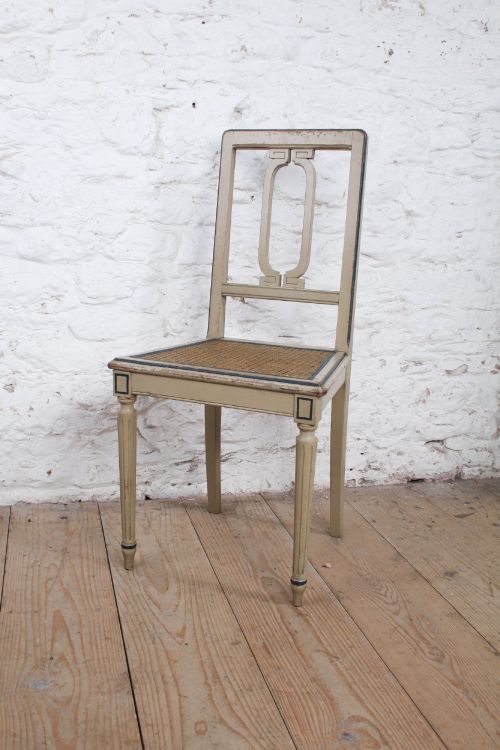
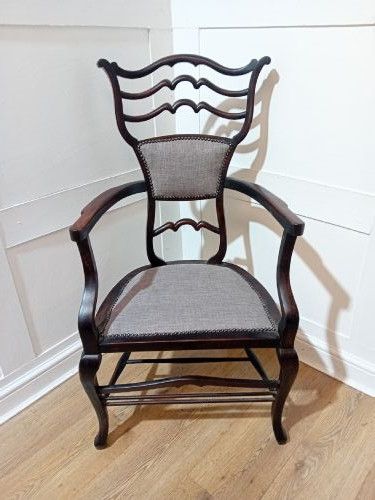
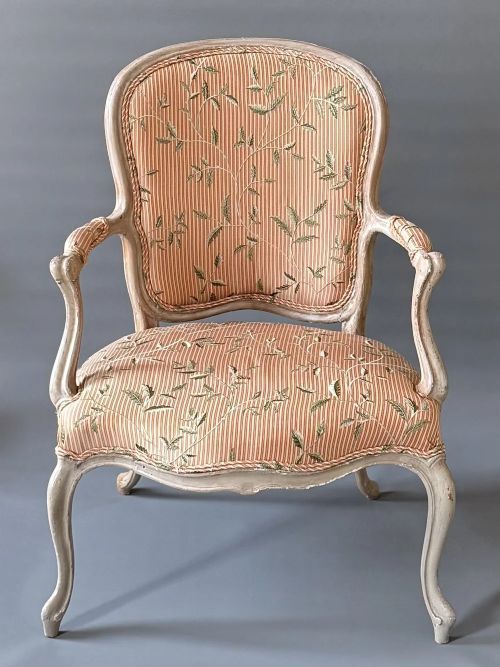
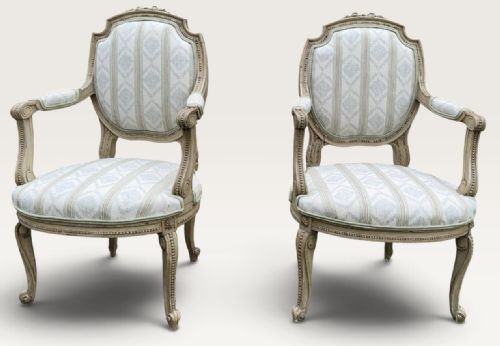
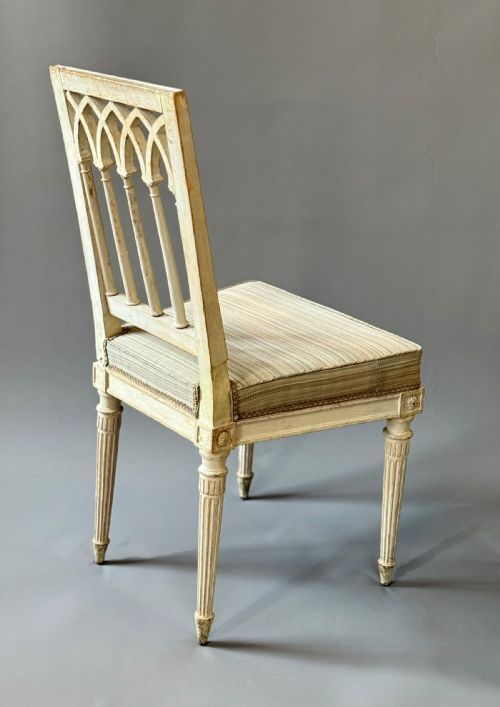
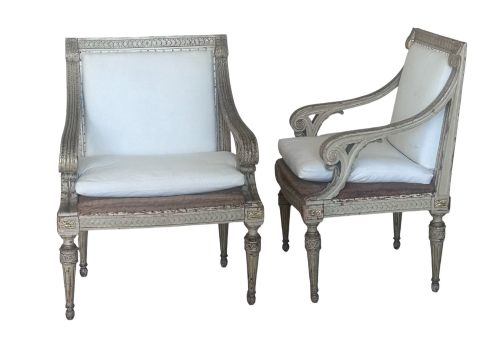
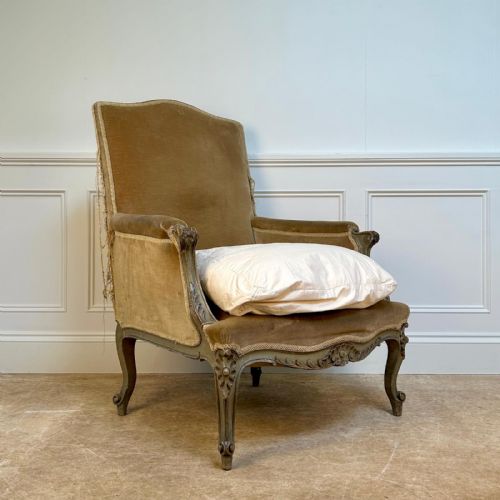
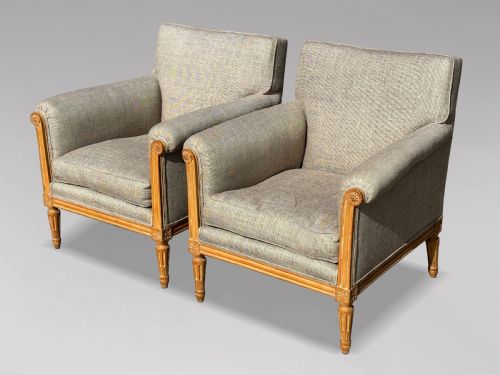
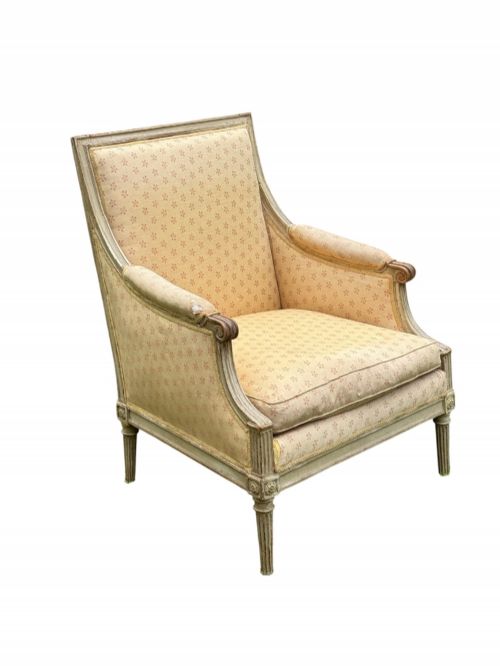
Grey wood chairs encompass a variety of seating forms designed primarily in French, Italian, and English traditions, spanning from the eighteenth century through the Art Deco era. When searching for grey wood chairs, a buyer most frequently encounters painted French armchairs, side chairs, and salon seating dating from the nineteenth and early twentieth centuries.
Makers and workshops across Europe utilised painted finishes, gesso, and parcel gilding on timber frameworks to achieve neutral grey tones. The forms range from upholstered bergères to carved wooden dining chairs and decorative side seating.
Materials and construction
The construction of these chairs relies heavily on solid timbers such as beech, walnut, fruitwood, and mahogany, shaped through traditional joinery and carving techniques. Artisans applied layers of paint, gesso, and occasional parcel gilt details directly onto the wooden frames.
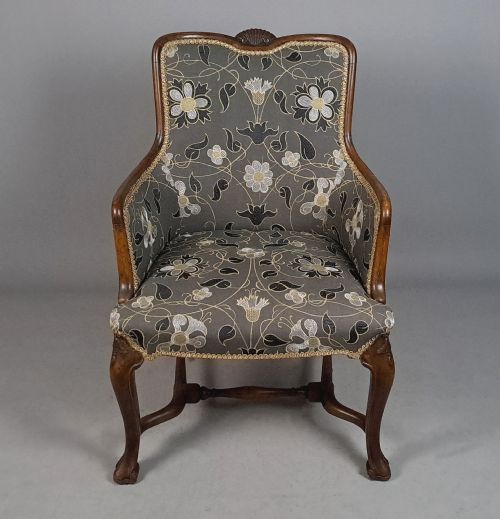
Upholstery forms a vital component of many pieces, utilising traditional textiles, fabric, and silk to pad seats, backs, and armrests. The combination of carved wooden structures with fabric or textiled coverings defines the tactile quality of the seating.
Grey Wood Chairs Retail Price Guide 2026
Typical asking prices for grey wood chairs among the pieces listed under this phrase on Sellingantiques today, from the lower quarter to the upper quarter. They describe what is for sale here now, not the wider market.
For those seeking the unexpected, the selection includes a chair carved entirely from a teak tree root alongside traditional French salon suites.
Evaluating quality and finish
Quality in these chairs rests upon the crispness of the wood carving, the integrity of the original paint surface, and the balance of the structural proportions. Pieces retaining their original painted or parcel gilt surface hold greater historical value than later repainted examples.
The sophistication of the design style, whether elaborate Neoclassical carving or restrained Gustavian lines, dictates the refinement of the piece. Superior examples exhibit harmonious joins, balanced upholstery support, and authentic period materials.
Henri Jacob·Colefax and Fowler·Hille
The Grey Wood Chairs Glossary
- Gesso
- A plaster-like mixture applied to wood surfaces to prepare them for painting or gilding. It provides a smooth base for decorative finishes.
- Gustavian
- A Swedish neoclassical style characterised by restrained classical motifs and pale painted finishes. It heavily influences many nineteenth-century grey painted chairs.
- Parcel Gilt
- A decorative technique where specific carved details on a painted surface receive a thin layer of gold leaf. This highlights architectural elements on the chair frame.
- Louis XVI
- A neoclassical style defined by straight tapered legs, geometric symmetry, and classical ornamentation. Chairs from this period display rigorous structural balance.
Grey Wood Chairs: Frequently Asked Questions
What periods do grey wood chairs come from?
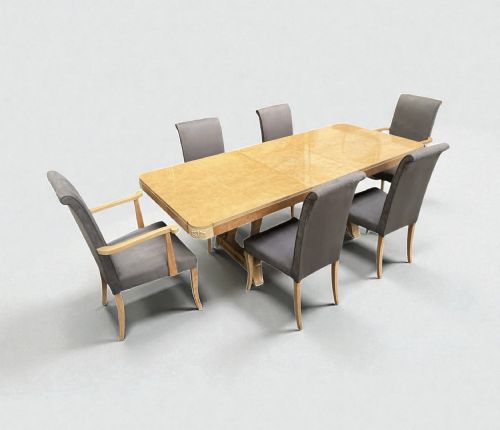
The pieces span from the eighteenth century through the Edwardian period and into the Art Deco era of the 1920s and 1930s. Eighteenth and nineteenth-century examples predominate, particularly French provincial and neoclassical revivals.
Later twentieth-century modern designs also appear alongside the antique selections, showing the enduring popularity of neutral painted seating.
How do I identify original paint?
Original painted surfaces show natural wear, patination, and multiple thin layers applied over gesso or wood. They integrate harmoniously with the age of the timber beneath rather than sitting flatly on top.
Modern repainting often masks the underlying wood texture and lacks the subtle tonal variations accumulated through decades of use.
Where were these chairs used historically?
Armchairs and bergères typically furnished grand drawing rooms, intimate salons, and bedrooms in country houses and town residences. Dining chairs served formal dining suites in both continental and British homes.
Smaller side chairs functioned as flexible movable seating for entertaining guests or accentuating corners of a room.
Are these chairs suitable for daily use?
Most antique and vintage chairs are structurally robust enough for regular sitting, provided the joinery and upholstery remain stable. Armchairs with padded backs and seats offer comfortable support for living spaces.
Lighter side chairs and dining suites function well for meals and occasional seating when properly maintained.