


Grey Stone Carved Sculpture
Grey stone carved sculpture brings the weight and permanence of antiquity directly into a room or garden, offering tactile connections to classical, medieval, and eastern traditions.
Grey Stone Carved Sculpture
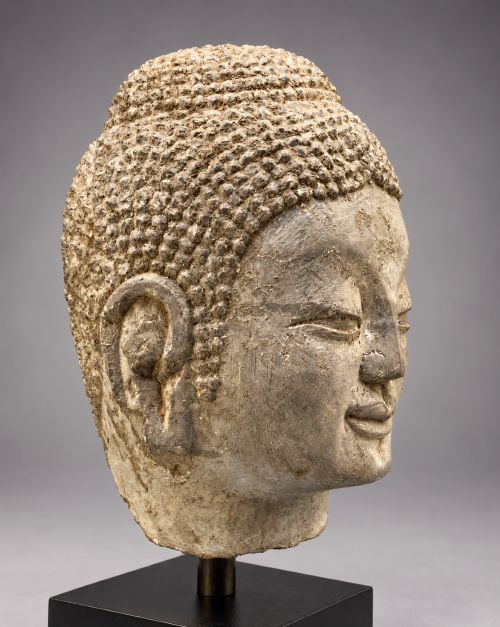
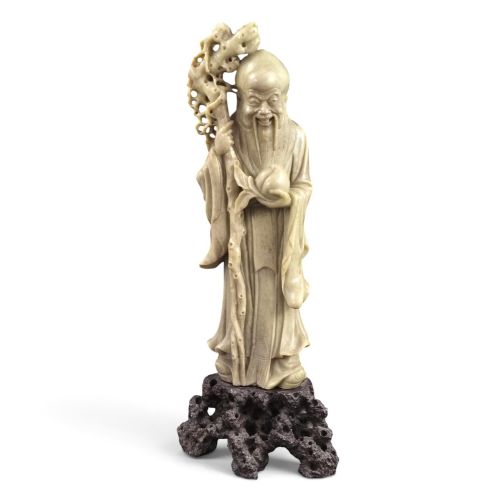
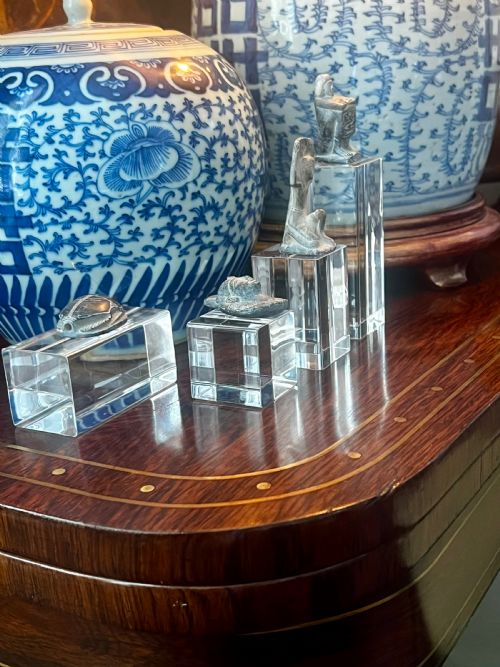
When you search for grey stone carved sculpture, you encounter a remarkably broad span of objects originating from various centuries and disparate regions. The selection ranges from pre-sixteenth century architectural salvage and religious figures to nineteenth-century decorative garden ornaments and grand tour marbles. These pieces include fragments of ancient statues, architectural corbels, garden animals, and scholarly Chinese soapstone carvings.
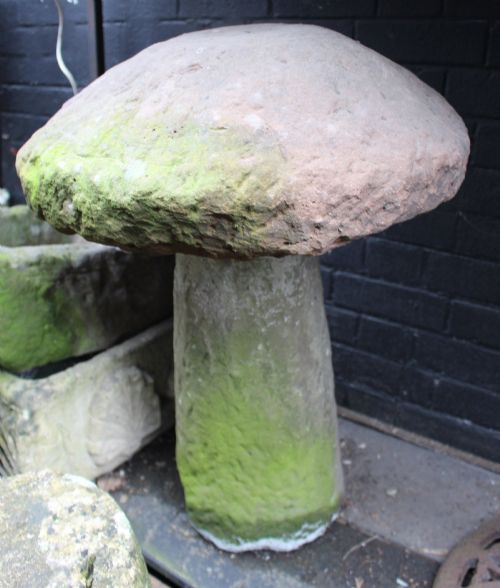
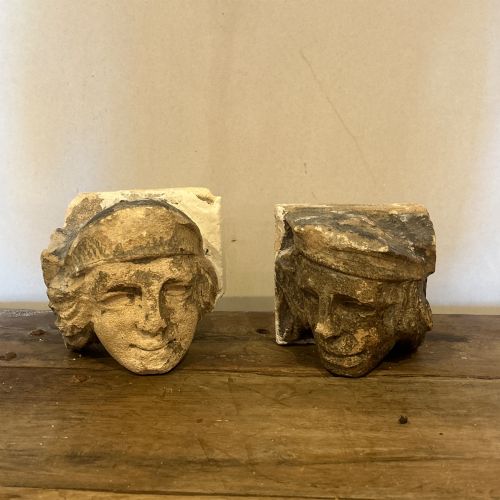
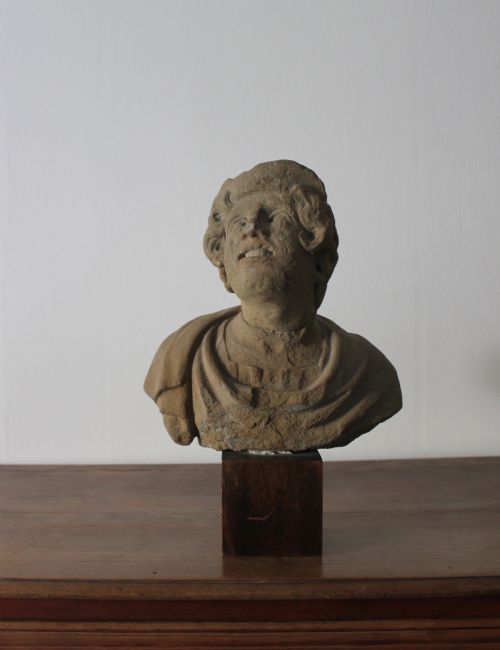
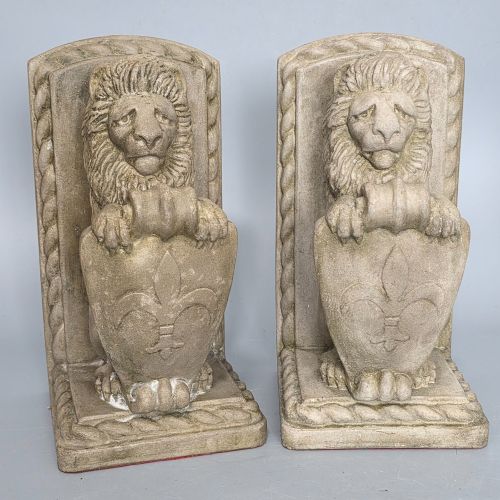
The versions you meet most frequently on this page fall primarily into domestic garden furnishings, such as staddle stones and lions, alongside historic architectural elements like limestone corbels and medieval busts. Alongside these structural and garden pieces sit smaller figurative works, including Chinese soapstone deities and marble busts reminiscent of grand tour collections. Each form carries distinct material qualities shaped by its original architectural or domestic context.
Origins stretch from English countryside farmyards and medieval ecclesiastical buildings to Chinese dynasties and Italian workshops. A buyer navigates periods spanning the Tang and Ming dynasties, the medieval Gothic era, and nineteenth-century revivals. This variety means an acquisition might function as a sturdy garden plinth or an intimate interior sculpture depending on its initial purpose.
Distinctions in quality and execution
The distinction between ordinary items and exceptional works lies primarily in the sharpness of the hand carving and the anatomical understanding of the maker. Masterpieces display confident, fluid line work in drapery and facial expressions, whereas lesser examples rely on mechanical rigidity or generalized mass production.
Material selection significantly influences the status of a piece, with high-grade marbles and carefully chosen historic sandstones commanding greater appreciation than coarse reconstituted compounds. The integrity of the preservation also dictates value, particularly when ancient architectural fragments retain their original surface tooling beneath centuries of weathering.
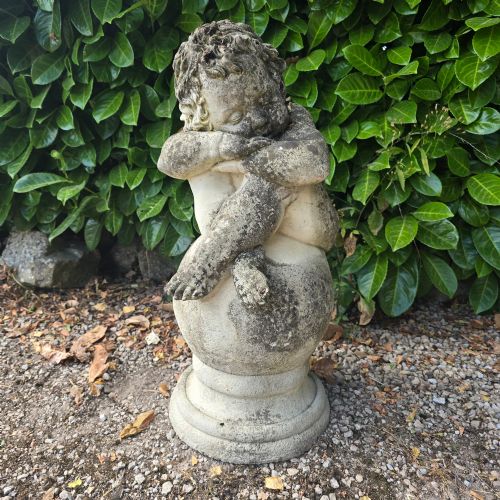
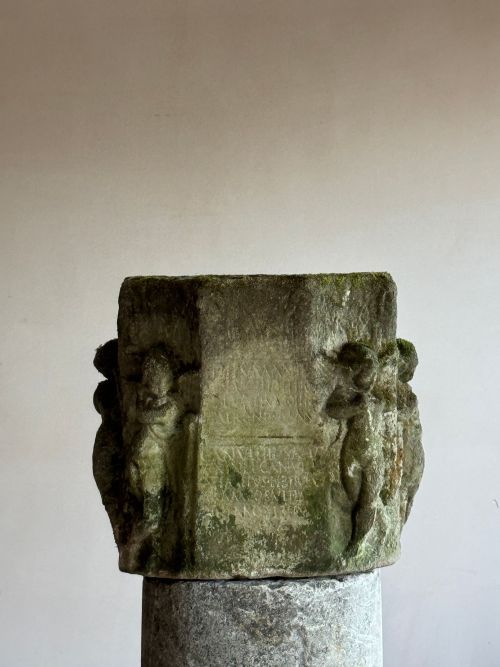
Among the stone menagerie rest a weathered sleeping cherub and a jovial garden toby keeping watch over the collection.
Gugielmo Pugi
The Grey Stone Carved Sculpture Glossary
- Staddlestone
- A mushroom-shaped stone support originally used to elevate granaries and grain ricks above damp ground and vermin. These functional agricultural items now serve widely as rustic garden ornaments.
- Corbel
- A structural piece of stone projecting from a wall to support a weight inside or outside a building. Medieval examples frequently feature carved human or animal heads.
- Grand Tour
- A traditional trip of Europe undertaken by upper-class European young men of means in the eighteenth and nineteenth centuries. Participants frequently returned with marble busts and statues.
- Reconstituted stone
- A composite material made from crushed or graded natural stone aggregates mixed with a binder. It is cast in moulds to replicate carved stone architectural ornaments and garden statues.
Grey Stone Carved Sculpture: Frequently Asked Questions
What is a staddle stone?
A staddle stone is a mushroom-shaped architectural support traditionally used to elevate timber granaries above the damp earth and pests. They consist of a distinct cap and base carved from hard stone.
Today, these robust agricultural salvage pieces find a second life as garden ornaments, often arranged in pairs on lawns or patios to add rustic structure.
How do I identify a medieval stone carving?
Medieval stone carvings, such as corbels and architectural busts, typically display deep chisel marks, heavy weathering, and distinct Gothic stylistic traits. The subjects are often religious figures, bishops, or grotesque heads.
Examining the back and sides of the stone often reveals original mortise holes or mounting scars that indicate how the piece integrated into an ancient wall.
Where should I place a heavy garden statue?
Heavy garden statues and stone lions require a stable, level foundation such as a stone plinth, paved terrace, or compacted gravel to prevent shifting over time. Placing them directly on bare soil can lead to uneven sinking.
Consider the surrounding sightlines in your garden so that architectural elements and animal sculptures create natural focal points from seating areas or pathways.
What is the difference between cast stone and carved stone?
Carved stone is shaped directly out of a natural block using hand tools like chisels and mallets, resulting in unique tool marks and individual character. Every single piece requires direct manual labour from a mason.
Cast stone is manufactured by pouring a mixture of cement, sand, and crushed stone into a mould. This technique allows for the efficient reproduction of ornamental garden statues and architectural details.