



Grey Carved Hall Table
A grey carved hall table brings neoclassical presence and solid marble surfaces to an entranceway, drawing on French and Italian console designs.
Grey Carved Hall Table
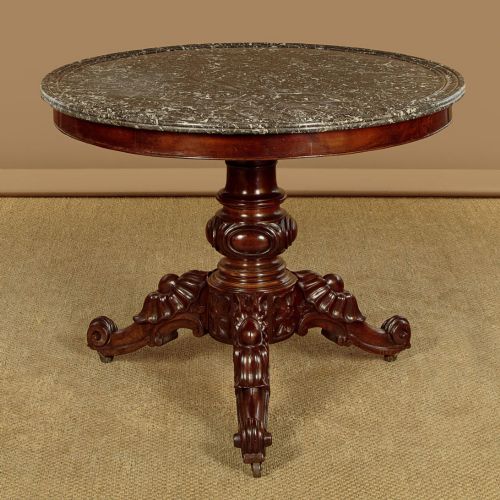
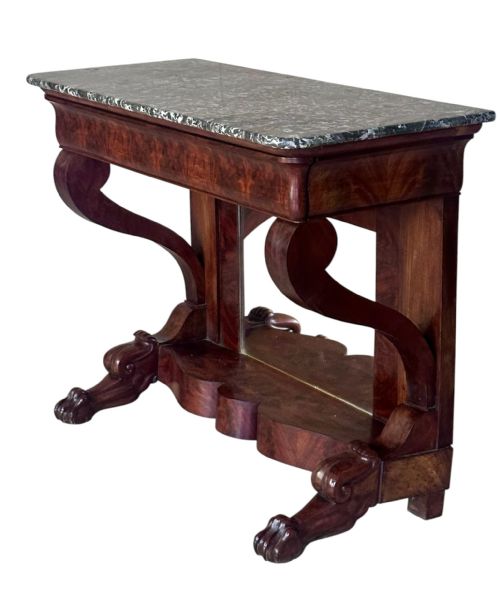
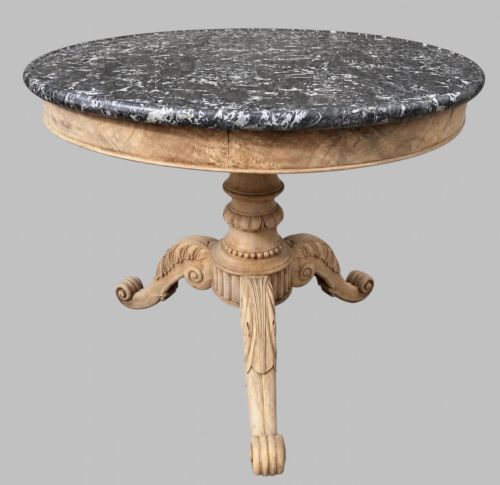
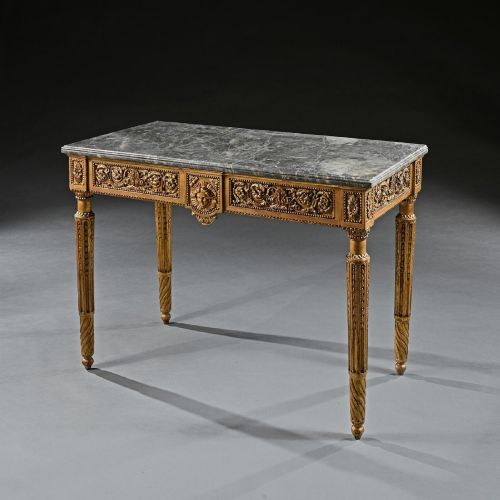
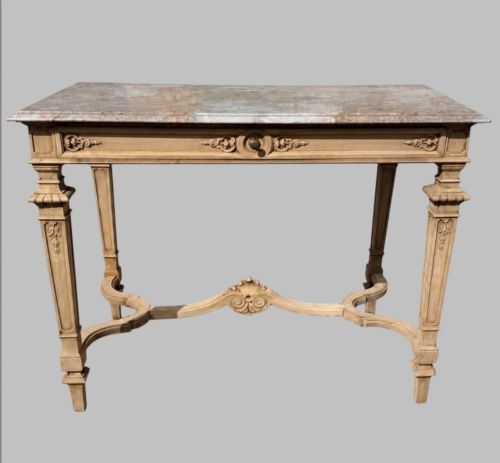
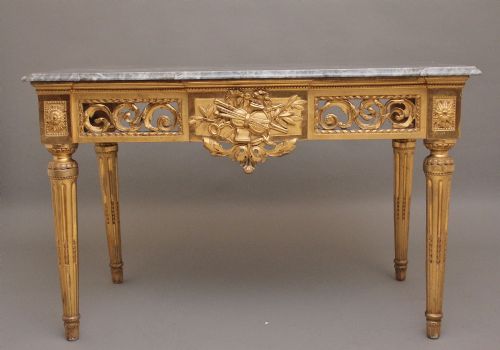
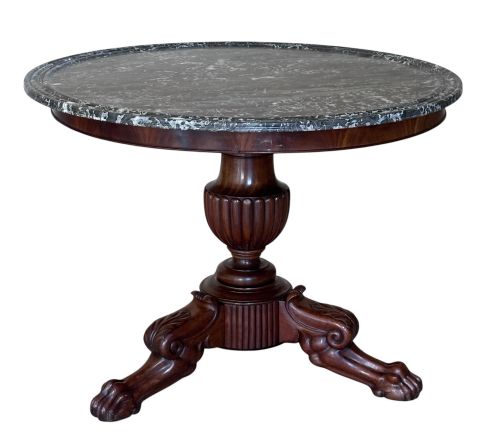
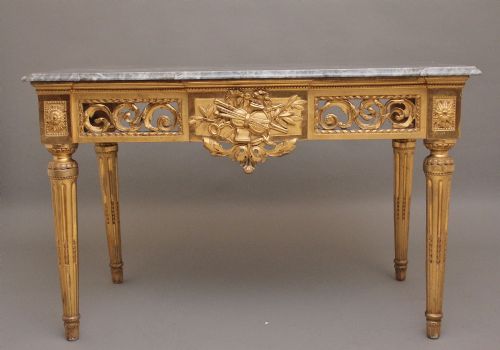
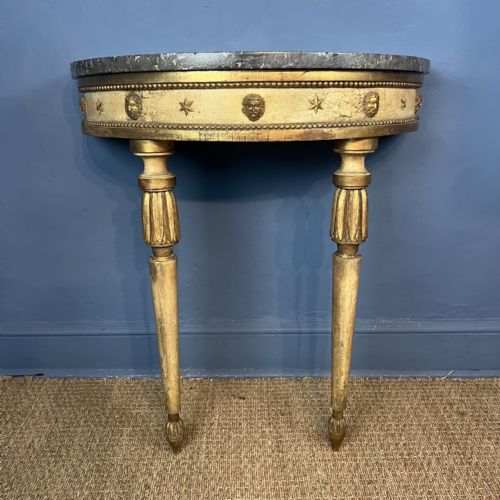
A grey carved hall table functions primarily as a console or side table designed to stand against an entrance wall, frequently topped with heavy marble. The forms appearing on this page span the eighteenth and nineteenth centuries, taking inspiration from Louis XVI, French Empire, and Italian neoclassical styles.
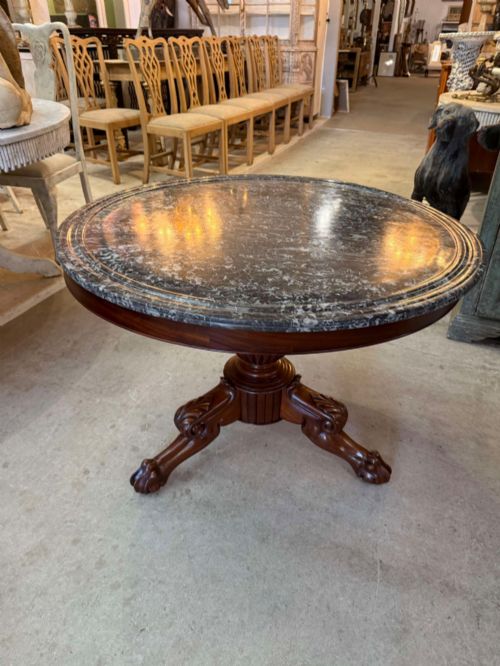
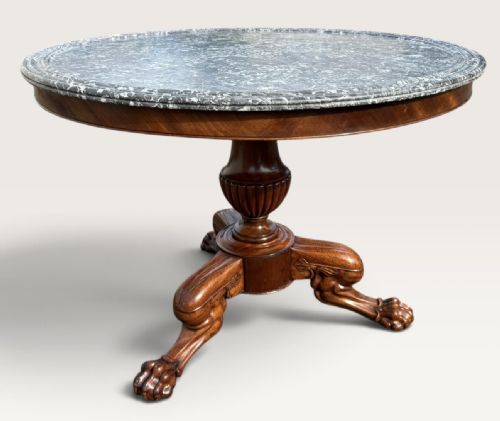
Most examples found here present as painted wood, giltwood, or mahogany structures originating from French, Italian, and English workshops. Buyers encounter gueridon, centre, and console tables sharing carved wooden frames and stone surfaces suited to narrow hallways.
Materials and construction
Carved wood forms the structural base of these tables, utilising walnut, mahogany, oak, and painted softwoods shaped into neoclassical details. Artisans applied hand-carved ornamentation directly to the timber frames before applying paint, parcel gilt, or clear finishes.
Slab marble provides the functional top surface across many pieces, paired with carved wooden bases in giltwood or painted finishes. Joinery methods of the eighteenth and nineteenth centuries secure these heavy stone slabs atop heavily decorated aprons and legs.
Grey Carved Hall Table Retail Price Guide 2026
Typical asking prices for grey carved hall table among the pieces listed under this phrase on Sellingantiques today, from the lower quarter to the upper quarter. They describe what is for sale here now, not the wider market.
The inventory spans console tables, gueridons, and side tables built during the Regency, Victorian, and Louis Philippe periods.
Distinctions in quality
The precision and depth of the wood carving separate standard joinery from exceptional craftsmanship, particularly on parcel-gilt and painted console tables. Sharpness in the relief work and the integration of the carved motifs into the structural apron indicate higher workshop standards.
The selection and thickness of the marble top dictate the overall solidity and period authenticity of the piece. Superior examples utilise heavy, well-veined marble slabs that fit flush into the rebated wooden frames without modern shims or alterations.
The Grey Carved Hall Table Glossary
- Console table
- A table designed to stand against a wall, frequently secured to the vertical surface with brackets or resting on front legs. These forms suit hallways and entrance spaces.
- Gueridon
- A round French table supported by a central pillar or multiple legs, frequently featuring a marble top. Originating in the seventeenth century, these remained popular through the nineteenth.
- Giltwood
- Timber that has been coated with a thin layer of gold leaf over a prepared gesso ground. This finish appears widely on eighteenth-century Italian and French tables.
- Parcel gilt
- Woodwork decorated with partial gilding that highlights specific carved details against a painted or polished ground. This technique creates contrast on neoclassical furniture.
- Serpentine
- A furniture front or top curving inward centrally and outward at the ends in a continuous wave line. This contour requires skilled carpentry to shape accurately.
Grey Carved Hall Table: Frequently Asked Questions
How do I identify a gueridon table?
A gueridon table is typically round with a central column or three to four upright legs supporting a circular top. They often feature inset marble slabs and compact proportions suited to smaller rooms.
Originating as candle stands, these tables evolved into general-purpose centre and occasional tables during the eighteenth and nineteenth centuries in France.
Are marble tops original to these tables?
Many eighteenth and nineteenth-century console and centre tables were constructed specifically to carry heavy marble slabs as functional, heat-resistant surfaces. The rebated wooden frames on these pieces usually accommodate the exact thickness of the stone.
Careful inspection of the underside reveals whether the wooden framing matches the weight and profile of the marble top. Original stone surfaces show appropriate wear consistent with the age of the wooden base.
How should I care for a painted wooden table?
Painted wooden furniture requires dusting with a dry, soft cloth and protection from direct sunlight and extreme humidity fluctuations. Moisture can damage aged painted surfaces and lift delicate gesso or gilt layers.
Avoid using commercial silicone sprays or abrasive cleaning agents on antique painted finishes. Professional conservation wax applied sparingly preserves the historic paint layers without creating a glossy buildup.
What distinguishes neoclassical furniture?
Neoclassical furniture draws inspiration from classical Greek and Roman architecture, featuring straight lines, symmetrical forms, and restrained ornamentation. Motifs such as fluted legs, urns, and acanthus leaves replace the fluid asymmetry of earlier rococo styles.
This aesthetic dominated late eighteenth and early nineteenth-century production across France, Italy, and England. The resulting tables emphasise architectural geometry and balanced proportions.