


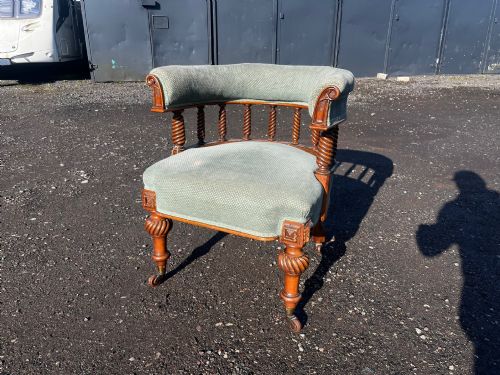


Green Velvet Library Chair
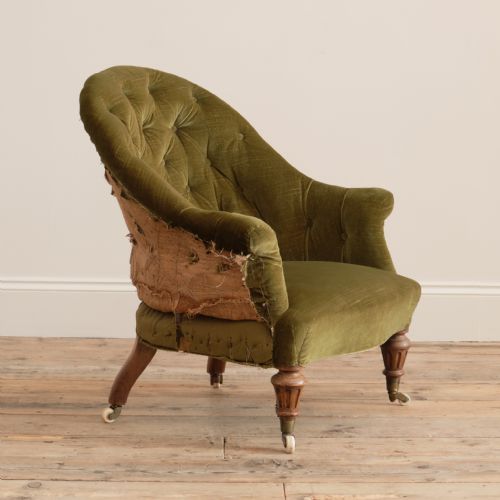
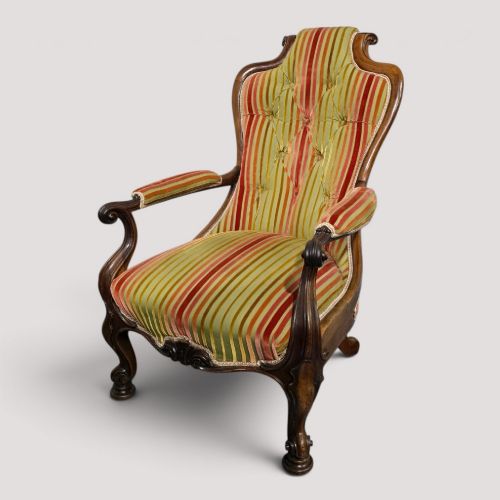
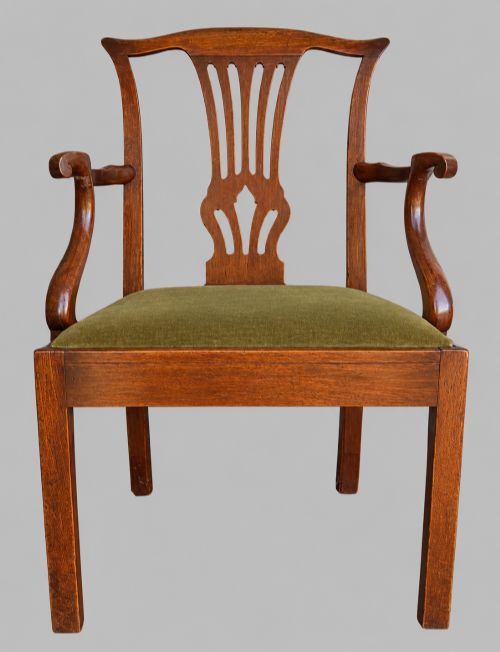
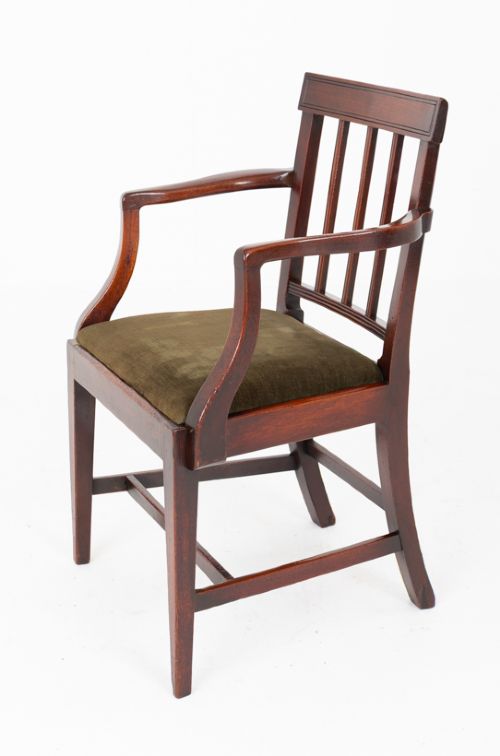
A green velvet library chair brings deep colour and sturdy seating to a room, drawing the eye with rich upholstery and dark timber frames.
Green Velvet Library Chair
A green velvet library chair is a sturdy seat designed for study and reading, most often appearing in mahogany, walnut, or rosewood across this selection. These pieces date primarily from the Georgian, Regency, and Victorian eras, taking the form of open armchairs, desk chairs, and bergères.
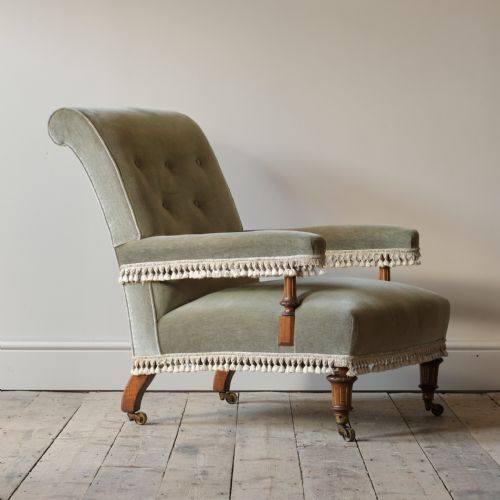
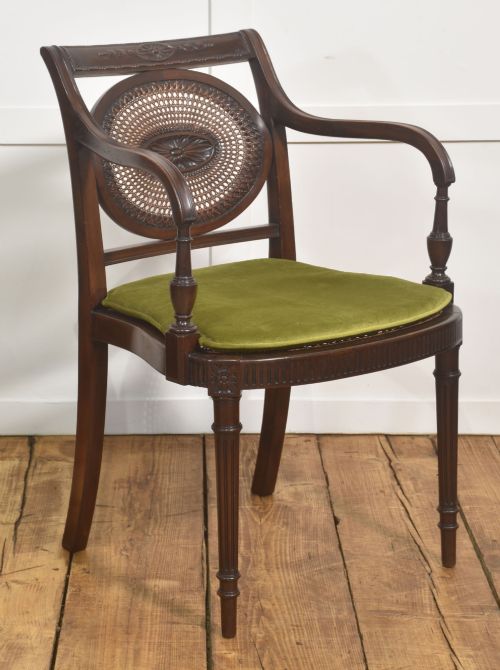
The version most commonly met on this page combines a dark wood frame with velvet upholstery, sometimes incorporating cane panels or brass castors. Makers often shaped these as library armchairs or study chairs to serve long hours of reading at a desk or table.
How they were made
Makers constructed the frames of these chairs from dense timbers like mahogany, walnut, and rosewood, carving the wood or turning the legs by hand. Brass castors frequently appear on the feet to allow easy movement across wooden floors or carpets.
Upholsterers stretched velvet tightly over interior padding, securing the edges with brass tacks or hiding them beneath gimp braid. Cane work was woven by hand into open frames on bergère models to provide lightweight backrests.
Some chairs roll into battle on brass castors, ready to slide across the study floor at a moment's notice.
What varies in quality
Quality reveals itself in the crispness of the timber carving and the weight of the frame, where denser hardwoods endure heavy use. The choice of timber grain and the precision of the joinery separate standard workshop output from exceptional commissions.
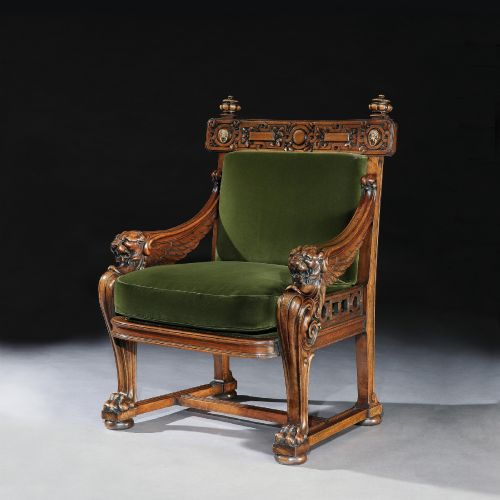
Upholstery finish and internal webbing standards also distinguish the work, as does the presence of documented maker stamps on the wood. Superior examples display balanced proportions and refined details like lion monopodia or delicate reeded legs.
Gillows·Howard & Sons·J. & T. Scott·George Bartholomew & Co.
The Green Velvet Library Chair Glossary
- Bergère
- An upholstered armchair with enclosed sides, often featuring cane panels woven into a wooden frame. This French form became popular in British seating during the Regency period.
- Gimp
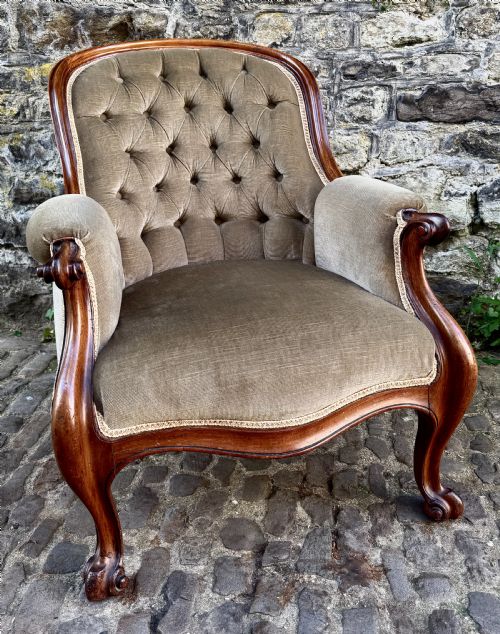
- A flat woven braid used to trim upholstery and conceal fixing tacks along the wooden frame. It matches the fabric colour to maintain a clean finish.
- Castor
- A small wheel fitted to the base of furniture legs to aid movement. Brass versions are typical on nineteenth-century library armchairs.
Green Velvet Library Chair: Frequently Asked Questions
What is a library chair?
A library chair is a sturdy armchair designed for reading and writing at a desk or table. These seats prioritise comfort and support during long hours of study.
They typically feature upholstered arms and backs set within a durable wood frame, often fitted with castors for movement across the room.
How do I date a library chair?
Dating relies on timber choices, leg styles, and structural forms that shifted across the Georgian, Regency, and Victorian periods. Heavier mahogany and walnut frames point to mid-nineteenth-century production.
Maker stamps and distinctive carving details like lion monopodia or X-frames further narrow down the decade of manufacture.
Are these chairs comfortable for daily use?
These pieces were built for functional seating in studies and libraries, offering solid arm support and padded backs. Their ergonomic proportions suit quiet reading or desk work.
Upholstered variants provide softer seating, while bergère styles offer firm support through cane panels and cushions.
What woods were used in these chairs?
Cabinet makers relied heavily on dense hardwoods such as mahogany, walnut, and rosewood to ensure structural stability. Satinwood also appears on later revival pieces.
These timbers were chosen for their strength and deep grain patterns, which took a fine polish.