



Green Upholstered Daybed
These green upholstered daybed pieces bring nineteenth-century elegance and reclining comfort to a room.
Green Upholstered Daybed
A green upholstered daybed encompasses nineteenth-century chaise longues, daybeds, settees, and modular duchesse brisee forms designed for horizontal rest and formal seating. These items span Victorian, Regency, French Rococo, and Empire styles, reflecting the eclectic tastes of the period.
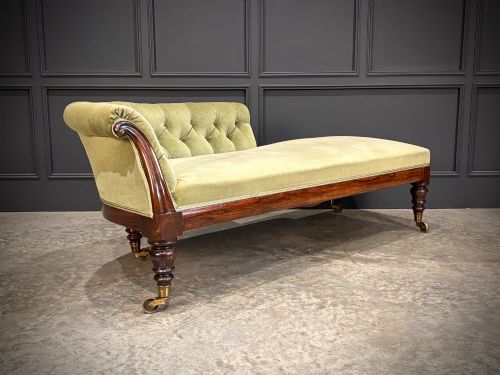
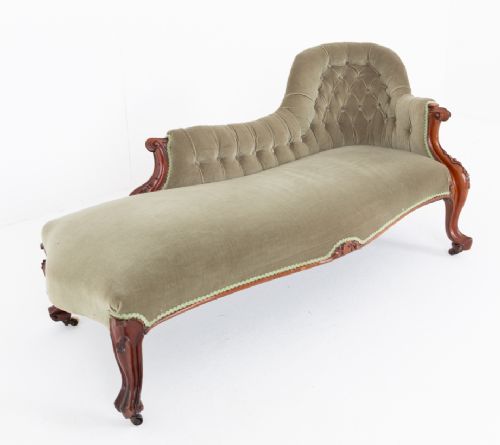
You are most likely to encounter Victorian rosewood or mahogany chaise longues and nineteenth-century daybed variants featuring rich wood frames and fabric or velvet upholstery. These pieces serve as both decorative focal points and functional furniture.
The selection includes specific regional interpretations such as Italian long stools, French giltwood multi-piece suites, and Howard style daybeds. Each object type offers a distinct silhouette tailored to nineteenth-century domestic interiors.
How they were made
Makers utilised solid timbers such as mahogany, rosewood, walnut, and giltwood to construct the structural frames of these seats. Carved details and scroll ends demonstrate traditional joinery and cabinet-making techniques of the nineteenth century.
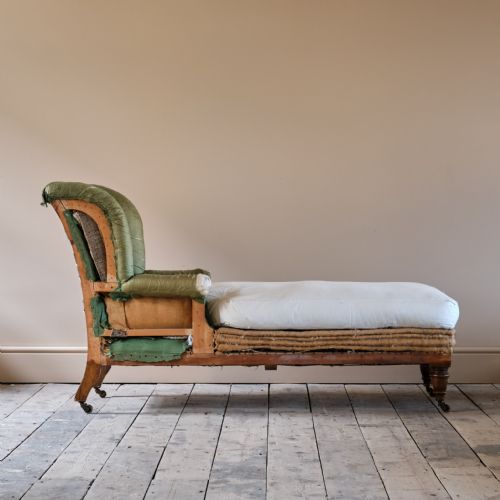
Upholstery incorporates traditional textile coverings including velvet and various fabrics, often paired with brass elements and internal box ottoman mechanisms. These materials provide both structural durability and tactile richness.
Green Upholstered Daybed Retail Price Guide 2026
Typical asking prices for green upholstered daybed among the pieces listed under this phrase on Sellingantiques today, from the lower quarter to the upper quarter. They describe what is for sale here now, not the wider market.
Some nineteenth-century daybeds cleverly conceal a box ottoman inside, proving that Victorians loved a secret compartment as much as a carved scroll.
What varies in quality
The distinction between standard examples and superior pieces rests on the depth and crispness of the timber carving and the architectural ambition of the frame. Elaborate French giltwood multi-piece compositions and finely figured rosewood display a higher degree of artisan skill than simpler forms.
The integrity of the structural woodwork and the harmonious integration of the upholstery style with the period of the frame dictate the overall standing of an item. Original timber patination and balanced proportions elevate the piece above utilitarian alternatives.
William Birch
The Green Upholstered Daybed Glossary
- Chaise Longue
- An upholstered long chair for reclining, typically featuring a backrest and one raised end. This form emerged as a popular nineteenth-century seating option for boudoirs and drawing rooms.
- Duchesse Brisee
- A multi-piece daybed consisting of a chair and a matching footstool, or two chair units separated by a low stool. This French style allows the user to recline with full leg support.
- Giltwood
- Wood that has been coated with gold leaf or a gold-coloured finish. This decorative treatment is frequently found on nineteenth-century French seating frames.
- Rosewood
- A dense, heavily figured dark timber utilised for high-end nineteenth-century furniture. Its natural grain patterns add visual complexity to carved frames.
- Scroll End
- A curved, volute-shaped terminal on the arm or back of a sofa or daybed. This classical design detail references Regency and Victorian aesthetics.
Green Upholstered Daybed: Frequently Asked Questions
What is a green upholstered daybed used for?
These pieces function primarily for reclining, resting, and formal seating within domestic living spaces. Nineteenth-century households placed them in drawing rooms, bedrooms, and galleries as both decorative statements and places of comfort.
They accommodate a semi-reclined posture, bridging the gap between a conventional sofa and a bed. Their diverse forms allow them to fit into window bays, alcoves, and large reception rooms.
How do I identify a Victorian daybed?
Victorian daybeds and chaise longues typically feature dense woods like mahogany or rosewood, deep buttoning, and curved structural woodwork. Stylistic cues often draw on French Rococo or classical revival motifs popular during the nineteenth century.
Look for hand-carved frames, scroll ends, and traditional upholstery methods that mark them apart from later reproductions. The weight of the timber and the joinery methods offer further clues to their nineteenth-century origin.
Are these daybeds comfortable to use daily?
Nineteenth-century daybeds offer firm support due to traditional horsehair or spring stuffing methods used in their original construction. Many surviving examples have been re-upholstered to suit modern standards of relaxation while retaining their historic frames.
The ergonomic design of a chaise longue or duchesse brisee naturally supports the back and legs in a semi-reclined position. They provide a practical seating option for reading or resting during the day.
How do I care for antique velvet and wood?
Protect antique velvet and fabrics by keeping them away from direct sunlight to prevent fading and textile degradation. Gentle brushing helps maintain the nap of the velvet without damaging the historic fibres.
Nourish exposed mahogany, rosewood, and walnut frames with appropriate wax polish applied sparingly. Avoid placing these items near direct heat sources to prevent the timber from splitting.